
Senones Abbey
Senones Abbey was a significant Benedictine monastery founded in the mid-7th century by Saint Gondelbert. It was located in the Rabodeau valley and named after the diocese of Sens. The abbey experienced periods of conflict with its advocates, the Princes of Salm, and underwent significant rebuilding in the 12th century and again in the 18th century under Abbot Antoine Calmet. Dissolved during the French Revolution, its buildings were later used for industrial purposes before being acquired for preservation.
Key Facts
- ›Founded in the MID-7th century by Saint Gondelbert, bishop of Sens.
- ›Followed the Rule of Saint Benedict.
- ›Advocates of the abbey were the Counts and later Princes of Salm, leading to frequent conflicts.
- ›Rebuilt in the 12th century by Abbot Anthony of Pavia, including a now-vanished round church.
- ›Home to the monk and chronicler Richer of Senones in the 13th century.
- ›Underwent a major rebuilding and library expansion in the 18th century under Abbot Antoine Calmet.

12th Century, 18th Century, 19th Century
- 12th-Century Bell Tower
- 18th-Century Rebuilding By Dom Antoine Calmet
- Library of 15,000 Volumes Assembled By Dom Antoine Calmet
Abbaye De Senones
Saint Gondelbert, Richer of Senones, Dom Antoine Calmet, Voltaire
- Founded In the Mid-7th Century
- Donation of Val De Senones To Gondelbert By Childeric Ii In 661
- Rebuilding By Abbot Anthony of Pavia In the 12th Century
- Foundation of Several Priories In the 12th and 13th Centuries
- Intervention By Emperor Maximilian Ii and Popes Pius V and Gregory Xiii In the 16th Century
- Introduction of the Reform of the Congregation of St. Vanne In 1618
- Rebuilding and Library Expansion Under Dom Antoine Calmet In the 18th Century
- Dissolution On March 2, 1793
- Acquired For Preservation In 1993
About Senones Abbey
Senones Abbey, known in French as Abbaye de Senones, was a Benedictine monastery situated in the picturesque valley of the Rabodeau, within the modern-day village of Senones in the Grand Est region of France. Its history spans over a millennium, marked by its founding in the mid-7th century, periods of significant architectural development, conflicts with its patrons, and eventual dissolution during the French Revolution.
Founding and Early History
The abbey's origins trace back to the mid-7th century, established by Saint Gondelbert, the bishop of Sens, who also served as its first abbot. He named the monastery after his diocese. In 661, Childeric II, king of Austrasia, granted the Val de Senones to Gondelbert, and the church was dedicated to Notre Dame. The monks adhered to the Rule of Saint Benedict.
Advocacy and Conflict
From at least the 12th century, the abbey's "advocates" – a secular protective role – were the Counts, and later the Princes, of Salm. This relationship was often fraught with conflict, which escalated to such an extent in the 16th century that it necessitated the intervention of Emperor Maximilian II and Popes Pius V and Gregory XIII. The resolution of these disputes ultimately weakened the abbey's standing against the claims of the Salm family.
Architectural and Intellectual Development
The 12th century saw a significant rebuilding of the abbey premises under Abbot Anthony of Pavia, which included a round church that has since vanished. During this period, Senones Abbey was instrumental in founding several smaller priories. The abbey was also the intellectual heart for figures like the monk and chronicler Richer of Senones, who composed his "Gesta Senoniensis ecclesiae" there in the mid-13th century. A notable reform, that of the Congregation of St. Vanne, was implemented in 1618.
The Era of Dom Antoine Calmet
The 18th century brought about a profound transformation under Abbot Dom Antoine Calmet, a celebrated scholar known for his extensive biblical commentaries and histories. Elected abbot in 1729, he initiated a comprehensive rebuilding of the entire complex and amassed a substantial library of 15,000 volumes. His intellectual stature attracted admiration, including from Voltaire, who visited the abbey in 1754.
Dissolution and Subsequent Use
The abbey's existence as a monastic institution concluded on March 2, 1793, when the Principality of Salm was integrated into the newly formed department of Vosges during the French Revolution. The abbey's assets were subsequently sold as national property. The buildings were acquired by local industrialists and repurposed for textile manufacturing, a function they served until 1993, when they were finally acquired for preservation. The current structures largely date from the 18th-century rebuilding, with the exception of the 19th-century church reconstruction and the sole surviving 12th-century element: the church's bell tower. The site has been recognized for its historical significance and has been listed as a Monument historique by the French Ministry of Culture since 1983.
Source: Wikipedia ↗
Frequently Asked Questions
When was Senones Abbey founded?
Senones Abbey was founded in the middle of the 7th century. Saint Gondelbert, bishop of Sens and the first abbot, established the monastery in the Rabodeau valley.
Who were the advocates of Senones Abbey?
The advocates of Senones Abbey, from at least the 12th century, were the Counts, and later Princes, of Salm. There were frequent conflicts between the abbey and these advocates throughout its existence, requiring intervention from imperial and papal authorities in the 16th century.
What notable figures are associated with Senones Abbey?
Saint Gondelbert, the founder and first abbot, is a key figure. The monk and chronicler Richer of Senones resided there in the 13th century. Later, Abbot Antoine Calmet, renowned for his biblical commentaries, led a significant rebuilding of the complex in the 18th century, and Voltaire was a visitor during his tenure.
What happened to Senones Abbey after it was dissolved?
Senones Abbey was dissolved on March 2, 1793, when the Principality of Salm was incorporated into the department of Vosges. Its assets were sold as national property, and the buildings were subsequently used for textile works by local industrialists until their acquisition for preservation in 1993.
What is the current status of the buildings at Senones Abbey?
The buildings primarily date from the 18th-century rebuilding under Dom Calmet. An exception is the church's bell tower, the only structure remaining from the 12th century; the rest of the church is a 19th-century reconstruction. The abbey has been listed as a Monument historique since 1983.
Related Monasteries
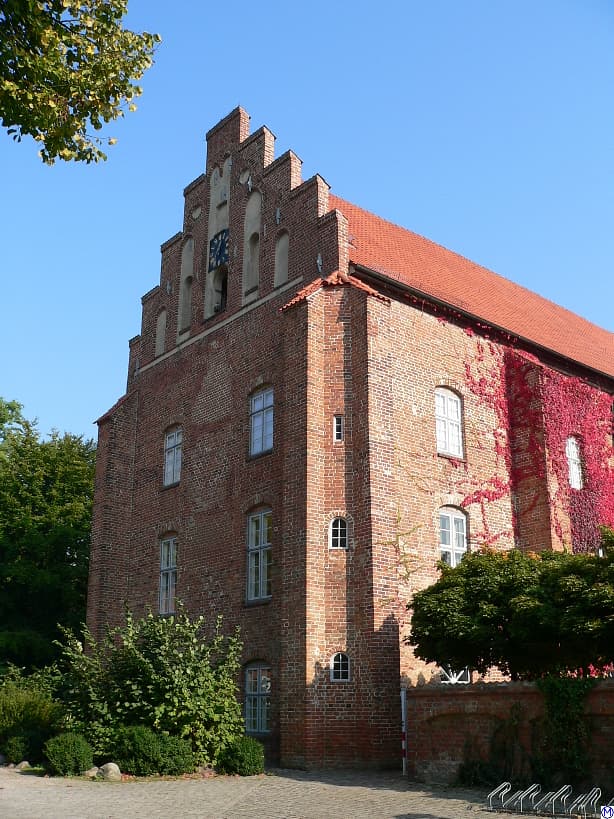
Cismar Abbey
Cismar Abbey was a Benedictine monastery founded in 1238 by Count Adolf IV of Holstein. It became a significant pilgrimage site due to its relic of Christ's blood and a healing spring, and was an early member of the Bursfelde Congregation. Dissolved during the Reformation in 1561, its church remains famous for its 14th-century carved altar, and the surviving buildings now function as a museum.

Abbey of Saint-Pierre-les-Nonnains
The Abbey of Saint-Pierre-les-Nonnains in Lyon, an ancient Catholic religious edifice, originally housed Benedictine nuns from the 10th century. Significantly rebuilt in the 17th century, it maintained considerable wealth and independence, governed by abbesses answerable only to the Pope. Closed during the French Revolution, the former abbey is now home to the Musée des Beaux-Arts de Lyon.

Augustinian convent
The Augustinian Convent of Toulouse was founded in 1286 by the Hermits of St. Augustine. Initially located outside the city walls, it was moved within the city between 1310 and 1341. After a devastating fire in 1463 and a period of decline, the convent was decommissioned in 1790 and its buildings now house the Toulouse Museum of Art.