
Sedlec Abbey
Sedlec Abbey, officially the Church of the Assumption of Our Lady and Saint John the Baptist, is a significant Gothic and Baroque Gothic structure located near Kutná Hora in the Czech Republic. Originally founded as the oldest Cistercian abbey in the Czech lands in 1142, it was rebuilt in the early 18th century by Johann Santini-Aichel, who infused it with his distinctive Baroque Gothic style. The church is recognized as a UNESCO World Heritage site, notable for its early Gothic architecture and later Baroque Gothic reconstruction.
Key Facts
- ›Founded in 1142 as the oldest Cistercian abbey in the Czech lands.
- ›The church was originally built around 1300 in the High Gothic style.
- ›The abbey and church were largely destroyed by the Hussites in 1421.
- ›Reconstruction in the Baroque Gothic style was completed in 1708 under Johann Santini-Aichel.
- ›It is a UNESCO World Heritage site, recognized for its architectural importance.
- ›The church is an early example of French Gothic cathedral resemblance in Bohemia.

Gothic, Baroque Gothic
Impressive Vaulting, Baroque Gothic Facade, Antechamber Decorated With Statues
- Church of the Assumption of Our Lady and Saint John the Baptist
JindřIch Snopek, Johann Blasius Santini-Aichel, Pavel IgnáC Bayer, MatěJ VáClav JäCkel
Founded As Cistercian Abbey, Church Built In Gothic Style, Destroyed By Hussites, Reconstruction In Baroque Gothic Style, Church Consecrated
About Sedlec Abbey
The Church of the Assumption of Our Lady and Saint John the Baptist, associated with Sedlec Abbey, stands as a significant example of Gothic and Baroque Gothic architecture near Kutná Hora in the Czech Republic. The origins of Sedlec Abbey trace back to 1142 when it was established as the first Cistercian monastery in the Czech lands. The church itself was initially constructed around 1300, representing one of the earliest High Gothic structures in the Kingdom of Bohemia and exhibiting similarities to French Gothic cathedrals.
History and Reconstruction
Despite its early prominence, Sedlec Abbey suffered a devastating blow in 1421 when the Hussites attacked and set fire to the monastery, leaving the church in ruins for two centuries. The ambitious undertaking to restore and rebuild the church began in 1700 under Abbot Jindřich Snopek. The initial reconstruction phase, led by architect Pavel Ignác Bayer, was later continued and completed by the renowned Czech Baroque architect Johann Blasius Santini-Aichel. Santini-Aichel infused the structure with his signature Baroque Gothic style, celebrated for its innovative vaulting, imposing facade, and intricately decorated antechamber featuring statues by Matěj Václav Jäckel. The church was consecrated in its rebuilt form in 1708.
Architectural Significance and Recognition
While the 18th-century reconstruction significantly altered the church's appearance, its eastern sections, including side chapels, choir, and transept, are understood to have retained elements of their original Gothic form on the exterior. The church's architectural importance is widely recognized, and it is included in the UNESCO World Heritage List, acknowledging its dual role as a key example of Czech Gothic architecture and an early, important instance of the Baroque Gothic style. The most recent restoration efforts on the church were undertaken in 2001.
Source: Wikipedia ↗
Frequently Asked Questions
When was Sedlec Abbey founded?
Sedlec Abbey was founded in 1142, making it the oldest Cistercian abbey in the Czech lands. The church on its grounds was first built around 1300.
What happened to Sedlec Abbey during the Hussite Wars?
The abbey and its church were burned down by the Hussites in 1421. The church then lay in ruins for approximately two centuries.
Who was responsible for the Baroque Gothic reconstruction of the church?
The reconstruction was initiated by Abbot Jindřich Snopek and primarily conducted by architect Johann Santini-Aichel, who completed the work in his original Baroque Gothic style.
Is Sedlec Abbey a UNESCO World Heritage site?
Yes, the Church of the Assumption of Our Lady and Saint John the Baptist at Sedlec Abbey is listed on the UNESCO World Heritage List. It is recognized alongside other monuments in Kutná Hora.
What architectural styles are present at Sedlec Abbey?
The site features both High Gothic architecture from its original construction around 1300 and the Baroque Gothic style from its 18th-century reconstruction, particularly noted for its vaulting and facade.
Related Monasteries
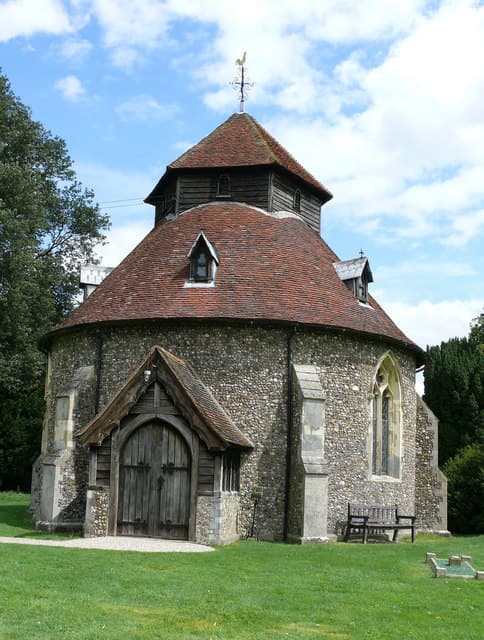
Little Maplestead Preceptory
Little Maplestead Preceptory was an establishment of the Knights Hospitaller located in the village of Little Maplestead, Essex, England. Its primary surviving structure is the parish church of St John the Baptist, a rare medieval round church built by the Knights Hospitallers. The church, dating from around 1335, retains much of its original design despite extensive rebuilding in the 19th century.

Lmbatavank
Lmbatavank, formally the Saint Stephen Church of Lmbat Monastery, is a 7th-century Armenian church situated on a hillside southwest of Artik in the Shirak Province. It is characterized by its cruciform centralized plan and octagonal drum topped by a dome. The church is notable for its 7th-century frescoes within the apse and decorative shield-type patterns on its exterior.

Olomouc
Olomouc is a historic city in the Czech Republic, located on the Morava River and serving as the administrative center of the Olomouc Region. It was a significant ecclesiastical metropolis and a former co-capital of Moravia, boasting a well-preserved historic city center. The city is renowned for its quintessential Baroque style, exemplified by the UNESCO World Heritage-listed Holy Trinity Column.