
Scala Dei Charterhouse
Christian·Spain·Ruins (partially renovated and open to public)·12th century
Scala Dei Charterhouse was a significant monastery of the Carthusian order in southern Catalonia, founded in the 12th century. It played a pivotal role in the region's history, initially as the first Carthusian house in the Iberian Peninsula and later by introducing viticulture, which led to the development of the Priorat wine region. The charterhouse was an important artistic center in the 17th century before its destruction in 1835.
Key Facts
- ›Established in 1194 by King Alfonso II of Aragon as the first Carthusian monastery in the Iberian Peninsula.
- ›Introduced viticulture to the region, laying the foundation for the Priorat wine region.
- ›Patron saint is Saint Bruno of Cologne, founder of the Carthusian order.
- ›Suffered destruction and was largely burned down in 1835 following anticlerical riots.
- ›The ruins have been renovated and are now open for visits.
- ›Was an important regional artistic center in the 17th century, known for the Escaladei school of painting.

Baroque, Neoclassical
- Ruins of the Church of Santa Maria
- Cloisters
- Cells For Monks
- Site of the Escaladei School of Painting
- Location Instrumental In the Development of the Priorat Wine Region
Cartoixa D'Escaladei, Chapterhouse of Scala Dei
Alfonso Ii of Aragon, Saint Bruno of Cologne, Arnaldus De Villa Nova, Alonso Tostado, Berenguer Gallart, Joan of Aragon, LluíS Pascal, RamóN Berenguer, Joaquim Juncosa, AndréS Capilla
- Founded In 1194
- Introduction of Viticulture In the 13th Century
- Rebuilding Programs In the 16th-18th Centuries
- Destruction and Partial Burning In 1835
- Donation of Ruins To Catalan Ministry of Culture In 1989
About Scala Dei Charterhouse
Scala Dei Charterhouse, also known by its Catalan name Cartoixa d'Escaladei, was a highly influential monastery of the Carthusian order situated in the southern region of Catalonia, Spain. Founded in 1194 by King Alfonso II of Aragon, it holds the distinction of being the first Carthusian monastery established on the Iberian Peninsula. Its strategic location was chosen to fulfill the Carthusian ideal of seeking silence, solitude, and a connection with nature, reportedly inspired by a vision of angels ascending a stairway to heaven.
Historical Significance and Development
The monastery played a crucial role in the region's development. By 1218, the monks were granted jurisdiction over several nearby villages and, importantly, introduced viticulture to the area around 1263. This initiative ultimately led to the formation of the renowned Priorat wine region, named in reference to the monks' vineyards. Scala Dei Charterhouse became an important artistic hub in the 17th century, fostering the Escaladei school of painting and producing significant works. It was also a repository for books, including one of the few surviving Catalan cookery manuscripts.
Decline and Legacy
The charterhouse's monastic life came to an abrupt end in 1835 when, following government decrees for the seizure of monastic properties, the community was expelled. In the ensuing wave of anticlericalism, the monastery was sacked and largely destroyed by fire. The surviving structures were later sold and eventually came under the care of the Catalan Ministry of Culture, which has undertaken renovations. Today, the ruins of Scala Dei Charterhouse remain a significant historical site, offering a glimpse into the region's religious, artistic, and agricultural past, and are accessible to the public for visitation.
Source: Wikipedia ↗
Frequently Asked Questions
When was Scala Dei Charterhouse founded?
Scala Dei Charterhouse was founded in 1194 by King Alfonso II of Aragon. This marked the establishment of the first Carthusian monastery in the Iberian Peninsula.
What is Scala Dei Charterhouse known for historically?
The monastery is historically significant for being the first Carthusian house in Iberia and for introducing viticulture to the region, which eventually became the renowned Priorat wine region. It was also an important artistic center in the 17th century.
What happened to Scala Dei Charterhouse?
In 1835, the monastery was seized due to decrees on monastic property. Shortly after, it was sacked and burned down by revolutionary mobs, leading to its destruction.
Can I visit Scala Dei Charterhouse today?
Yes, the ruins of Scala Dei Charterhouse have been renovated and are now open for visitors. The Catalan Ministry of Culture has overseen recent renovation efforts.
What is the origin of the name Scala Dei?
According to legend, when the Carthusian monks arrived, a shepherd told them he had seen angels ascending a stairway into heaven from the summit of a nearby mountain. The name Scala Dei, meaning 'Stairway of God,' is derived from this vision.
Related Monasteries

Monastery of Santa María la Real de las Huelgas
The Abbey of Santa María la Real de Las Huelgas is a historic Cistercian monastery for nuns located near Burgos, Spain. Founded in 1187 with royal patronage, it served as a burial site for the Castilian royal family and its abbesses wielded significant secular authority. Today, it houses a community of Cistercian nuns, supports a daughter house in Peru, and is open to the public as a significant cultural heritage site.

Poblet Monastery
Poblet Monastery, officially the Royal Abbey of Santa Maria de Poblet, is a Cistercian monastery founded in 1151 in Catalonia, Spain. It served as a significant royal pantheon for the Crown of Aragon and was once home to over 300 monks. Despite suffering ruin and desecration in the 19th century, it was refounded in 1940 and is now a UNESCO World Heritage Site, housing an active monastic community.
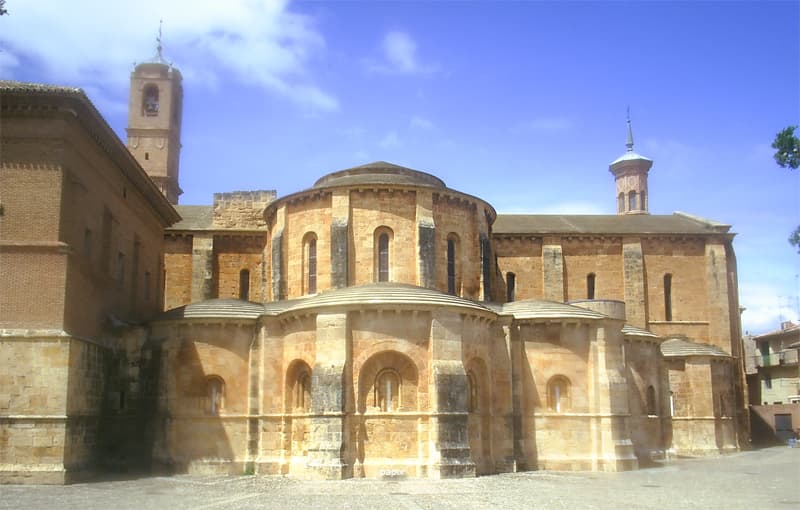
Santa María la Real, Fitero
The Monastery of Santa María la Real, also known as Fitero, is a significant Cistercian monastery located in Fitero, Navarre, Spain. Founded in the 12th century, it played a crucial role in the region's religious and political landscape, enduring periods of conflict and spiritual revival. Its church, consecrated in 1247, showcases a blend of Romanesque and Gothic architectural influences.