
Santa María la Real, Fitero
Christian·Spain·Ruins/Museum/Parish Church·12th century
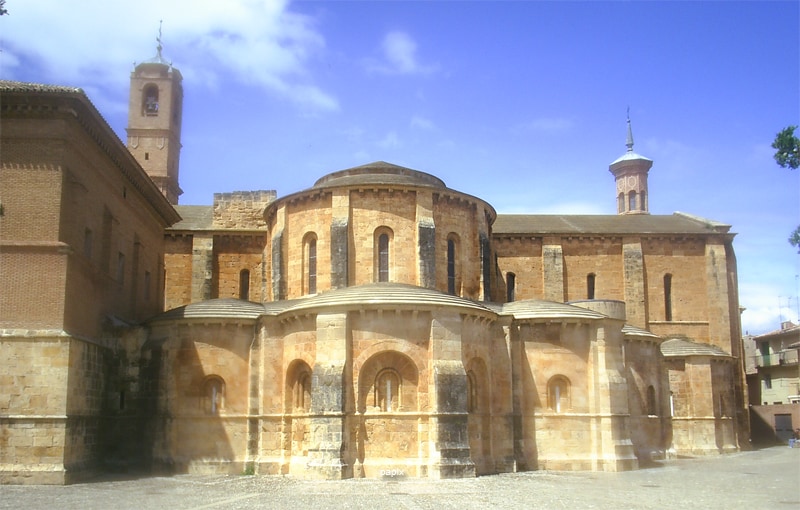
The Monastery of Santa María la Real, also known as Fitero, is a significant Cistercian monastery located in Fitero, Navarre, Spain. Founded in the 12th century, it played a crucial role in the region's religious and political landscape, enduring periods of conflict and spiritual revival. Its church, consecrated in 1247, showcases a blend of Romanesque and Gothic architectural influences.
Key Facts
- ›Founded in 1140 at Niencebas, later moved to its current location in Fitero between 1147 and 1152.
- ›Officially affiliated with the Order of Cistercians in 1147.
- ›The abbey church was constructed between the 12th and 13th centuries and consecrated in 1247.
- ›Experienced periods of spiritual decline and revival, with a notable resurgence in the 17th and 18th centuries.
- ›Monastic life ceased in 1835 due to a government decree.
- ›The church continues to function as a parish church under secular priests.
Romanesque, Gothic, Plateresque
Abbey Church, Cloister, Chapter House
Monasterio De Santa MaríA La Real, Monasterio De Santa MaríA De Nienzebas
Abbot Raimundo De Fitero, Abbot Guillermo, Abbot Marino, Abbot Pedro De Quesada, Abbot Garcia, Don Juan MartíNez De Medrano 'El Mayor', King Peter Iv of Aragon, Fray PláCido De Corral Y Guzman, Baltasar Febre
- Gift of Land By Alfonso Vii of LeóN and Castile
- Affiliation With the Order of Cistercians
- Attack and Expulsion of Monks By the Bishop of Tarazona
- War Over Jurisdiction Between Navarra and Castile
- Monks Forced To Abandon Monastery Due To Government Decree
- Monks Permanently Removed From the Monastery
About Santa María la Real, Fitero
Monastery of Fitero
The Monastery of Santa María la Real, commonly known as the Monastery of Fitero, is a historic Cistercian monastery situated in Fitero, Navarre, Spain, along the Alhama river. Its establishment dates back to the 12th century, and it played a significant role in the religious and political affairs of the region.
History and Significance
The monastery's origins trace to October 25, 1140, when Alfonso VII of León and Castile granted land for its creation. A small monastery was established by 1141 under Abbot Raimundo de Fitero, who formally affiliated it with the Order of Cistercians in 1147. Between 1147 and 1152, Abbot Raimundo oversaw the relocation of the monastery to its present site in Fitero. The monastery faced challenges, including an attack in 1159 by the bishop of Tarazona, which led to the expulsion or death of its monks. A period of expansion and increased influence occurred between 1161 and 1191 under Abbot Guillermo. Internal disciplinary issues arose between 1189 and 1210, with the Order of Cistercians intervening to restore order. The monastery's jurisdiction was a point of contention between Castile and Navarre, culminating in a war in 1335, which was resolved in 1336, affirming its belonging to Navarre.
Construction and Architecture
While no physical remains exist from the original monastery built at Niencebas, it is understood to have been primarily constructed of wood with some stone elements, following typical Cistercian layouts. The monastery at Fitero, after its relocation, also initially featured wooden structures that were later replaced by a wall of brick, rock, and mortar. The current surviving structures primarily date from the 12th and 13th centuries, including the chapter house and significant portions of the church. The church underwent several modifications, with its portico reconstructed in the 15th century and later adapted to a Plateresque style in the early 16th century. Major restorations and the erection of a new cloister, along with supporting buildings, took place in the late 16th and early 18th centuries.
The Abbey Church
The Abbey Church of Fitero, consecrated in 1247, is the monastery's main place of worship. Its initial construction phases occurred between 1179 and 1195, with the completion of the sanctuary, transept, and supporting structures. The church's design was heavily influenced by Gothic architecture. Its main facade exhibits Romanesque elements with round arches. The floor plan is a Latin cross with three naves, an ambulatory sanctuary, and five side chapels, similar to other Cistercian monastic churches. Following the permanent departure of the monks in 1835, the church has continued to serve the community as a parish church under secular priests.
Source: Wikipedia ↗
Frequently Asked Questions
When was the Monastery of Fitero founded?
The monastery was initially established at Niencebas on October 25, 1140. It was later transferred to its current location in Fitero between 1147 and 1152.
What religious order is the Monastery of Fitero associated with?
The monastery is a Cistercian monastery, officially affiliating with the Order of Cistercians in 1147. Its abbots and monks followed the Cistercian rule.
What is the architectural style of the Abbey Church of Fitero?
The Abbey Church of Fitero features a main facade with a Romanesque style characterized by round arches. The church's overall design was heavily influenced by Gothic architecture, with inspirations from Burgundy, France.
What happened to the monks of Fitero in the 19th century?
The monks were forced to abandon the monastery in 1809 due to a government decree and returned briefly before being permanently removed in 1835.
Is the Monastery of Fitero still an active monastery?
No, the monks were permanently removed in 1835, and monastic life ceased. However, the abbey church continues to offer religious services as a parish church.
Related Monasteries

Monastery of Santa María la Real de las Huelgas
The Abbey of Santa María la Real de Las Huelgas is a historic Cistercian monastery for nuns located near Burgos, Spain. Founded in 1187 with royal patronage, it served as a burial site for the Castilian royal family and its abbesses wielded significant secular authority. Today, it houses a community of Cistercian nuns, supports a daughter house in Peru, and is open to the public as a significant cultural heritage site.

Poblet Monastery
Poblet Monastery, officially the Royal Abbey of Santa Maria de Poblet, is a Cistercian monastery founded in 1151 in Catalonia, Spain. It served as a significant royal pantheon for the Crown of Aragon and was once home to over 300 monks. Despite suffering ruin and desecration in the 19th century, it was refounded in 1940 and is now a UNESCO World Heritage Site, housing an active monastic community.

Scala Dei Charterhouse
Scala Dei Charterhouse was a significant monastery of the Carthusian order in southern Catalonia, founded in the 12th century. It played a pivotal role in the region's history, initially as the first Carthusian house in the Iberian Peninsula and later by introducing viticulture, which led to the development of the Priorat wine region. The charterhouse was an important artistic center in the 17th century before its destruction in 1835.