
Monastery of Santa María la Real de las Huelgas
The Abbey of Santa María la Real de Las Huelgas is a historic Cistercian monastery for nuns located near Burgos, Spain. Founded in 1187 with royal patronage, it served as a burial site for the Castilian royal family and its abbesses wielded significant secular authority. Today, it houses a community of Cistercian nuns, supports a daughter house in Peru, and is open to the public as a significant cultural heritage site.
Key Facts
- ›Founded in 1187 by royal decree of Alfonso VIII of Castile, at the behest of his wife Eleanor of England.
- ›Served as the royal burial place for many members of the Castilian royal family.
- ›The abbesses historically held extensive secular authority over numerous villages and exercised judicial powers.
- ›Houses the Museo de Ricas Telas, showcasing medieval textiles from royal tombs.
- ›Preserves the 14th-century Codex Las Huelgas, a significant music manuscript.
- ›Supports a daughter house, the Monastery of the most Holy Trinity, in Peru.

Museo De Ricas Telas, Codex Las Huelgas, Royal Tombs, Defensive Tower
Abbey of Santa MaríA La Real De Las Huelgas
Alfonso Viii of Castile, Eleanor of England, Constance, Queen Berengaria, Al Nasir, Sancho Vii of Navarre
- Founding of the Monastery
- Wedding of Edward I of England and Eleanor of Castile
- Battle of Las Navas De Tolosa Leading To the Seizure of A Tapestry
About Monastery of Santa María la Real de las Huelgas
The Abbey of Santa María la Real de Las Huelgas is a significant Cistercian monastery for nuns situated approximately 1.5 kilometers west of Burgos, Spain. Its establishment was authorized by Pope Clement III in 1187 and formalized by Alfonso VIII of Castile, with the charter stipulating governance by the Cistercian Order. Historically, the monastery held numerous royal privileges, including tax exemptions and lordship over many villages, with its abbesses wielding considerable secular authority akin to lords and spiritual authority comparable to bishops.
Royal Connections and Significance
Las Huelgas served as a crucial royal pantheon, designated as the burial place for many members of the Castilian royal family. This close association with royalty is underscored by its historical role as a venue for royal weddings, notably that of Edward I of England to Eleanor of Castile in 1254. The defensive tower of the abbey itself is recognized as the birthplace of King Peter of Castile, further cementing its royal lineage. The monastery also founded an affiliated Royal Hospital to care for pilgrims on the Camino de Santiago, an initiative notably supported by Queen Eleanor.
Cultural and Spiritual Heritage
Beyond its historical and royal significance, Las Huelgas is a repository of rich cultural heritage. It houses the Museo de Ricas Telas, which exhibits medieval textiles recovered from royal tombs, including a tapestry captured after the Battle of Las Navas de Tolosa in 1212. Furthermore, the monastery preserves the 14th-century Codex Las Huelgas, a unique music manuscript containing monophonic and polyphonic compositions believed to have been performed by the nuns. The monastic community today consists of 36 nuns following the Spanish Congregation of St. Bernard, a reform movement of Cistercian nuns, and they support themselves through various crafts and services. The monastery is also open to the public for visits, managed by the Spanish heritage organization Patrimonio Nacional.
Source: Wikipedia ↗
Frequently Asked Questions
When was the Monastery of Santa María la Real de las Huelgas founded?
The monastery was authorized for founding by Pope Clement III in a papal bull issued on January 2, 1187. The foundational charter was granted in June of the same year by Alfonso VIII of Castile.
What is the significance of the name 'Las Huelgas'?
The name 'huelgas' in this context refers to land that had been left fallow, rather than the modern meaning of 'labour strikes'. It reflects the origin of the site where the monastery was established.
What royal connections does the monastery have?
The monastery was historically a significant royal site, serving as the burial place for many Castilian royal family members. It also hosted numerous weddings of foreign and Spanish royal families, including that of Edward I of England.
What is the current status of the monastery?
The monastery currently houses an active community of 36 Cistercian nuns who are part of the Spanish Congregation of St. Bernard. It is also open to the public for visits, administered by Patrimonio Nacional.
What notable cultural artifacts are housed at Las Huelgas?
Las Huelgas is home to the Museo de Ricas Telas, displaying medieval textiles from royal tombs, including a tapestry seized after the Battle of Las Navas de Tolosa. It also preserves the 14th-century Codex Las Huelgas, a music manuscript.
Are there any affiliated monasteries?
Yes, the Abbey of Santa María la Real de Las Huelgas has founded a daughter house in Peru, known as the Monastery of the Most Holy Trinity, located in the Lurín District near Lima.
Related Monasteries

Poblet Monastery
Poblet Monastery, officially the Royal Abbey of Santa Maria de Poblet, is a Cistercian monastery founded in 1151 in Catalonia, Spain. It served as a significant royal pantheon for the Crown of Aragon and was once home to over 300 monks. Despite suffering ruin and desecration in the 19th century, it was refounded in 1940 and is now a UNESCO World Heritage Site, housing an active monastic community.

Miraflores Charterhouse
Miraflores Charterhouse, known as Cartuja de Miraflores, is a significant Isabelline Gothic monastery located near Burgos, Spain. Founded in 1442 by King John II of Castile on the site of his father's hunting lodge, it was rebuilt after a fire in 1452. The monastery is renowned for its late-Gothic architecture, particularly the church, and houses the impressive royal sepulchers of King John II and Queen Isabella of Portugal, designed by Gil de Siloé.
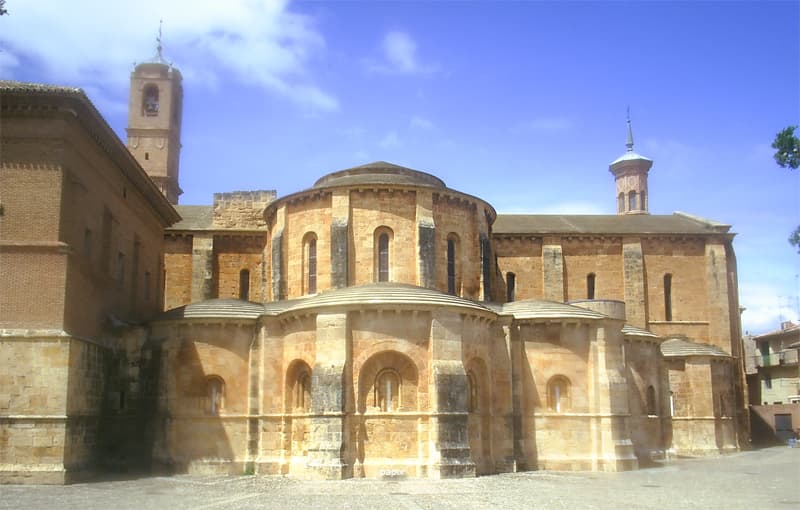
Santa María la Real, Fitero
The Monastery of Santa María la Real, also known as Fitero, is a significant Cistercian monastery located in Fitero, Navarre, Spain. Founded in the 12th century, it played a crucial role in the region's religious and political landscape, enduring periods of conflict and spiritual revival. Its church, consecrated in 1247, showcases a blend of Romanesque and Gothic architectural influences.