
Săpânța-Peri Monastery
Săpânța-Peri Monastery is a contemporary monastic complex in Maramureș, Romania, established in 1997 to revive the historical tradition of the old Peri Monastery. Its most striking feature is the wooden church of Archangel Michael, renowned as the world's tallest wooden church, adorned with significant amounts of gold. The monastery continues the legacy of religious and literary work historically associated with the Peri region.
Key Facts
- ›The church of Archangel Michael is the tallest wooden church in the world.
- ›The monastery was founded in 1997 to renew the tradition of the old Peri Monastery.
- ›The church was plated with 8.5 kilograms of gold, and its seven-meter cross with four kilograms of gold.
- ›The monastery hosts an active community of six nuns.
- ›The tower of the monastery is visible from five kilometers away over the Tisza river.

Maramureș Style, Wooden Architecture
- Tallest Wooden Church In the World
- Extensive Gold Plating On Church and Cross
- Double Eaves Characteristic of Wooden Churches of Maramureș
Peri Monastery
Grigore Lutai, Dorel Cordoș, Stavrofora Agnia Ciuban
- Destruction of the Original Monastery Church In 1783.
About Săpânța-Peri Monastery
The Săpânța-Peri Monastery, situated in the village of Săpânța in the Maramureș region of Romania, is a contemporary monastic complex established in 1997. Its primary aim is to revive the historical and spiritual traditions of the ancient Peri Monastery, which was once a significant religious and cultural center.
History and Significance
The original Peri Monastery, with its stone church, served as the headquarters for the Romanian Diocese of Maramureș for over 300 years and was patronized by Saint Michael the Archangel. During its existence, it was a vital hub for the translation and copying of important religious texts into Romanian for the first time, including "The Psalter" and "The Gospel." The original church was destroyed in 1783. The modern Săpânța-Peri Monastery was founded by parish priest Grigore Lutai, with architect Dorel Cordoș designing the complex. Since 2005, it has housed an active community of nuns who continue the ongoing construction and development.
Architectural Highlights
The monastery's most prominent feature is its wooden church dedicated to Archangel Michael, which holds the distinction of being the tallest wooden church in the world. This structure exemplifies the characteristic Wooden Churches of Maramureș style, distinguished by its double eaves. The church is renowned for its lavish decoration, having been plated with 8.5 kilograms of gold, and its prominent seven-meter high cross is covered with an additional four kilograms of gold. The monastery's tower is a visible landmark, observable from up to five kilometers away over the Tisza river, serving as a distant beacon for Romanians in Transcarpathia, a historical part of Maramureș now in Ukraine.
Source: Wikipedia ↗
Frequently Asked Questions
When was the Săpânța-Peri Monastery founded?
The Săpânța-Peri Monastery was founded in 1997. This was done with the intention of reviving the historical traditions of the ancient Monastery of the Holy Archangel Michael, which was located in Peri, Maramureș.
What is the significance of the church at Săpânța-Peri Monastery?
The church of Archangel Michael at Săpânța-Peri Monastery is significant for being the tallest wooden church in the world. It is a representative of the characteristic Wooden Churches of Maramureș style, featuring double eaves.
What makes the church visually striking?
The church is visually striking due to its extensive use of gold. It was originally covered with 8.5 kilograms of gold, and the seven-meter high cross atop the structure was adorned with an additional four kilograms of gold.
Is there an active monastic community at Săpânța-Peri Monastery?
Yes, Săpânța-Peri Monastery hosts an active community of nuns. Since 2005, a community of nuns has resided there, continuing the construction and maintenance work of the monastery.
Where is Săpânța-Peri Monastery located?
Săpânța-Peri Monastery is located within the boundaries of the village of Săpânța, in the Maramureș region of Romania. The church is situated on the banks of the Tisza river.
Related Monasteries

Brebu Monastery
Brebu Monastery is a significant 17th-century Romanian Orthodox monastic complex, noted for its architectural preservation and importance in Romanian art of the period. Construction began in 1640 under Matei Basarab, and the monastery is situated in Prahova County, Romania, nestled in the foothills of the Bucegi and Grohotiş Mountains. It stands as one of the few medieval Romanian monuments largely preserved in its original form.
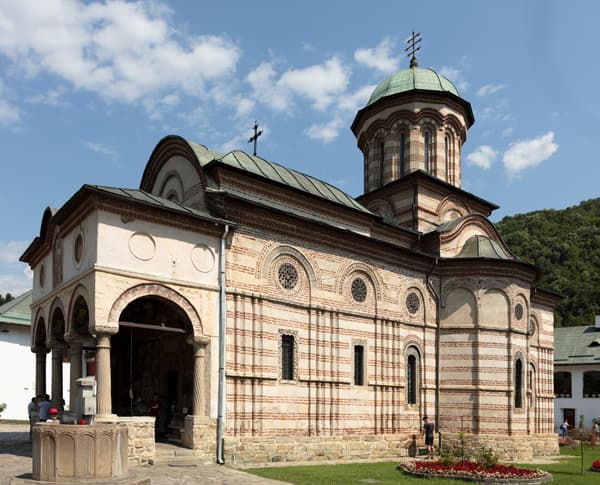
Cozia Monastery
Cozia Monastery is a significant medieval monastic complex in Romania, founded by Voivode Mircea the Elder in the late 14th century. It played a crucial role in the spiritual, cultural, and political history of Wallachia for over six centuries, serving as a prominent Orthodox center, a royal necropolis, and a model for subsequent religious architecture. The monastery is renowned for its Byzantine-influenced architecture, well-preserved frescoes, and its enduring importance as a pilgrimage site and symbol of national heritage.

Dragomirna
Dragomirna Monastery, situated in northern Moldavia, is noted for its unique proportions and intricate stone carvings, making it the tallest medieval monastery in the region. Construction began in the early 17th century, with a small graveyard church completed in 1602, followed by the larger church dedicated in 1609. Its distinctive architectural style and setting among forested hills contribute to its renown in Orthodox architecture.