
Santa Maria Casanova
The Abbey of Santa Maria Casanova was a significant Cistercian monastery established in 1191 and completed in 1208, marking the first Cistercian foundation in Abruzzo, Italy. Although nearly all of its structures were demolished after its suppression in 1807, a lone tower, recently restored, remains as a testament to its former presence. It played a role in the Cistercian network, serving as a mother abbey to several other foundations.
Key Facts
- ›Founded in 1191 by the mother abbey of Tre Fontane in Rome.
- ›Construction was completed in 1208.
- ›It was the first Cistercian abbey established in the Abruzzo region.
- ›Served as the mother abbey for San Pastore and Santo Spirito D'Ocre.
- ›Suppressed in 1807 by Joseph Bonaparte.
- ›Only a single restored tower remains of the original complex.

Lone Tower
Abbazia Di Santa Maria Di Casanova
- Suppression of Religious Orders In the Kingdom of Naples By Joseph Bonaparte In 1807
About Santa Maria Casanova
The Abbey of Santa Maria Casanova, known in Italian as Abbazia di Santa Maria di Casanova, was a significant Cistercian monastery located in Villa Celiera, within the Province of Pescara, Italy.
History and Significance
Founded in 1191 by the mother abbey of Tre Fontane in Rome, which itself derived from the Benedictine order at Clairvaux, the construction of Santa Maria Casanova was completed in 1208. This marked a notable establishment as it was the first Cistercian abbey in the Abruzzo region. The monastery played a role in the expansion of the Cistercian order, functioning as a mother abbey to daughter foundations such as the Abbey of St. Mary of Ripalta, the Abbey of San Pastore, and Santo Spirito d'Ocre. Its monastic life under Cistercian rule continued until 1807.
Demise and Legacy
The abbey's operational history concluded in 1807 when religious orders in the Kingdom of Naples were suppressed by Joseph Bonaparte. Following this suppression, nearly all of the abbey's buildings were razed. Today, only a single tower of the original complex remains, a remnant that has undergone recent restoration. This lone structure stands as the sole physical testament to the once-prominent Abbey of Santa Maria Casanova.
Source: Wikipedia ↗
Frequently Asked Questions
When was the Abbey of Santa Maria Casanova founded?
The Abbey of Santa Maria Casanova was founded in 1191. Its construction was completed in 1208.
What is the religious order associated with Santa Maria Casanova?
Santa Maria Casanova was a Cistercian monastery. The Cistercian order has its roots in the Benedictine tradition, originating from Clairvaux.
What remains of the Abbey of Santa Maria Casanova today?
Almost all of the abbey buildings were destroyed after its suppression. The only remaining structure is a lone tower, which has been recently restored.
Where was the Abbey of Santa Maria Casanova located?
The abbey was situated in Villa Celiera, within the Province of Pescara, Italy. It was the first Cistercian abbey in the Abruzzo region.
What happened to the abbey after its founding?
The abbey was ruled by the Cistercians until 1807, when religious orders in the Kingdom of Naples were suppressed by Joseph Bonaparte. Following this, nearly all of its buildings were razed.
Related Monasteries
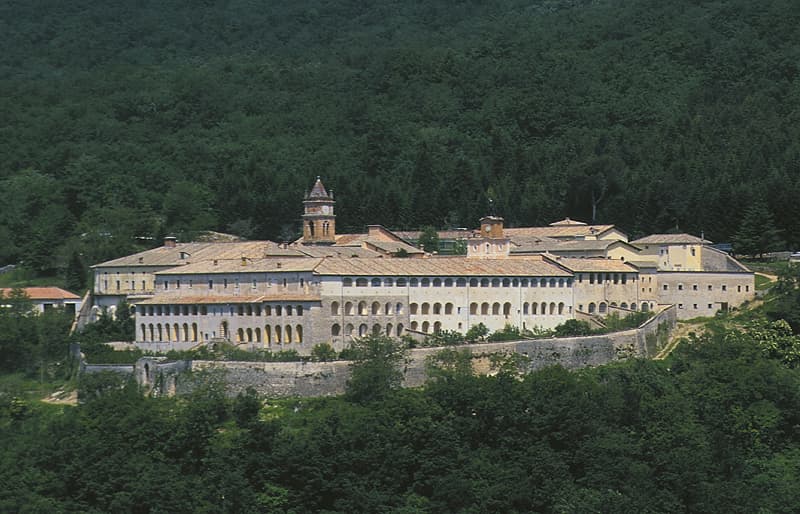
Trisulti Charterhouse
Trisulti Charterhouse is a historic monastery located in Collepardo, Italy, with a complex history dating back to a Benedictine abbey founded in 996. It was later assigned to the Carthusians by Pope Innocent III in 1204, with its church consecrated in 1211. The monastery has undergone significant renovations, particularly in the Baroque style, and is now owned by the Cistercians. It gained notoriety in 2018 when plans were announced to establish a "gladiator school" for right-wing politicians, a venture that led to legal disputes.

Losa Charterhouse
Montebenedetto Charterhouse, also known as Losa Charterhouse in its early history, was a former Carthusian monastery located in the Val di Susa, Piedmont, Northern Italy. Founded in the late 12th century, its initial site at Losa proved unsuitable, leading to its relocation to Montebenedetto. The monastery underwent several moves and destructions over centuries, with its original church being the most well-preserved structure.

Avigliana
Avigliana is a historic Italian town and municipality located in the Metropolitan City of Turin, Piedmont. Situated in the Susa Valley, it is recognized for its natural beauty, particularly the two maar lakes, Lago Grande and Lago Piccolo, and its proximity to the Sacra di San Michele abbey. The town has a long history, with evidence of fortifications dating back to the Lombard era and experiencing periods of conflict and control by various powers, including the House of Savoy.