
Saintes
Saintes is a historic town and commune in western France, notable for its rich Gallo-Roman, medieval, and classical heritage. It served as the first Roman capital of Aquitaine and later as the capital of the province of Saintonge. Today, Saintes is an important transport hub and a significant tourist destination, recognized as a French Town of Art and History.
Key Facts
- ›Founded as Mediolanum Santonum during the Roman era.
- ›Served as the first Roman capital of Aquitaine.
- ›Designated as the capital of the province of Saintonge under the Ancien Régime.
- ›Became a member of the French Towns and Lands of Art and History in 1990.
- ›Features notable Roman remnants such as the Arch of Germanicus and a Roman amphitheater.

Gallo-Roman, Medieval, Renaissance, Classical
Arch of Germanicus, Roman Amphitheater, Thermae of Saint-Saloine, Abbaye-Aux-Dames, Basilique Saint-Eutrope, CathéDrale Saint-Pierre, MuséE ArchéOlogique, MuséE Du PréSidial, MuséE De L'éChevinage
Mediolanum Santonum, Xaintes, Xainctes
Madame De Montespan
- Became the First Roman Capital of Aquitaine
- Designated As the Capital of the Province of Saintonge
- Briefly Became the Prefecture of Charente-InféRieure In 1790
About Saintes
Saintes is a historic town and commune located in the Charente-Maritime department of western France. It holds significant historical importance, having been established as Mediolanum Santonum by the Romans, and later served as the first Roman capital of Aquitaine. Throughout its history, it was also designated as the capital of the province of Saintonge under the Ancien Régime. The city's name was historically spelled Xaintes or Xainctes.
Heritage and Tourism
Recognized for its noteworthy Gallo-Roman, medieval, and classical heritage, Saintes is a prominent tourist destination. It has been a member of the French Towns and Lands of Art and History since 1990. The town boasts several museums, a theater, and cinemas, and hosts numerous festivals. A European center for musical research and practice is based in its Abbaye aux Dames.
Roman and Medieval Legacy
Key Roman landmarks include the Arch of Germanicus, a triumphal arch originally built at the entrance to a bridge over the Charente River, and the ruins of a Roman amphitheater. Remnants of the thermae of Saint-Saloine, dating back to the 1st century, are also visible, along with fragments of third-century ramparts. The medieval and later periods are represented by significant ecclesiastical sites such as the Abbaye-aux-Dames, the Basilique Saint-Eutrope, and the Cathédrale Saint-Pierre.
Modern Significance
Today, Saintes remains an important economic and transport hub for the central part of the department. It features a robust commerce and service sector, administrative functions, and significant employment in property maintenance, retail, and tourism. The city is well-connected by road and rail, serving as a focal point for several railway lines.
Source: Wikipedia ↗
Frequently Asked Questions
What is the historical significance of Saintes?
Saintes holds significant historical importance as it was the first Roman capital of Aquitaine and later the capital of the province of Saintonge. Its rich Gallo-Roman, medieval, and classical heritage makes it a key heritage site.
What are the main Roman landmarks in Saintes?
The primary Roman landmarks include the Arch of Germanicus, a triumphal arch that once stood at the entrance to a bridge over the Charente. Ruins of a Roman amphitheater are also visible, built against a hill and an embankment.
What is the current status of Saintes as a city?
Saintes is a commune and a historic town in western France, serving as a sub-prefecture of the Charente-Maritime department. It remains an economic heart and an important transport hub for the region.
What heritage status does Saintes hold?
Saintes has been a member of the French Towns and Lands of Art and History since 1990, acknowledging its noteworthy Gallo-Roman, medieval, and classical heritage.
What notable religious sites are located in Saintes?
Significant religious sites include the Abbaye-aux-Dames, where Madame de Montespan was educated, the Basilica of Saint Eutropius, and Saintes Cathedral, Cathédrale Saint-Pierre.
Related Monasteries
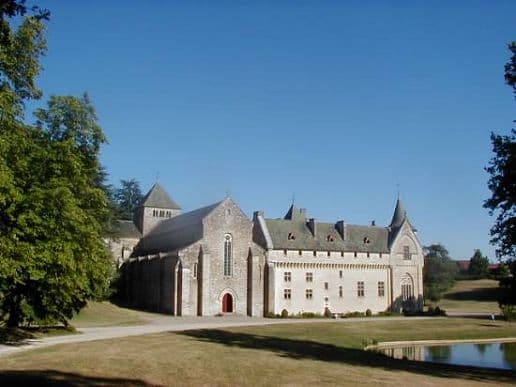
Abbey of Loc-Dieu
Abbey of Loc-Dieu is a Cistercian abbey situated in Aveyron, France, founded in 1123 on a site historically known as "devil's place" before being renamed "place of God" by its monastic inhabitants. Despite facing destruction and rebuilding, it became a significant Gothic architectural site and, during World War II, served as a safe haven for artworks from the Louvre, including the Mona Lisa. Today, the abbey and its park are open to the public.

Abbey of Saint-Germain-des-Prés
The Abbey of Saint-Germain-des-Prés, originally a Benedictine abbey founded in 558, is one of the oldest churches in Paris. It served as a significant center for scholarship, producing illuminated manuscripts, and was a royal necropolis. Despite destruction by Vikings and damage during the French Revolution, the church has undergone numerous rebuilds and restorations, incorporating Romanesque, Gothic, and later decorative styles, and remains an active Catholic parish church.

Abbey of Sénanque
Sénanque Abbey is a Cistercian monastery founded in 1148 in Provence, France, renowned for its remarkably preserved Romanesque architecture. Initially thriving, it experienced decline and was suppressed during the French Revolution, only to be re-established in 1854 and later reactivated in 1988. Today, it houses an active monastic community and is known for its lavender fields and spiritual retreats.