
Rüthen
Rüthen is a German town located in the district of Soest, North Rhine-Westphalia, known for its historical significance as a member of the Hanseatic League and as the site of witch trials. Established with town law in 1200, its importance waned in later centuries, though it retains medieval remnants like town gates and a significant Jewish cemetery. The town is also recognized for its natural beauty, situated between the Arnsberger Wald and the Möhne river valley, and is the largest commune by area in its district.
Key Facts
- ›First mentioned in documentation from Kloster Grafschaft in 1072.
- ›Granted town law on September 29, 1200, by Archbishop Adolf I von Altena of Cologne.
- ›Became a member of the Hanseatic League starting in 1375.
- ›Site of witch trials between 1573 and 1660, with at least 79 executions.
- ›The Jewish cemetery from 1625 is the oldest of its kind in Westphalia.
- ›It is the largest commune by area within the district of Soest, covering 158 square kilometers.

Gothic, Baroque
Catholic Church St. Nikolaus, Catholic Church St. Johannes Der TäUfer, Former Abbey of the Order of Capuchins, Former Abbey of the Order of Ursulines, Old Cityhall, Hachtor, Hexenturm, Jewish Cemetery, Schloss KöRtlinghausen, Hohler Stein
Adolf I. Von Altena
Granted Town Law In 1200, Joined the Hanseatic League In 1375, Witch Trials From 1573 To 1660
About Rüthen
Rüthen is a town located in the district of Soest, North Rhine-Westphalia, Germany, with a history stretching back to its first mention in 1072. The town was granted formal town law on September 29, 1200, by Archbishop Adolf I von Altena of Cologne, marking a significant point in its development. Its strategic position and economic connections led to its inclusion in the Hanseatic League starting in 1375, a period during which its merchants established far-reaching business ties and contributed to the town's prosperity. However, the importance of Rüthen diminished in the centuries that followed.
Historical Context and Events
A darker chapter in Rüthen's history involves witch trials, which took place between 1573 and 1660. During this period, 104 individuals were prosecuted as witches and wizards, with at least 79 receiving death sentences. The town also bears witness to its medieval past through surviving structures. Parts of its medieval town wall remain, along with the Hachtor, an old town gate that also served as a prison, and the Hexenturm, known as the witches' tower. The Jewish cemetery, dating from 1625, is noted as the oldest of its kind in Westphalia and is situated near the Hachtor.
Architecture and Nature
Architecturally, Rüthen features several notable buildings. The Catholic Church of St. Nikolaus was constructed in the 13th century after a city fire, with its tower receiving its current top in 1712. The Catholic Church of St. Johannes der Täufer, built between 1871 and 1874, incorporates an older tower from 1737 that houses a Madonna figure considered Rüthen's oldest artwork. The town also has remnants of former abbeys, including the Capuchin abbey which now houses apartments and a reconstructed historic garden, and the Ursuline abbey built in 1749, which now serves as a bank. The old town hall, a complex built between 1726 and 1730, is distinguished by its façade and a large, curved flight of stairs.
Geography and Administration
Geographically, Rüthen is situated at the northeastern edge of the Arnsberger Wald natural preserve, located between the Haarstrang and the valley of the Möhne river. It boasts the highest point in the district of Soest at the Wehberg (528.9 meters) and the lowest point in the Pöppelsche river valley (130 meters). With an area exceeding 310 square kilometers, it is the largest municipality by area in the district of Soest. Following local government reforms in 1975, Rüthen was expanded to include 15 districts, consolidating its administrative footprint.
Source: Wikipedia ↗
Frequently Asked Questions
When was Rüthen first mentioned in historical records?
Rüthen was first mentioned in a document from the Kloster Grafschaft in 1072. This early mention indicates that the area had some level of established presence or significance even before it was granted town law.
When did Rüthen receive town law status?
Rüthen was granted town law by the sovereign Archbishop Adolf I von Altena of Cologne on September 29, 1200. This marked a significant step in its development as a recognized urban center.
What was Rüthen's role in medieval trade?
Starting in 1375, Rüthen belonged to the Hanseatic League, a powerful economic alliance of trading cities. Its merchants had extensive business connections, which contributed to the town's wealth during that period.
Were there witch trials in Rüthen?
Yes, like many other cities in the Duchy of Westphalia, Rüthen held witch trials. Between 1573 and 1660, 104 people were tried as witches and wizards, with at least 79 sentenced to death.
What medieval fortifications remain in Rüthen?
Of the medieval town fortifications, significant portions of the city wall still exist. Additionally, the Hachtor, an old town gate that also served as a prison, and the Hexenturm (witches' tower) are still standing.
What is notable about the Jewish cemetery in Rüthen?
The Jewish cemetery in Rüthen, established in 1625, is significant as it is the oldest of its kind in the region of Westphalia. It is located adjacent to the Hachtor.
Related Monasteries
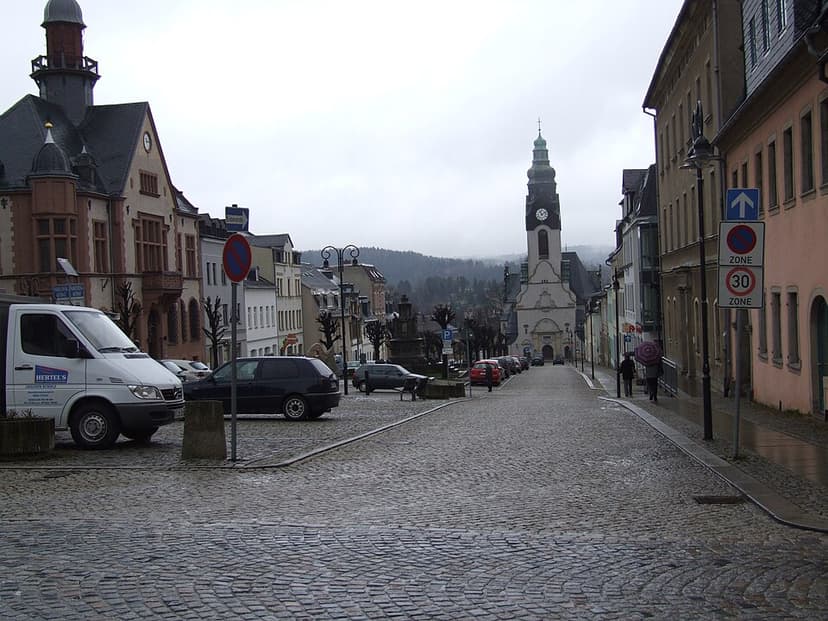
Adorf
Adorf is a small town in the Vogtlandkreis region of Saxony, Germany, with a history dating back to around 1200 when it was founded. It gained town status in 1293 and developed as a center for crafts, spinning, weaving, and musical instrument making due to its strategic location and transport links. Despite being destroyed by fire in 1768, Adorf has preserved historical structures like the Freiberger Tor, the last remaining town gate in Vogtland, and boasts attractions such as Miniaturschauanlage Klein-Vogtland.

Olpe
Olpe is a town located in the foothills of the Ebbegebirge in North Rhine-Westphalia, Germany, known for its historical development as a mining and ironworking center. Situated on the southern edge of the Biggesee reservoir, it boasts a rich history dating back to its first documentary mention in 1220 and subsequent granting of town rights in 1311. The town has endured significant events, including devastating fires and the impact of World War II, but has consistently rebuilt, evolving its urban landscape and economic base.

Beckum
Beckum is a town in North Rhine-Westphalia, Germany, whose name originates from "home upon the brooks" due to its location near three streams. Granted town charter in 1224, it experienced periods of growth and hardship, eventually becoming a major center for the chalk and cement industries in the late 19th century. Today, Beckum is an industrial town with a focus on machine engineering and cement production.