
Olpe
Olpe is a town located in the foothills of the Ebbegebirge in North Rhine-Westphalia, Germany, known for its historical development as a mining and ironworking center. Situated on the southern edge of the Biggesee reservoir, it boasts a rich history dating back to its first documentary mention in 1220 and subsequent granting of town rights in 1311. The town has endured significant events, including devastating fires and the impact of World War II, but has consistently rebuilt, evolving its urban landscape and economic base.
Key Facts
- ›First documentary mention of Olpe was in 1220.
- ›Granted town rights on the Soest model in 1311.
- ›Experienced a major fire in 1795 that destroyed 83% of the town.
- ›Became a district seat in 1819.
- ›The Bigge Reservoir was created in 1965.
- ›Olpe's population is overwhelmingly Catholic, with Saint Martin of Tours as its patron.

Gothic Revival
- Biggesee Reservoir
- Kreuzkapelle
- Historic Town Wall Remnants With Engelsturm and Hexenturm
- Waterwheel At the Former Site of the Uppermost Town Mill
- St.-Martinus-Kirche
- Evangelical Church
- Marketplace With PannenklöPper Memorial
- Chapels
- KurköLner Platz With Geschichtsbrunnen
- KöLsches Heck
Olpebach-TäLer, Pastoralverbund Olpe-Biggesee, St.-Sebastianus-SchüTzenverein
Count Heinrich Ii of Virneburg, Saint Agatha of Catania, Saint Roch of Montpellier, Saint Martin of Tours, Ewald Mataré, Johann Adam Stahl, Manfred SchöNe
- First Archaeological Finds Dating To About Ad 900
- First Documentary Mention In 1220
- Granted Town Rights In 1311
- First Mention of Kreuzkapelle In 1500
- Witch Trials Held Between 1587 and 1697
- Great Fire In 1634
- First Vow To Saint Agatha In 1665
- First Vow To Saint Roch In 1668
- Last Witch Sentenced In 1696
- Great Fire of Olpe In 1795 Destroyed 83% of the Town
- Became A District Seat In 1819
- Evangelical Municipality Founded 1842-1844
- Franciscans of the Everlasting Worship Founded In 1863
- Railway Reached Olpe In 1875
- St.-Martinus-Kirche Burnt Down In 1908 and Rebuilt In 1909
- Heavily Bombed On 28 March 1945
- Bigge Reservoir Created In 1965
- Municipal Restructuring On 1 July 1969
About Olpe
Olpe is a town located in North Rhine-Westphalia, Germany, nestled in the foothills of the Ebbegebirge and situated on the southern edge of the Biggesee reservoir. Its history is deeply rooted in mining and ironworking, with archaeological finds suggesting settlements dating back to around AD 900. The town received its first documentary mention in 1220 and was granted town rights in 1311, marking significant milestones in its development.
Historical Context and Development
Throughout its history, Olpe has faced considerable challenges, including major fires, most notably the Great Fire of 1795 which destroyed 83% of the town. This event led to a significant rebuilding effort that reshaped the urban landscape, moving away from its medieval appearance towards a more structured plan with broad streets. The town also experienced events such as witch trials between 1587 and 1697 and was heavily bombed towards the end of World War II. In 1965, the creation of the Bigge Reservoir further altered the local geography.
Religious and Cultural Significance
Olpe's population is predominantly Catholic, with Saint Martin of Tours serving as the town's patron saint. The town is ecclesiastically administered by the Archbishopric of Paderborn and features two parish clusters. Notably, Olpe is home to two monastic establishments: a convent run by the Franciscan Sisters of Perpetual Adoration and the Pallottine monastery at the Pallotti-Haus. Culturally, Olpe hosts a variety of events, including concerts, plays, and exhibitions, with venues such as the Stadthalle Olpe and the Marktplatz. The town also holds several chapels, including the Kreuzkapelle, Rochuskapelle, and Valentinskapelle, and features historical buildings like remnants of the town wall with the Engelsturm and Hexenturm.
Source: Wikipedia ↗
Frequently Asked Questions
When was Olpe first mentioned in historical records?
Olpe's first documentary mention dates back to the year 1220. This early record marks a significant point in the town's recorded history.
What significant historical event impacted Olpe's urban layout?
The Great Fire of Olpe in 1795 was a devastating event that destroyed 83% of the town. When rebuilt, the old medieval appearance was abandoned in favor of a new master plan featuring broad, parallel streets.
What natural feature is prominent in Olpe's geography?
The Biggesee, South Westphalia's largest reservoir, lies in the north of the town. This significant body of water plays a role in the local geography and recreational activities.
What is the primary religious affiliation of Olpe's population?
The population of Olpe is overwhelmingly Catholic. The town's patron saint is Saint Martin of Tours, reflecting its strong religious heritage.
What historical event led to the creation of the Bigge Reservoir?
The Bigge Reservoir, also known as the Biggetalsperre, was created in 1965 through damming. This project significantly altered the landscape and water management in the region.
Related Monasteries
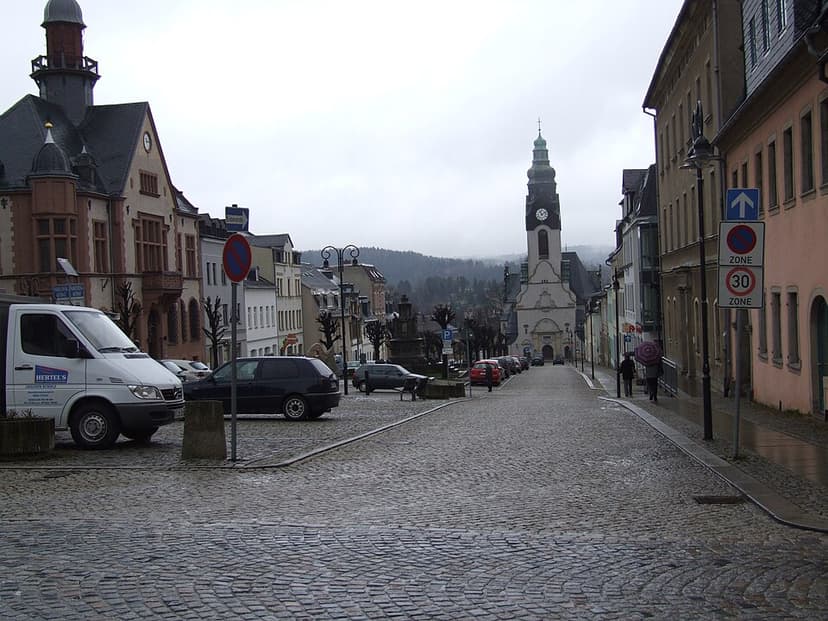
Adorf
Adorf is a small town in the Vogtlandkreis region of Saxony, Germany, with a history dating back to around 1200 when it was founded. It gained town status in 1293 and developed as a center for crafts, spinning, weaving, and musical instrument making due to its strategic location and transport links. Despite being destroyed by fire in 1768, Adorf has preserved historical structures like the Freiberger Tor, the last remaining town gate in Vogtland, and boasts attractions such as Miniaturschauanlage Klein-Vogtland.

Rüthen
Rüthen is a German town located in the district of Soest, North Rhine-Westphalia, known for its historical significance as a member of the Hanseatic League and as the site of witch trials. Established with town law in 1200, its importance waned in later centuries, though it retains medieval remnants like town gates and a significant Jewish cemetery. The town is also recognized for its natural beauty, situated between the Arnsberger Wald and the Möhne river valley, and is the largest commune by area in its district.

Beckum
Beckum is a town in North Rhine-Westphalia, Germany, whose name originates from "home upon the brooks" due to its location near three streams. Granted town charter in 1224, it experienced periods of growth and hardship, eventually becoming a major center for the chalk and cement industries in the late 19th century. Today, Beckum is an industrial town with a focus on machine engineering and cement production.