
Ross Priory
Scotland·Recreational and conference centre·19th century
Ross Priory is an early 19th-century country house located on the south shore of Loch Lomond in Scotland, known for its romantic architectural style and association with Sir Walter Scott. Originally part of the Buchanan family estate known as The Ross, the current house was significantly remodelled in 1816. The name "Priory" is a stylistic affectation, not indicative of ecclesiastical origins. Today, it serves as a recreational and conference centre for the University of Strathclyde.
Key Facts
- ›The present house was completed in 1816 after extensive remodelling by James Gillespie Graham.
- ›The name "Priory" is a 19th-century romantic affectation and does not signify ecclesiastical origins.
- ›Sir Walter Scott spent time at Ross Priory and is believed to have drawn inspiration for his Waverley Novels from his visits.
- ›The estate was owned by the Leith-Buchanan family until the later 20th century.
- ›In 1973, it was sold to the University of Strathclyde and now functions as a recreational and conference centre.
- ›Ross Priory is a category a listed building, and its grounds are listed on the Inventory of Gardens and Designed Landscapes in Scotland.
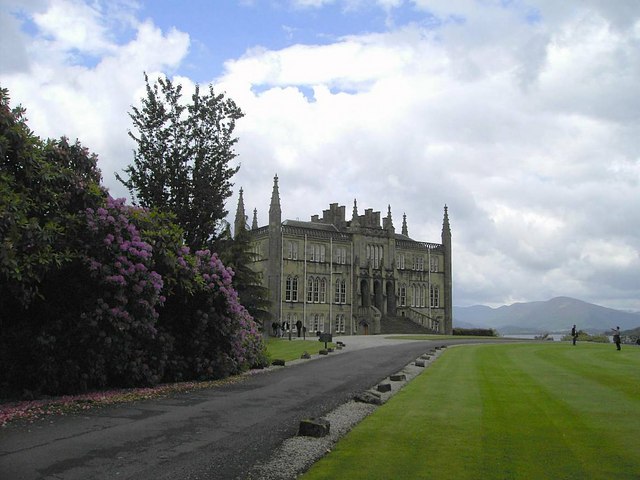
Scottish Gothic
Formal Garden, Parkland, Burial Ground, Golf Course, Room Named For Sir Walter Scott
the Ross
Sir Walter Scott, James Gillespie Graham, James Leith-Buchanan, 5th of Ross, Marquess of Tullibardine, Major George J.H. Christie
- Marquess of Tullibardine Cursed the Buchanan Family In 1745.
- the Buchanan's Male Line Died Out In 1925.
- Sold To the University of Strathclyde In 1971.
About Ross Priory
Ross Priory is a distinguished country house situated west of Gartocharn, within West Dunbartonshire, Scotland, gracing the southern shores of Loch Lomond. Its history is intertwined with the Buchanan family, who owned the estate, known as The Ross, from the 14th century. While a dwelling existed on the site from at least 1693, the present structure is the result of significant remodelling undertaken by architect James Gillespie Graham, with completion in 1816. Notably, the designation "Priory" is a romantic affectation of the 19th century, bearing no relation to any ecclesiastical origins.
History and Architecture
The estate's past includes a colourful, albeit apocryphal, tale of a curse placed upon the Buchanan family in 1745 by the Marquess of Tullibardine. The current house, designed in a Scottish Gothic style, was an ambitious remodelling of a pre-existing farmhouse. It stands on approximately 200 acres, encompassing formal gardens, parkland, a burial ground, and a golf course. The Leith-Buchanan family, descendants of the original owners, retained possession until the later 20th century.
Notable Associations and Current Use
Ross Priory is famously associated with the celebrated author Sir Walter Scott, who spent time there and is believed to have drawn inspiration for his Waverley Novels from his visits; a room on the first floor is dedicated to his memory. In 1973, the property was acquired by the University of Strathclyde, transitioning from private ownership to a vibrant hub for the university community. Today, it functions as a recreational and conference centre, hosting meetings and events for staff and graduates, and also serves as a popular wedding venue. The estate's gardens and parkland remain accessible to the public through Scotland's Gardens Scheme, offering visitors a chance to experience its scenic beauty.
Source: Wikipedia ↗
Frequently Asked Questions
What is the historical significance of Ross Priory?
Ross Priory holds historical significance as an early 19th-century country house that was a focal point for the Buchanan family estate, known as The Ross. It is also notable for its association with Sir Walter Scott, who visited and is thought to have found inspiration for his novels there. The estate's history also includes a notable curse placed upon the Buchanan family in the 18th century.
What is the architectural style of Ross Priory?
Ross Priory is described as a Scottish Gothic style country house. The current structure is the result of an extensive remodelling of an existing farmhouse, designed by architect James Gillespie Graham and completed in 1816.
Who currently owns and operates Ross Priory?
Ross Priory was sold to the University of Strathclyde in 1973. It is now used as a recreational and conference centre for the university's staff and graduates, and also serves as a wedding venue.
Can the public visit Ross Priory?
While the house itself is primarily used for university events and as a wedding venue, its surrounding gardens, woodlands, and parkland are open to the public as part of Scotland's Gardens Scheme. Visitors can also book bed and breakfast accommodation within the house.
Why is it called "Ross Priory" if it has no religious history?
The use of the term "Priory" for Ross Priory is a deliberate 19th-century romantic affectation. It does not indicate any ecclesiastical provenance or historical connection to a religious monastic order.
Related Monasteries

Fort Augustus Abbey
Fort Augustus Abbey, officially St. Benedict's Abbey, was a Benedictine monastery in Scotland that operated from the late 19th century until 1998. It also hosted a boys' school until 1993. The abbey's establishment was largely due to the philanthropic efforts of the 3rd Marquess of Bute, aiming to revive monasticism in Scotland. During its operational years, it faced significant challenges, including allegations of abuse and financial difficulties that ultimately led to its closure and the sale of the buildings.
Abernethy Priory
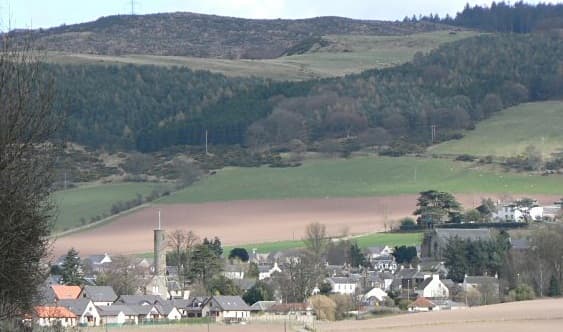
Abernethy Priory was a significant religious and political center in the Pictish era, later becoming the site of an Augustinian priory and then a collegiate church. Its medieval round tower is a prominent landmark, marking the historical importance of the site. The village of Abernethy, where the priory was located, retains evidence of its ancient past, including Roman encampments and early Christian sculptures.

Applecross Monastery
Applecross Monastery was founded in the 7th century by Saint Máel Ruba, a significant figure in the early Celtic Church. Located on the remote Applecross peninsula in Wester Ross, Scotland, the monastery was once a center of religious life and known as 'The Sanctuary' (A' Chomraich). While only a sculptured stone and carved fragments remain as archaeological evidence of the early monastic site, the area retains its historical and spiritual significance. The lands were secularized in the late 16th century and have since been owned by various estates and trusts, with the Applecross Trust currently managing the peninsula.