
Roskilde Abbey
Christian·Denmark·Ruins (site now occupied by a church)·12th century
Roskilde Abbey, also known as Our Lady's Abbey, was a significant Benedictine nunnery established in the early 12th century on the Danish island of Zealand. It transitioned to the Cistercian reform movement in 1177 and was suppressed in 1536 during the Protestant Reformation. The abbey was particularly renowned for housing the tomb of Saint Margrethe of Roskilde, a local saint whose veneration led to the abbey becoming a pilgrimage site.
Key Facts
- ›Founded in the early 12th century as a Benedictine nunnery.
- ›Became part of the Cistercian reform movement in 1177.
- ›Suppressed in 1536 during the Protestant Reformation.
- ›Was the site of the tomb of Saint Margrethe of Roskilde.
- ›The shrine to Saint Margrethe was declared a pilgrimage site by the Pope.

Tomb of Saint Margrethe of Roskilde, Pilgrimage Site
Our Lady's Abbey, Roskilde, Roskilde Kloster, Vor Frue Kloster
Saint Margrethe of Roskilde, Absalon of Lund
Suppression During the Protestant Reformation
About Roskilde Abbey
Roskilde Abbey, also known by its Danish names Roskilde Kloster and Vor Frue Kloster, or as Our Lady's Abbey, was a prominent religious institution dedicated to Saint Mary the Virgin. Located in Roskilde on the island of Zealand in Denmark, the abbey played a significant role in the region's religious history from its founding in the early 12th century.
History and Significance
Originally established as a Benedictine nunnery, Roskilde Abbey underwent a significant transformation in 1177 when it was integrated into the Cistercian reform movement. This change marked a new chapter in its spiritual and organizational life. The abbey's prominence was further enhanced by its association with Saint Margrethe of Roskilde, also known as Margaret of Ølse or Margaret of Højelse. Following her death in 1176 and reports of miracles occurring near her grave, her remains were transferred to Roskilde Abbey by Bishop Absalon of Lund.
Her shrine at the abbey became a recognized place of pilgrimage, sanctioned by the Pope, which brought considerable spiritual and economic benefit to the nuns, who were allotted a third of the generated income. Despite these efforts and local veneration, Saint Margrethe was never formally canonized. The abbey's existence came to an end in 1536 with its suppression during the Protestant Reformation in Denmark. Today, the site is recognized as the location of the Old Church of Our Lady, Roskilde (Gammel Vor Frue Kirke).
Source: Wikipedia ↗
Frequently Asked Questions
When was Roskilde Abbey founded?
Roskilde Abbey was founded in the early 12th century. Initially established for Benedictine nuns, it later adopted the Cistercian reforms.
What was the religious tradition of Roskilde Abbey?
The abbey began as a Benedictine nunnery. In 1177, it was incorporated into the Cistercian reform movement, making it a Cistercian institution.
Why was Roskilde Abbey suppressed?
Roskilde Abbey was suppressed in 1536 as part of the Protestant Reformation in Denmark. This event led to the dissolution of many monastic institutions.
What is significant about Saint Margrethe of Roskilde in relation to the abbey?
Saint Margrethe of Roskilde, also known as Margaret of Ølse, was buried at the abbey after miracles were reported near her grave. Her shrine became a significant pilgrimage destination.
What remains of Roskilde Abbey today?
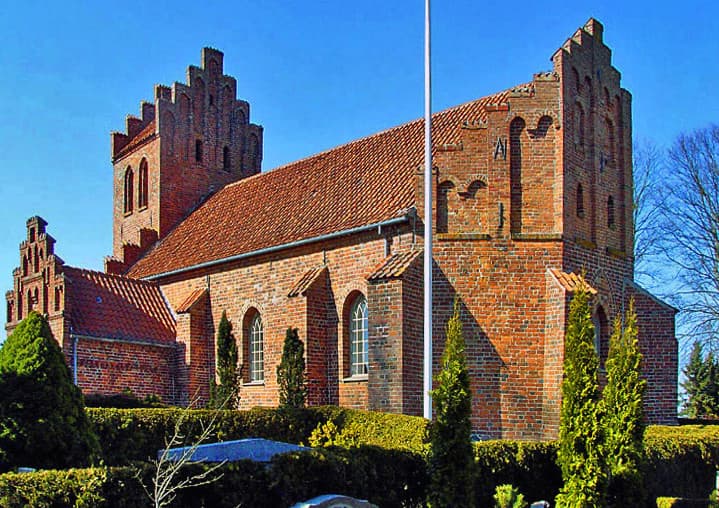
The site of Roskilde Abbey is now occupied by the Old Church of Our Lady, Roskilde (Gammel Vor Frue Kirke). While the abbey itself is gone, the church stands on its former grounds.
Related Monasteries

Asserbo Charterhouse
Asserbo Charterhouse was a short-lived Carthusian monastery founded in the late 12th century by Bishop Absalon in North Zealand, Denmark. Despite its initial monastic purpose, it soon transitioned to being used as a farmhouse and later leased to noble families. The site was famously swallowed by drifting sands from the 15th century until the 18th century, with the ruins eventually excavated in the 19th century.

Børglum Abbey
Børglum Abbey was a significant Premonstratensian monastery in medieval Denmark, flourishing from the 12th century until the Reformation. Originally a royal farm, it became the seat of the bishopric of Vendsyssel before the Premonstratensians established a daughter house that grew to become the mother house for their order in Scandinavia. The abbey's church served as the cathedral, making it a powerful religious and political entity, known for its seminary and annual market.
Eskilsø Abbey
Æbelholt Abbey was an Augustinian monastery founded on Eskilsø Island in 1104 before relocating to Æbelholt in 1167. It became a significant religious center, particularly after the canonization of its first abbot, William of Æbelholt, as St. Vilhelm in 1224. Following the Reformation, the abbey was dissolved in 1560, its buildings were largely demolished for reuse, and the site now hosts an abbey museum and a reconstructed medieval garden.