
Rochester Cathedral Priory
Anglican (Church of England)·England·active·7th century
Rochester Cathedral, officially the Cathedral Church of Christ and the Blessed Virgin Mary, is the mother church of the Diocese of Rochester in Kent, England. Founded in the early 7th century by Justus, the first Bishop of Rochester, it has undergone numerous rebuilds and remodels, most notably in the Norman and later Gothic styles. The cathedral is significant for its historical role as a center of Christianity in England, its continuous episcopal see, and its architectural evolution over centuries, serving as a Grade I listed building.
Key Facts
- ›Founded in the early 7th century by Justus, the first Bishop of Rochester.
- ›Rebuilt in the Norman style on the site of its Anglo-Saxon predecessor.
- ›Served by a college of secular priests initially, later replaced by Benedictine monks, becoming a priory.
- ›Suffered damage from fires, sieges, and periods of dilapidation, particularly after the Dissolution of the Monasteries.
- ›Represents architectural styles ranging from Romanesque to Gothic, with later medieval additions.
- ›The seat (cathedra) of the Bishop of Rochester, the second oldest bishopric in England.

Norman, Gothic, Romanesque
- Site of the Second Oldest Bishopric In England
- Incorporates Elements From Romanesque To Gothic Architectural Periods
- Crypt
- Shrines of Ss Paulinus and William of Perth, and Relics of St Ithamar Drew Pilgrims
- Cathedral Church of Christ and the Blessed Virgin Mary
Justus, King æThelberht of Kent, Bede, Ithamar, William the Conqueror, Odo of Bayeux, Gundulf, Lanfranc, Ernulf, John, Gilbert De Glanville, St William of Perth, King John, Richard Wendene, Simon De Montfort, Edward I, Hamo De Hythe, Edward Iii, the Black Prince, John Fisher, Henry Viii, Nicholas Ridley, Samuel Pepys, Queen Elizabeth I, James I & Vi, William Laud, John Evelyn, Thomas Fairfax
- Founding of the Diocese of Rochester
- Ravaging of Kent By King æThelred of Mercia
- Grant of Land By Sigerd and Egbert, Confirmed By Offa of Mercia
- Grant of Cathedral and Estates To Odo of Bayeux By William the Conqueror
- Trial of Penenden Heath
- Appointment of Gundulf As Bishop and Start of New Cathedral Construction
- Dedication of the Norman Cathedral
- Fires Damaging the Cathedral
- Rebuilding of the East End Commenced
- Looting By Forces of King John
- Rededication of the Cathedral
- Desecration By Troops of Simon De Montfort
- Building of Strong Stone Screens and Doors
- Raising of the Central Tower By Hamo De Hythe
- the Black Death
- Completion of Clerestory and Vaulting of the North Quire Aisle
- Completion of the Great West Window
- Construction of the Lady Chapel
- Dissolution of the Priory of St Andrew
- Consecration of Nicholas Ridley As Bishop of Rochester
- Steep Decline and Dilapidation After the Dissolution
- Visit of Queen Elizabeth I
- Visit of James I & Vi and Christian Iv of Denmark
- Visit of William Laud
- Despoliation By Parliamentarian Soldiers During the Civil War
- Repairs and Restoration After the Restoration
- Rebuilding of the Steeple and West Front Towers
About Rochester Cathedral Priory
Rochester Cathedral, formally known as the Cathedral Church of Christ and the Blessed Virgin Mary, stands as a significant religious and architectural landmark in Rochester, Kent, England. It holds the distinction of being the mother church of the Church of England Diocese of Rochester and serves as the seat of the Bishop of Rochester, making it the second oldest bishopric in England after Canterbury. The current structure, largely rebuilt in the Norman style on the site of its Anglo-Saxon predecessor, is a Grade I listed building, showcasing a rich history of construction, damage, and rebuilding across various architectural periods.
Early Establishment and Norman Rebuilding
The origins of Rochester Cathedral trace back to the early 7th century when Justus, one of Augustine of Canterbury's missionaries and the first Bishop of Rochester, founded a church dedicated to Andrew the Apostle. This early foundation was intended to serve as the seat of a bishopric and was supported by a college of secular priests, forming the basis of what would evolve into the King's School. The original Anglo-Saxon structure suffered damage from Viking raids and later neglect, particularly after the Norman Conquest when William the Conqueror granted the cathedral to his half-brother, Odo of Bayeux, leading to misappropriation of its resources.
Under Bishop Gundulf, appointed in 1077, a significant rebuilding program commenced, transforming the cathedral into the Norman style. Gundulf, a skilled architect, oversaw the construction of a new church, including its tower, and importantly, replaced the secular clergy with Benedictine monks, thereby establishing the Priory of St Andrew. This period saw the cathedral evolve into a monastic establishment, drawing pilgrims to the shrines of its saints and relics, which in turn funded further architectural development.
Medieval Transformations and Later History
The medieval period witnessed continuous remodelling and expansion of Rochester Cathedral. From around 1190, the east end was rebuilt, and subsequent phases of work in the 13th and 14th centuries saw the construction of new transepts, the rebuilding of nave piers, and the raising of the central tower. These works, funded by pilgrim offerings, integrated various styles, demonstrating a transition from Romanesque to Gothic architecture. The cathedral also served as a site of conflict, being desecrated during sieges, most notably by Simon de Montfort's troops in 1264.
The Dissolution of the Monasteries under Henry VIII in 1540 marked a profound turning point, leading to the dismantling of the Priory of St Andrew and the confiscation of its estates by the Crown. This resulted in a period of steep decline and dilapidation, with the cathedral described by diarist Samuel Pepys as a "shabby place." Despite this, Rochester Cathedral continued to host notable visitors, including royalty. The post-Dissolution foundation established a new structure centered around a dean and prebendaries, rather than monks.
Throughout subsequent centuries, the cathedral fabric required ongoing care and repair, facing challenges from fires, neglect during the Commonwealth period, and extensive rebuilding of its towers and roof in the 18th century. Today, Rochester Cathedral stands as a testament to over 1,400 years of continuous Christian worship and architectural evolution, embodying a rich tapestry of English history and religious life.
Source: Wikipedia ↗
Frequently Asked Questions
When was Rochester Cathedral founded?
The Diocese of Rochester was founded in the early 7th century by Justus, who established a church dedicated to Andrew the Apostle on the site of the present cathedral. This marked the beginning of Rochester's role as a bishopric.
What is the architectural style of Rochester Cathedral?
The present cathedral was rebuilt in the Norman style. Over centuries, it has incorporated various architectural styles, demonstrating a progression from Romanesque to Gothic architecture, with significant medieval remodelling.
Who was instrumental in rebuilding Rochester Cathedral?
Bishop Gundulf, appointed in 1077, was a key figure in the rebuilding of the cathedral in the Norman style. He began construction of a new cathedral around 1080, likely playing a major role in its design and the works he commissioned.
Has Rochester Cathedral been damaged throughout its history?
Yes, Rochester Cathedral has suffered significant damage from various events. It was ravaged by King Æthelred of Mercia in 676, damaged by great fires in 1130, 1137, and 1179, looted during sieges, and fell into disrepair after the Dissolution of the Monasteries.
What was the significance of the Priory of St Andrew at Rochester?
The Priory of St Andrew was established by Bishop Gundulf, who replaced the secular chaplains with Benedictine monks. The priory contributed to the upkeep of St Bartholomew's Hospital and was dissolved by royal command in 1540.
Is Rochester Cathedral still an active religious site?
Yes, Rochester Cathedral remains the mother church of the Diocese of Rochester and the seat of the Bishop of Rochester. It continues to function as an active place of worship and a historical monument.
Related Monasteries

Ely Cathedral Priory
Ely Cathedral, originally an abbey founded in 672 by St Æthelthryth, is an Anglican cathedral in Cambridgeshire, England. It evolved from an Anglo-Saxon monastery to a prominent Benedictine abbey before being refounded as a cathedral in 1109. Renowned for its monumental Romanesque architecture, it features a unique central Octagon tower and later additions in Decorated Gothic style, making it a significant historical and architectural landmark.
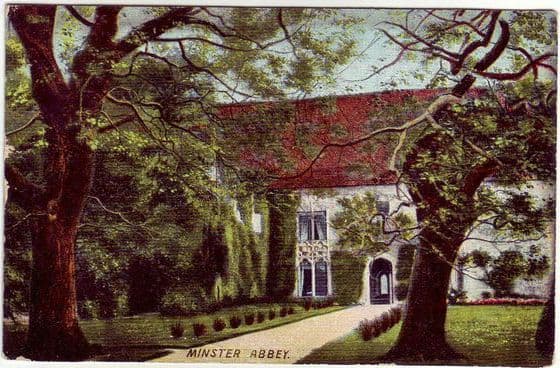
Minster in Thanet Priory
Minster Abbey in Minster-in-Thanet, Kent, England, originally comprised two abbeys: a 7th-century foundation that endured until the Dissolution of the Monasteries, and a modern Benedictine priory established in 1937 beside its ruins. The ancient abbey was famously founded by Domne Eafe, who received land as compensation for her brothers' deaths, with its boundaries legendarily defined by a deer. The current site hosts a Benedictine community of women.
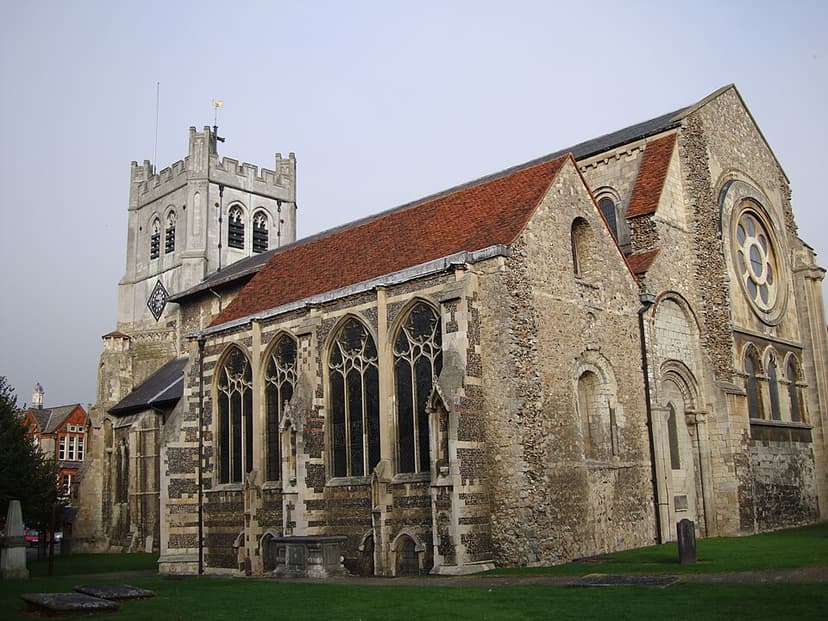
Waltham Abbey
Waltham Abbey, officially the Abbey Church of Waltham Holy Cross and St Lawrence, has a history of continuous worship dating back to the 7th century. Originally a monastic site, it was refounded as an Augustinian abbey in 1177 and became a major pilgrimage destination before its closure in 1540 during the Dissolution of the Monasteries. The present building primarily dates from the early 12th century, showcasing Norman architecture, and continues to serve as the parish church for the town of Waltham Abbey, England.