
Rmanj Monastery
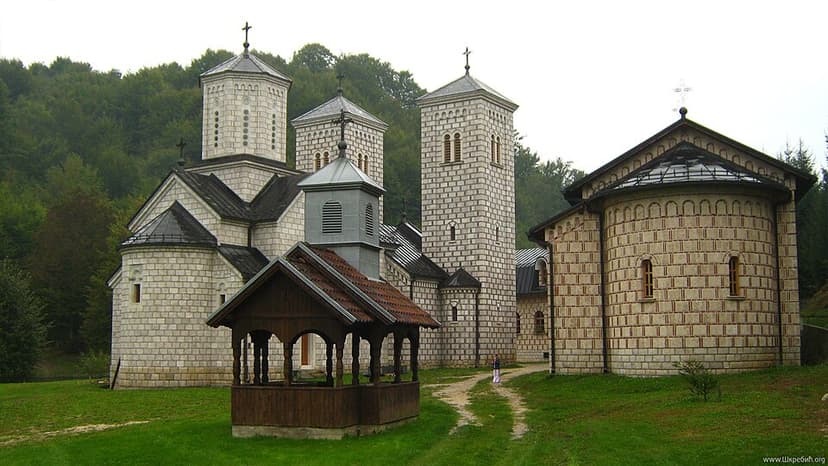
Rmanj Monastery is a Serbian Orthodox monastery located in Martin Brod, Bosnia and Herzegovina, dedicated to Saint Nicholas. Its history is marked by frequent destruction and rebuilding, with the original construction dating to the late 15th or early 16th century. It served as a significant religious and administrative center, particularly as the seat of the Metropolitanate of Dabro Bosnia for over a century, and has been declared a National Monument of Bosnia and Herzegovina.
Key Facts
- ›Original construction is dated to the late 15th or early 16th century.
- ›It was the westernmost Serbian Orthodox monastery at the end of the 16th century.
- ›Served as the seat of the Metropolitanate of Dabro Bosnia for approximately 110 years.
- ›Suffered multiple destructions by fire and conflict throughout its history.
- ›Completely destroyed by German bombing in World War II.
- ›Declared a National Monument of Bosnia and Herzegovina in 2007.

- Location At the Confluence of the Unac and Una Rivers
- Served As the Seat of the Metropolitanate of Dabro Bosnia
Manastir Rmanj
Gavrilo Predojević
- Conquest of the Area By the Ottoman Empire
- Temporary Abandonment In 1578
- Renewal By Telli Hasan Pasha
- Served As Seat of Metropolitanate of Dabro Bosnia
- Burned Down In 1663
- Rebuilt and Occupied Again In 1737
- Burned Again During Austro-Turkish War
- Rebuilt In 1863-1865
- Damaged During Anti-Ottoman Uprising
- Visited and Described By Arthur Evans
- Repaired In 1883
- Yugoslav Partisan Field Hospital Organized During Wwii
- Bombed and Destroyed By Germans On April 23, 1944
- Renovation Allowed By Socialist Yugoslavia In 1974
- Church Completed In the 1980s
- Foundation of Monks' Dormitory Consecrated In 1993
- Shelled and Damaged During Operation Storm In 1995
- Church Mined By Croatian Soldiers
- Dormitory Completed In 2006
- Three Monks Inhabit It In 2007
- Declared A National Monument of Bosnia and Herzegovina In 2007
About Rmanj Monastery
The Rmanj Monastery, known in Serbian as Manastir Rmanj, is a significant Serbian Orthodox religious site located in Martin Brod, in the northwestern region of Bosnia and Herzegovina. Situated on the left bank of the Unac River, close to its confluence with the Una, the monastery is dedicated to Saint Nicholas. Its origins trace back to the late 15th or early 16th century, with the earliest written record mentioning it dating to 1498. Throughout its history, Rmanj Monastery has endured numerous destructions and subsequent rebuildings, underscoring its resilience and importance.
Historical Significance and Destruction
Rmanj Monastery held considerable importance, particularly in the late 16th and early 17th centuries when it served as the seat of the Metropolitanate of Dabro Bosnia for approximately 110 years, hosting ten metropolitans. Its strategic position also made it the westernmost Serbian Orthodox monastery at the end of the 16th century. The monastery's history is punctuated by periods of devastation, including being burned down by Ottoman forces multiple times, damaged during various uprisings and wars, and completely destroyed by German aerial bombing during World War II. Despite these setbacks, it was repeatedly rebuilt, with significant reconstruction efforts occurring in the 19th century and again in the late 20th century.
Modern Era and Recognition
Following its complete destruction in 1944, the monastery's renovation was permitted in 1974. The church was completed in the 1980s, and the monks' dormitory foundation was consecrated in 1993. The monastery sustained further damage from shelling during Operation Storm in 1995, leading to its church being mined, though these explosives were later removed. The dormitory was completed in 2006, and by 2007, a community of three monks resided there. In recognition of its historical and cultural value, Rmanj Monastery was declared a National Monument of Bosnia and Herzegovina in 2007. Although efforts have been made to re-establish an active monastic community, public access details are not widely documented.
Source: Wikipedia ↗
Frequently Asked Questions
When was Rmanj Monastery founded?
The exact year of Rmanj Monastery's establishment cannot be precisely determined. However, the earliest written evidence referring to the monastery dates back to 1498, suggesting its origins lie in the late 15th or early 16th century.
What is the religious affiliation of Rmanj Monastery?
Rmanj Monastery is a Serbian Orthodox monastery. It is dedicated to Saint Nicholas.
Where is Rmanj Monastery located?
Rmanj Monastery is situated in Martin Brod, in the north-western part of Bosnia and Herzegovina. It is located on the left bank of the Unac River, near its confluence with the Una River.
Has Rmanj Monastery been damaged or destroyed in its history?
Yes, Rmanj Monastery has experienced numerous disasters. It was abandoned after the Ottoman conquest, burned down by Ottomans in 1663 and again in 1787–1791, badly damaged during uprisings in 1875-1876, completely destroyed by German bombing in 1944, and shelled during Operation Storm in 1995.
What was the significance of Rmanj Monastery in the 16th and 17th centuries?
In the second half of the 16th and the first half of the 17th century, Rmanj Monastery served as the seat of the Metropolitanate of Dabro Bosnia. During this period, ten metropolitans served there.
Is Rmanj Monastery currently active?
Following extensive renovations after conflicts, the dormitory was completed in 2006, and three monks began inhabiting it in 2007. Efforts have been made to re-establish an active community.
Related Monasteries
Stuplje Monastery
Stuplje Monastery is a Serbian Orthodox monastery dedicated to Archangel Michael, located in Gornji Vijačani, Bosnia and Herzegovina. While folk tradition links its founding to King Dragutin, historical records suggest its earliest mention dates to the late 15th century. After being destroyed by the Ottomans, its location was lost until archaeological discoveries in the 1990s led to its reconstruction and consecration in 2008.

Tvrdoš Monastery
Tvrdoš Monastery is a Serbian Orthodox monastery located near Trebinje in Bosnia and Herzegovina, with its origins dating back to the late 15th or early 16th century. It historically served as the seat of the archbishops of Herzegovina until its destruction by Venetian forces in 1694. While the current structure was rebuilt in 1924, the monastery is renowned today for its wine production and 15th-century wine cellars, which are a significant tourist draw.

Bišnja Monastery
Bišnja Monastery is a Serbian Orthodox monastery consecrated in 2006, dedicated to the Intercession of the Theotokos. Located in Donja Bišnja, Bosnia and Herzegovina, its construction was funded by ktitor Ratko Đekić, with its first inhabitants arriving from other Serbian Orthodox monasteries. The monastery is notable for its extensive orchard and the production of rakia.