
Rheinau Abbey
Christian·Switzerland·ruins/empty buildings·8th century
Rheinau Abbey was a significant Benedictine monastery located on an island in the Rhine River in Switzerland, founded around 778. It experienced periods of both prosperity, marked by imperial favor and architectural grandeur in the Baroque style, and hardship, including suppression during the Reformation and its eventual dissolution in 1862. After its closure, the monastic buildings were repurposed for a hospital and later a psychiatric clinic, and have stood empty since 2000.
Key Facts
- ›Founded around 778 on an island in the Rhine River.
- ›Was a Benedictine monastery and a member of the Swiss Congregation.
- ›Suffered suppression during the Reformation in 1529 but was re-established in 1532.
- ›Rebuilt in the Baroque style in the 18th century under Abbot Gerold II Zurlauben.
- ›Dissolved by the cantonal council in 1862.
- ›The former monastic buildings housed a hospital and later a psychiatric clinic.

Romanesque, Baroque
Archive Begun In 1120, Pipe Organ Built By Daniel Hayl the Elder, Baroque Monastic Complex
Kloster Rheinau
St. Findan, Count Rudolf of Lenzburg, Abbot Gerold Ii Zurlauben, Franz Beer, Daniel Hayl the Elder
- Foundation Around 778
- Dedication of Romanesque Basilica In 1114
- Treaty With the Old Swiss Confederacy In 1455
- Suppression During the Reformation In 1529
- Re-Establishment In 1532
- Re-Building In Baroque Style
- Temporary Suspension During French Invasion In 1798
- Restoration In 1803
- Placed Under Cantonal Supervision In 1834
- Dissolution Decreed In 1862
About Rheinau Abbey
Rheinau Abbey: A Benedictine Legacy on the Rhine
Rheinau Abbey, known historically as Kloster Rheinau, was a prominent Benedictine monastery situated on an island in the Rhine River in what is now the canton of Zurich, Switzerland. Its foundation is traditionally dated to around 778, making it one of the older monastic foundations in the region. Throughout its centuries of existence, the abbey played a significant role in religious, cultural, and territorial affairs, experiencing periods of both flourishing development and severe disruption.
History and Development
The early history of Rheinau Abbey involved a complex interplay of imperial patronage and the challenges posed by local lords, known as "Vögte." By the ninth century, the community numbered forty-three, with a substantial portion ordained as priests. A notable figure associated with the abbey during this time was St. Findan, an Irishman who lived there as a hermit for twenty-two years after escaping Viking captivity. The abbey's scriptorium was active and productive in the twelfth century, contributing to its scholarly reputation. A Romanesque basilica was dedicated in 1114, and the archive, still extant, began in 1120.
The abbey faced significant challenges, including territorial disputes with the Counts of Sulz, leading to a treaty with the Old Swiss Confederacy in 1455 for protection. The Reformation in 1529 led to the abbey's abandonment, but it was successfully re-established in 1532 and subsequently became a center for the Counter-Reformation. The 18th century marked a period of resurgence under Abbot Gerold II Zurlauben, during which the monastic complex underwent a magnificent rebuilding in the Baroque style, with construction extending up to 1744. The abbey church was re-dedicated in 1710.
Suppression and Aftermath
The abbey's existence was further disrupted by the French Revolution and invasion of Switzerland in 1798, leading to a temporary suspension, though it was restored in 1803. The subsequent integration of Rheinau and its town into the Canton of Zurich brought it under cantonal supervision. Restrictions on accepting new novices were imposed from 1836, and ultimately, the cantonal council decreed the dissolution of the abbey in 1862.
From 1603 until its dissolution, Rheinau Abbey was affiliated with the Swiss Congregation, now part of the Benedictine Confederation. After its closure, the former monastic buildings were repurposed. In 1867, they housed a cantonal hospital and nursing home, and later developed into a cantonal psychiatric clinic. This clinic closed in 2000, and since then, the historic buildings have remained empty, awaiting a new purpose for this significant historical site.
Source: Wikipedia ↗
Frequently Asked Questions
When was Rheinau Abbey founded?
The foundation of Rheinau Abbey is supposed to have taken place in about 778. This places its origins in the late 8th century.
What religious order was Rheinau Abbey part of?
Rheinau Abbey was a Benedictine monastery. From 1603 until its dissolution, it was a member of the Swiss Congregation, which is now part of the Benedictine Confederation.
Why was Rheinau Abbey suppressed and dissolved?
The abbey was overwhelmed by the Reformation in 1529, leading to its abandonment, though it was re-established shortly after. Later, in the 19th century, the canton of Zürich placed it under supervision and prevented new novices, ultimately decreeing its dissolution in 1862.
What happened to the buildings after the abbey was dissolved?
After its dissolution in 1862, the abbey buildings were converted into a cantonal hospital and nursing home. A psychiatric clinic later developed on the site, which closed in 2000, leaving the buildings empty since then.
What architectural style is Rheinau Abbey primarily known for?
While it had a Romanesque basilica dedicated in 1114, the monastic complex was magnificently re-built in the Baroque style in the 18th century, up to 1744. Much of what remains today reflects this Baroque reconstruction.
Related Monasteries

Disentis Abbey
Disentis Abbey is a Benedictine monastery located in the Canton of Grisons, Switzerland, around which the town of Disentis grew. Its history is marked by periods of destruction and rebuilding, with its foundation traditionally attributed to local saints but more recent research suggesting an early 8th-century origin. The abbey has played a significant role in regional history, serving as a "Reichskloster" directly answerable to the Emperor and possessing extensive landholdings.

Lucerne
Lucerne, a city in central Switzerland, developed around the Benedictine Monastery of St. Leodegar, founded around 750. It gained strategic importance as a trade route gateway and allied with neighboring cantons to form the Swiss Confederacy in 1332. The city remained predominantly Catholic during the Reformation and became a fashionable tourist destination in the 19th century, attracting notable figures like Richard Wagner and Mark Twain. Its iconic Chapel Bridge, first erected in the 14th century, is a significant historical landmark.
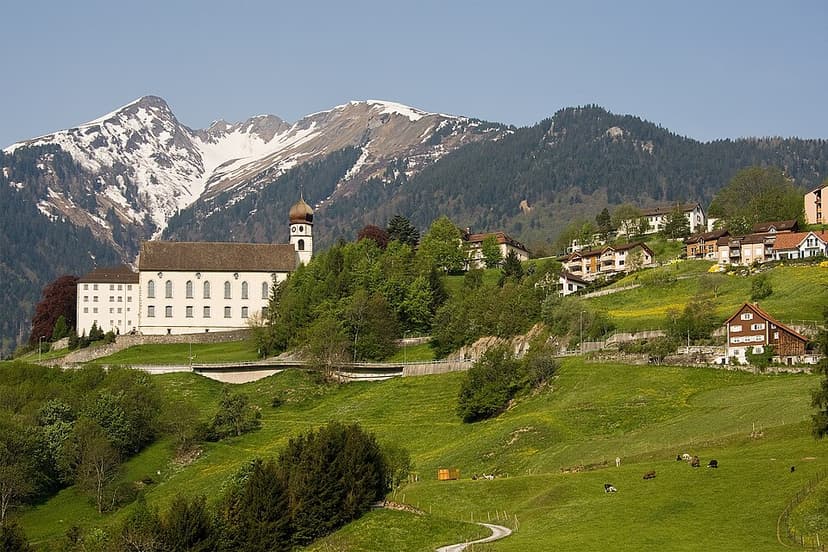
Pfäfers Abbey
Pfäfers Abbey, also known as St. Pirminsberg, was a significant Benedictine monastery located in Pfäfers, Switzerland. Founded in the 8th century, it played a crucial role as a religious, political, and cultural center in the Chur–Raetian region, controlling important trade routes and establishing numerous parishes. Despite periods of foreign control and internal struggles, it rebuilt in the Baroque style in the 17th century before ultimately being secularized in the 19th century and its buildings repurposed.