
Pfäfers Abbey
Benedictine·Switzerland·Secularized (buildings now a psychiatric hospital)·8th century
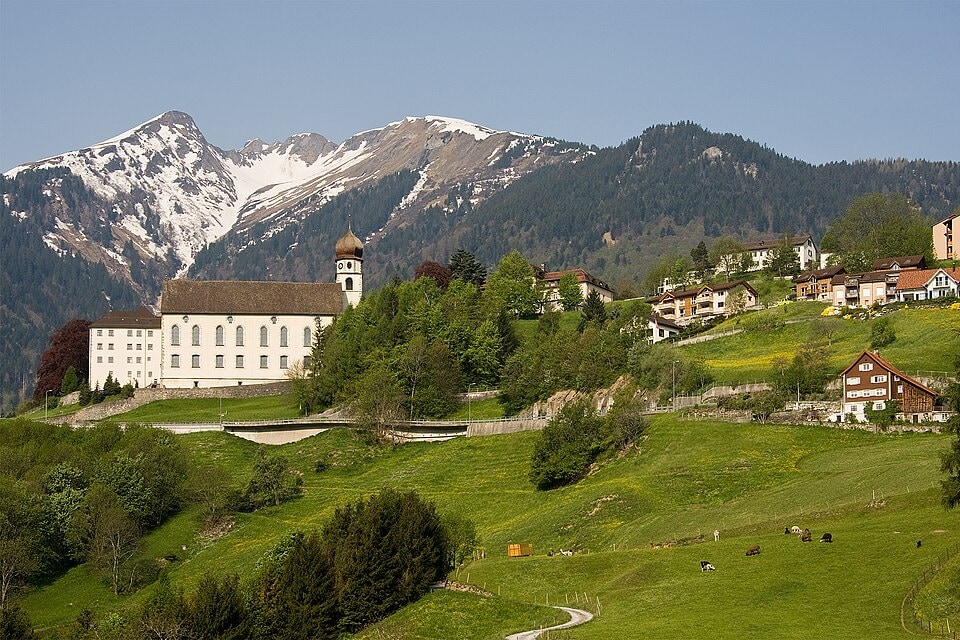
Pfäfers Abbey, also known as St. Pirminsberg, was a significant Benedictine monastery located in Pfäfers, Switzerland. Founded in the 8th century, it played a crucial role as a religious, political, and cultural center in the Chur–Raetian region, controlling important trade routes and establishing numerous parishes. Despite periods of foreign control and internal struggles, it rebuilt in the Baroque style in the 17th century before ultimately being secularized in the 19th century and its buildings repurposed.
Key Facts
- ›Founded in 731 by Reichenau Abbey, with the first monks originating from Reichenau.
- ›Considered the most important religious center in Chur-Raetia after the bishop's seat of Chur.
- ›Controlled the important route through the Kunkels Pass to Italy.
- ›Rebuilt in the Baroque style in the late 17th century after a fire destroyed the medieval structure.
- ›Secularized in 1838, with its buildings later becoming a psychiatric hospital.
- ›Produced three significant Chur-Raetian manuscripts: Liber Aureus, Liber viventium, and Vidimus Heider.
Baroque
Liber Aureus, Liber Viventium, Vidimus Heider, St. Pirminsberg Psychiatric Hospital
St. Pirminsberg, Monasterium Fabariense
Saint Pirmin, Hermann of Reichenau, Lothair I, Solomon Iii, Bishop of Constance, Otto I, Holy Roman Emperor, Henry Iv, Henry V, Pope Paschal Ii, Otto Iv, Holy Roman Emperor, Abbot Rudolf, John Heider, Justus Zink, Boniface I Tschupp, Ambrosius MüLler, Johann Jakob Scheuchzer, Benedict Bochsler, Plazidus Pfister, Pope Gregory Xvi, Konrad Von Ritter, Nicolò Rusca
- Founded From Reichenau Abbey In 731.
- First Documentary Mention In 762.
- Granted Rights of Free Abbot Election In 840 and Ecclesiastical Immunity In 861.
- Subject To Disputes Over Protectorship Between Abbey of St. Gall and Bishop of Chur .
- Confirmed Right of Free Abbot Election By Otto I In 949.
- Fell Under Foreign Control During the Investiture Controversy .
- Vogtei Transferred To Barony of Sax In 1208, Bought Back In 1257.
- Vogtei Later Passed To Counts of Werdenberg-Sargans and Werdenberg-Heiligenberg.
- Became A Swiss Protectorate In Condominium After Acquisition of Sargans.
- Caught In Turmoil of Swabian War and Protestant Reformation.
- Medieval Monastery and Church Destroyed By Fire In 1665.
- Rebuilt In Baroque Style, Completed In 1694.
- Controversy Over Abbot Election In 1734 Due To Forgery of Royal Privileges.
- Revolt of Monastery's Subjects Crushed In 1794.
- Abolished and Partially Destroyed During French Revolutionary Wars In 1798.
- Formally Restored In 1803.
- Secularized In 1838 By the Canton of St. Gallen.
- Buildings Became St. Pirminsberg Psychiatric Hospital In 1845.
About Pfäfers Abbey
Pfäfers Abbey: A Benedictine Foundation in the Swiss Alps
Pfäfers Abbey, also known as St. Pirminsberg, was a historically significant Benedictine monastery situated in Pfäfers, near Bad Ragaz, in the canton of St. Gallen, Switzerland. Its strategic location at the junction of the Tamina and Rhine valleys positioned it as a vital religious, political, and cultural hub for the Chur–Raetian region.
Founding and Early Influence
According to historical chronicles, Pfäfers Abbey was founded in 731 from Reichenau Abbey, with its first monks originating from Reichenau. The founding legend is associated with the itinerant bishop Saint Pirmin. The monastery quickly established itself as a major religious center, second only to the bishop's seat of Chur in the region.
Pfäfers Abbey controlled the crucial Kunkels Pass route, connecting to passes into Italy, and exerted substantial influence across eastern Switzerland and beyond, reaching into what is now Baden-Württemberg, Val Bregaglia, Vinschgau, and the County of Tyrol. The abbey was instrumental in the founding of many parishes in the 9th and 10th centuries. Emperors Lothair I and Otto I, among others, granted and confirmed rights to the monastery, including the freedom to elect its abbot and ecclesiastical immunity.
Medieval and Early Modern Challenges
Throughout the Middle Ages, Pfäfers Abbey remained a prominent intellectual center, producing three important Chur-Raetian manuscripts: the Liber Aureus (a primary source for the abbey's history), the Liber viventium (a memorial book), and the Vidimus Heider (a cartulary). The abbey also navigated complex political landscapes, dealing with various protectorships (Vogtei) held by noble families and later by the Swiss Confederacy. These periods often involved the monks buying back their freedom and rights.
Rebuilding and Secularization
A devastating fire in 1665 destroyed the medieval monastery and church. The abbey was subsequently rebuilt in the Baroque style, with construction beginning in 1672 and the new abbey church consecrated in 1694. Despite financial difficulties and external political pressures, including involvement in the Swabian War and the Reformation, the abbey persevered.
However, the 18th century brought further challenges, including controversies over abbot elections and the identification of forged imperial and papal documents. In 1798, during the French Revolutionary Wars, the abbey was abolished and partially destroyed. Although it was formally restored in 1803, financial struggles led the last abbot, Plazidus Pfister, to request secularization. This was acceded to in 1838, and the Great Council of the canton of St. Gallen declared the monastery secularized, transferring its assets. The former abbey buildings were later transformed into the cantonal asylum of St. Pirminsberg, which today operates as the St Pirminsberg Psychiatric Hospital.
Source: Wikipedia ↗
Frequently Asked Questions
When was Pfäfers Abbey founded?
Pfäfers Abbey was founded in 731 by Reichenau Abbey. The first documentary mention of the abbey dates to 762.
What was the significance of Pfäfers Abbey?
Pfäfers Abbey was a vital religious, political, and cultural center in the Chur–Raetian region. It controlled important trade routes and its influence extended across eastern Switzerland and into parts of modern-day Germany and Austria.
What happened to Pfäfers Abbey after its secularization?
Following its secularization in 1838, the buildings of Pfäfers Abbey were repurposed. In 1845, they became the cantonal asylum of St. Pirminsberg, which is today known as the St Pirminsberg Psychiatric Hospital.
What architectural style is represented at Pfäfers Abbey?
The medieval monastery was destroyed by fire in 1665. It was subsequently rebuilt in the Baroque style in the late 17th century.
Are there any famous manuscripts associated with Pfäfers Abbey?
Yes, Pfäfers Abbey was the site where three of the most important Chur-Raetian manuscripts were created. These include the Liber Aureus, the Liber viventium, and the Vidimus Heider.
Related Monasteries

Disentis Abbey
Disentis Abbey is a Benedictine monastery located in the Canton of Grisons, Switzerland, around which the town of Disentis grew. Its history is marked by periods of destruction and rebuilding, with its foundation traditionally attributed to local saints but more recent research suggesting an early 8th-century origin. The abbey has played a significant role in regional history, serving as a "Reichskloster" directly answerable to the Emperor and possessing extensive landholdings.

Lucerne
Lucerne, a city in central Switzerland, developed around the Benedictine Monastery of St. Leodegar, founded around 750. It gained strategic importance as a trade route gateway and allied with neighboring cantons to form the Swiss Confederacy in 1332. The city remained predominantly Catholic during the Reformation and became a fashionable tourist destination in the 19th century, attracting notable figures like Richard Wagner and Mark Twain. Its iconic Chapel Bridge, first erected in the 14th century, is a significant historical landmark.

Rheinau Abbey
Rheinau Abbey was a significant Benedictine monastery located on an island in the Rhine River in Switzerland, founded around 778. It experienced periods of both prosperity, marked by imperial favor and architectural grandeur in the Baroque style, and hardship, including suppression during the Reformation and its eventual dissolution in 1862. After its closure, the monastic buildings were repurposed for a hospital and later a psychiatric clinic, and have stood empty since 2000.