
Remse
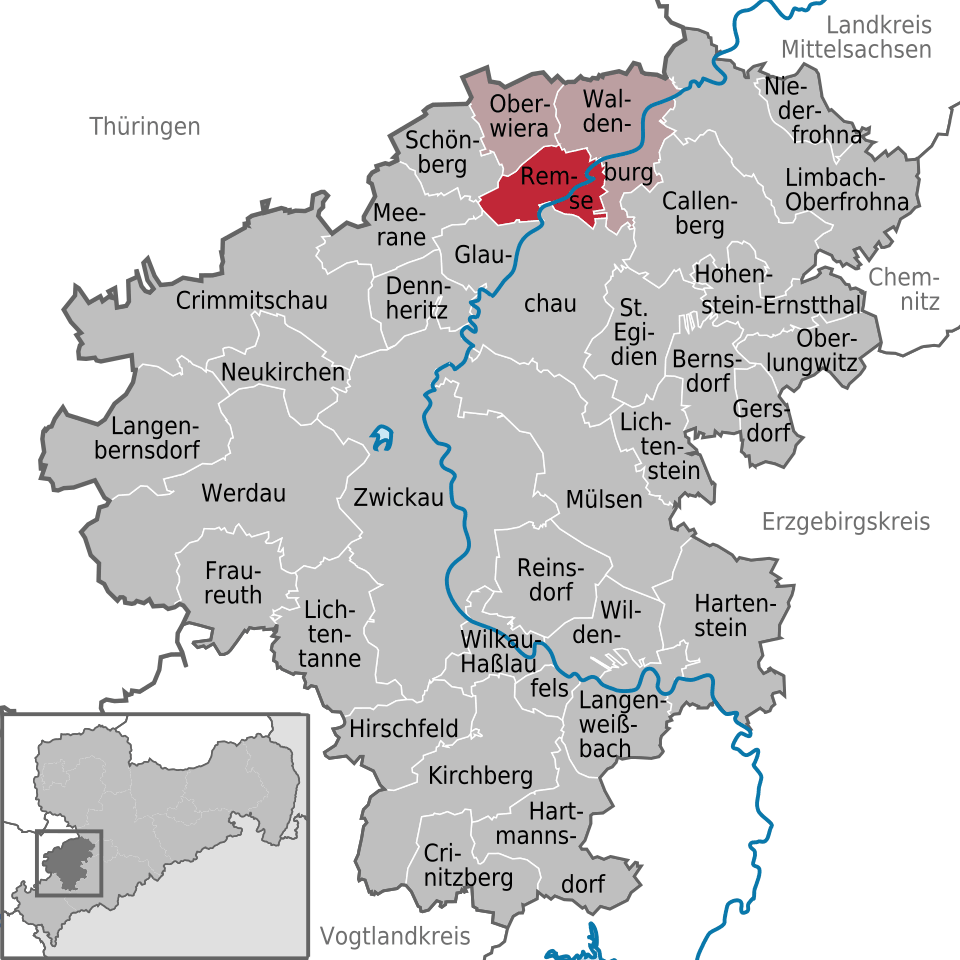
Remse is a municipality located in the Zwickau district of Saxony, Germany. Situated north of Glauchau, it comprises five villages, including the namesake Remse, and is intersected by federal highways and the A4 Autobahn. The area is known for its agricultural landscape, with the potato processing plant near Weidensdorf being its largest company.
Key Facts
- ›Remse is a municipality in the Zwickau district of Saxony, Germany.
- ›It is located approximately 2 miles north of the city of Glauchau.
- ›The municipality consists of five villages: Remse, Weidensdorf, Kleinchursdorf, Kertzsch, and Oertelshain.
- ›Remse is intersected by two federal highways and has access to the A4 Autobahn.
- ›The largest company in Remse is a potato processing plant located near Weidensdorf.
Potato Processing Plant Near Weidensdorf
About Remse
Overview
Remse is a municipality located in the Zwickau district of Saxony, Germany. It is situated a short distance, approximately two miles, north of the city of Glauchau. The municipality is characterized by its collection of villages and its integration into the regional transportation network.
Geography and Structure
The municipality of Remse is comprised of five distinct villages: Remse, Weidensdorf, Kleinchursdorf, Kertzsch, and Oertelshain. This decentralized structure is typical of many rural municipalities in the region. Remse benefits from its connectivity, with two federal highways traversing the area. Furthermore, access to the federal Autobahn A4 is readily available from the southern part of the municipality, facilitating broader transportation links.
Economy
Economically, Remse is notable for its largest company, a potato processing plant situated near the village of Weidensdorf. This facility represents a significant presence within the local economy, likely contributing to employment and regional agricultural processing.
Source: Wikipedia ↗
Frequently Asked Questions
Where is Remse located?
Remse is a municipality situated in the Zwickau district of Saxony, Germany. It lies approximately two miles north of the city of Glauchau.
What villages make up the municipality of Remse?
The municipality of Remse is comprised of five distinct villages. These include the eponymous village of Remse itself, along with Weidensdorf, Kleinchursdorf, Kertzsch, and Oertelshain.
What is the main economic activity or largest company in Remse?
The largest company within the municipality of Remse is a potato processing plant. This significant industrial facility is located near the village of Weidensdorf.
How is Remse connected by transportation infrastructure?
Remse is well-connected by road networks, with two federal highways crossing through the municipality. Additionally, the federal Autobahn A4 is accessible from the southern part of the town.
Related Monasteries
Dahlem
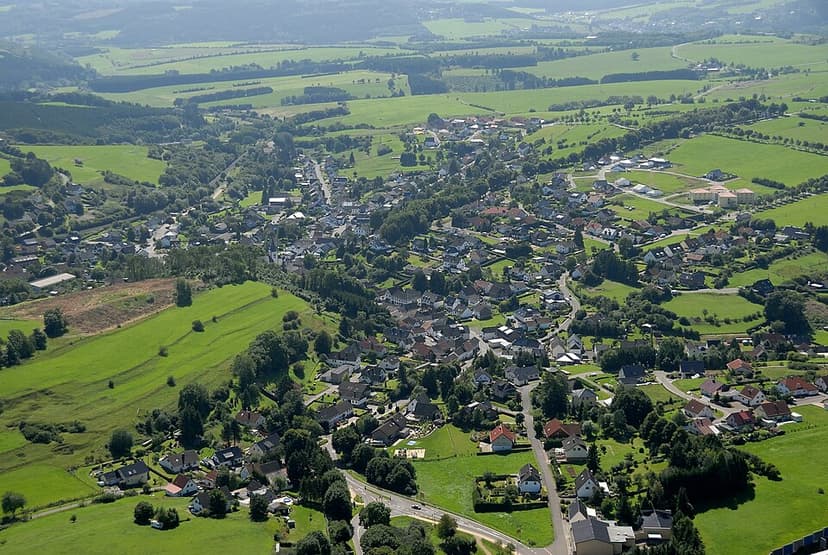
Dahlem is a municipality situated in the district of Euskirchen, within the German state of North Rhine-Westphalia. It is distinguished by having the lowest population density and the smallest population among all municipalities in the state. Located in the Eifel hills, it encompasses the small medieval town of Kronenburg and lies within the High Fens – Eifel Nature Park.

Eschweiler
Eschweiler is a German municipality located in the district of Aachen, North Rhine-Westphalia, situated on the river Inde. Historically, it has roots dating back to Celtic and Roman times, with its first mention by Einhard in 828. The town's development was significantly shaped by coal mining, industrialization, and its administrative affiliations, first with the Duchy of Jülich, then France, and finally Prussia, before becoming part of modern Germany. Eschweiler is recognized for its rich mining history, carnival traditions, and several historical castles and churches.
Gramzow
Gramzow is a municipality located in the Uckermark district of Brandenburg, Germany. While historical details are limited in available records, its significance lies in its geographical placement within the Uckermark region. The municipality's current status and defining characteristics are primarily administrative and local, with no specific monastic traditions or founding dates readily documented.