
Regina Coeli Monastery
Catholic·United States·repurposed building (formerly monastery, now addictions rehabilitation facility)·20th century
Regina Coeli Monastery, originally established in Davenport, Iowa, by Discalced Carmelite nuns in 1911, later relocated to Bettendorf, Iowa, in 1916. The monastery was designed by Arthur Ebeling, blending Mediterranean architectural motifs with modern American construction. While the Discalced Carmelite community moved to Eldridge, Iowa, in 1975, the historic Bettendorf building has served various purposes, including an Evangelical Christian Church, a Franciscan monastery, a hotel, and currently houses The Abbey Center, an addictions rehabilitation facility.
Key Facts
- ›Founded in Davenport, Iowa, in 1911 by Discalced Carmelite nuns.
- ›Relocated to Bettendorf, Iowa, in 1916.
- ›Designed by architect Arthur Ebeling, incorporating Romanesque, Mission, and Gothic Revival styles.
- ›Listed on the National Register of Historic Places since 1994.
- ›Currently houses the Abbey Center, an addictions rehabilitation facility.
- ›The Discalced Carmelite nuns moved to a new monastery in Eldridge, Iowa, in 1975.
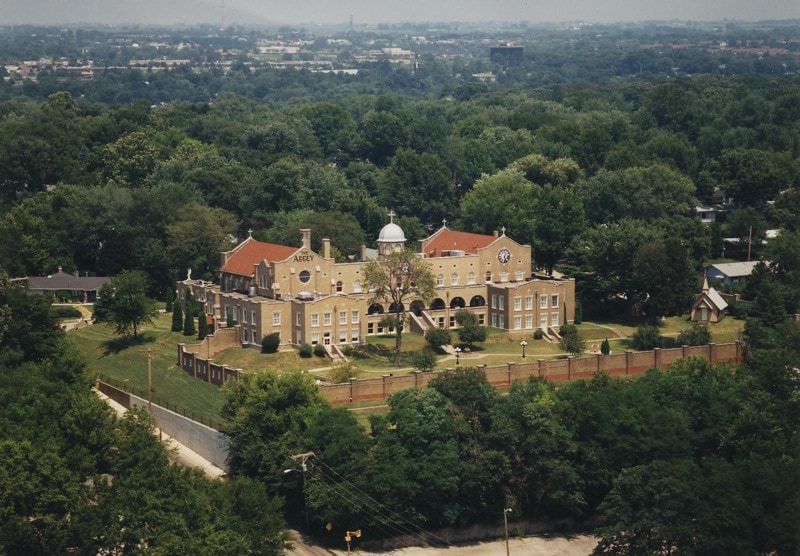
Italian Romanesque, Mission Style, Gothic Revival
- Pater Noster Chapel
- Double Cruciform Building
- Arcade On South Elevation
- Cupola and Dome
- Stepped and Sloping Parapet
- Rose Window
- 10-Foot Cloister Wall With Stations of the Cross
Davenport Carmel, the Abbey, St. Francis Monastery
Mother Clare of the Blessed Sacrament, Mother Aloysius of Our Lady of Good Counsel, Sister Gabriel of Divine Providence, Sister Gertrude of the Sacred Heart, Joseph Nagle, Rev. Garrett Nagle, James Cardinal Gibbons, Bishop James Davis, Pius Mohr, Arthur Ebeling, Mother Teresa Seelbach, Sister Hilda Ammann, Mother Paula Doersching, Mother Grace Meade, Sister Joan Meyer, Sister Elizabeth Kinsella, Sister Ann Mezer, Mother Agnes Dwight, Sister Michael Skelley, Sister Magdalen Heun, Sister Raphael Baker, Sister Marie Schuman, Sister Clare Lafferty
- Arrival of Discalced Carmelite Nuns In Davenport
- Establishment of the Davenport Carmel
- Dedication of Pater Noster Chapel
- Relocation To Bettendorf and Renaming To Regina Coeli
- Consecration of Monastery Bells
- Ku Klux Klan Demonstration Near the Monastery
- Establishment of New Carmelite Foundations
- Move To Eldridge, Iowa
- Conversion To the Abbey Center
About Regina Coeli Monastery
Regina Coeli Monastery is the historic name given to a former monastic building in Bettendorf, Iowa, originally constructed for the Discalced Carmelite nuns. The community's presence in the region began in Davenport, Iowa, in 1911, established by Mother Clare of the Blessed Sacrament and other nuns arriving from Baltimore. Their initial site featured a chapel built in the Late Gothic Revival style, dedicated as Pater Noster Chapel.
Seeking a more suitable location for contemplative life, the community relocated to a new, larger monastery in Bettendorf in 1916, a building designed by architect Arthur Ebeling. This new structure, named Regina Coeli Monastery, artfully blended Mediterranean architectural influences, such as Romanesque and Mission styles, with modern construction. The building itself is a double cruciform structure of gold mottled brick and Bedford limestone, featuring a central dome.
While the Discalced Carmelite nuns operated from this Bettendorf site, they also established several new foundations in other states. By the 1970s, due to declining numbers and the inability to maintain the large building, the community moved to a more modest facility in Eldridge, Iowa, in 1975. The original Regina Coeli Monastery building in Bettendorf has since been sold and repurposed several times, notably serving as a hotel before becoming its current function as The Abbey Center, an addictions rehabilitation facility. The building was recognized for its historical significance and listed on the National Register of Historic Places in 1994.
Source: Wikipedia ↗
Frequently Asked Questions
When was Regina Coeli Monastery founded?
The Discalced Carmelite nuns first arrived in Davenport, Iowa, in November 1911, and the Carmel was officially established on November 24, 1911. The monastery later moved to Bettendorf, Iowa, in 1916.
Where is Regina Coeli Monastery located?
The historic building of Regina Coeli Monastery is located in Bettendorf, Iowa, United States. The current Discalced Carmelite community resides in Eldridge, Iowa.
What is the current use of the original Regina Coeli Monastery building?
The original building in Bettendorf, Iowa, no longer houses the Carmelite nuns. It currently serves as The Abbey Center, an addictions rehabilitation facility.
What architectural styles are present at Regina Coeli Monastery?
The architecture of Regina Coeli Monastery is a blend of styles, including Italian Romanesque influences in its arcade and cupola, Mission style in its parapets, and Gothic Revival in its chapel, designed by Arthur Ebeling.
Has the monastery always been known as Regina Coeli Monastery?
No, the monastery's name was changed to Regina Coeli when it moved to the Bettendorf location in 1916. The original Davenport Carmel was dedicated to the prophet Elijah.
Did the nuns face any challenges at the Bettendorf location?
Yes, the monastery faced hostility from the Ku Klux Klan, who erected fiery crosses nearby. However, this provocation led townspeople to defend the nuns.
Related Monasteries

Abbey of Our Lady of the Holy Trinity
The Abbey of Our Lady of the Holy Trinity was a Catholic contemplative monastery of Trappist Cistercian monks located in Huntsville, Utah. Founded in 1947 as a daughter house of the Abbey of Our Lady of Gethsemani, it was known for its enclosed religious order and its support of itself through farming and beekeeping. The abbey celebrated its final mass and closed on August 27, 2017, after its monastic community dwindled.

Blue Cloud Abbey
Blue Cloud Abbey, formally Our Lady of the Snows Abbey, was an American Benedictine monastery established in South Dakota in 1950. Founded to serve Native American communities and express monastic life more stably in the region, it grew to a peak of forty monks. The abbey closed in 2012 due to a declining and aging monastic community, with its property subsequently purchased by a Catholic non-profit to operate as a retreat center.
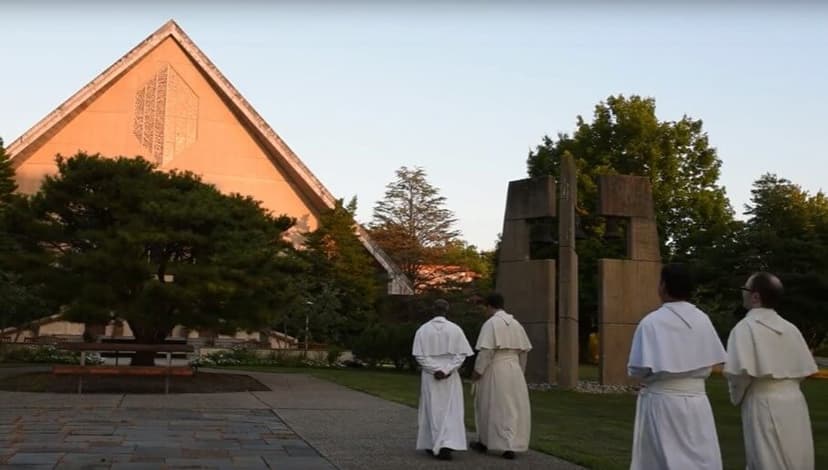
Daylesford Abbey
Daylesford Abbey is a Catholic monastery of the Norbertine order, located in Chester County, Pennsylvania. Founded in the 1950s to expand the Norbertine presence on the East Coast, it was established on the Cassatt Estate and later moved to its present 88-acre site in Paoli. The abbey is known for its solemn liturgies, adherence to the Rule of St. Augustine, and its ministries in education and social services, including a prominent role in supporting the homeless.