
Rătești Monastery
Eastern Orthodox·Romania·Deserted (since 2014)·17th century
Rătești Monastery is an Eastern Orthodox nunnery located in Buzău County, Romania. Originally founded as a monks' monastery in the 17th century, it transitioned to a community of nuns in 1760 after a period of desertion. The monastery features a church in a mixed neoclassical and local ecclesiastical style, with paintings by Nicolae Teodorescu and Gheorghe Tattarescu. It also houses a museum with historical Bibles and religious artifacts.
Key Facts
- ›Founded in 1634 by the boyar Dragomir family, initially as a monks' monastery.
- ›Became a nunnery in 1760 following desertion due to a lack of monks.
- ›The church was painted in 1843-1844 by Nicolae Teodorescu and Gheorghe Tattarescu.
- ›Features a museum opened in 1975, exhibiting historical Bibles and religious art.
- ›Has been deserted since 2014 due to a landslide, with a smaller monastery built nearby.
- ›As of 2006, approximately 75 nuns resided at the monastery.

Neoclassical, Local Ecclesiastical
- Museum with historical bibles and religious artifacts
- Church paintings by Nicolae Teodorescu and Gheorghe Tattarescu
- Water-well dating from 1911
Dragomir Family, Nicolae Teodorescu, Gheorghe Tattarescu, Dionisie Romano
- Monastery deserted in 1752 due to lack of monks
- Revived as a community of nuns in 1760
- Bell tower rebuilt and reduced in height after an earthquake in 1894
- Deserted since 2014 due to a landslide
About Rătești Monastery
Rătești Monastery is an Eastern Orthodox nunnery situated in Berca Commune, Buzău County, Romania, on the western bank of the Buzău River. Its history traces back to its founding in 1634 by the Dragomir family, initially established as a monastery for monks. However, due to a scarcity of male monastics, the monastery became deserted in 1752. It was subsequently revived in 1760 as a community of nuns, a role it maintained for many years.
Architecture and Art
The monastery church embodies a blend of neoclassical and local ecclesiastical architectural styles. Its interior walls were adorned with frescoes between 1843 and 1844 by the artists Nicolae Teodorescu and his nephew, Gheorghe Tattarescu. The bell tower, originally erected in 1854 by Dionisie Romano, underwent significant modifications in 1894, when it was redesigned and reduced in height following an earthquake.
Museum and Collections
Within the monastery compound, a museum was established in 1975, housed in a hall painted in 1859 by a monk from the nearby Ciolanu Monastery. The museum's collection includes a multi-language Bible printed in Greek, Latin, and Hebrew in 1629. Visitors can also view a fragment of the 1688 Bucharest Bible, the first edition translated into Romanian, alongside its 1988 anniversary reprint. The exhibits further feature numerous icons painted on wood and glass, as well as intricate gold and silver-thread embroidery.
Recent History
As of 2006, Rătești Monastery was home to approximately 75 nuns. However, the monastery has been deserted since 2014 due to a landslide. A smaller monastic community has since been established in a new facility located across the road.
Source: Wikipedia ↗
Frequently Asked Questions
When was Rătești Monastery founded?
The oldest known document related to Rătești Monastery is a donation deed dated May 6, 1634, indicating its establishment around that time. Initially, it was a monastery for monks.
What is the religious tradition of Rătești Monastery?
Rătești Monastery is an Eastern Orthodox nunnery. It adheres to the Eastern Orthodox Christian tradition.
What is the current status of Rătești Monastery?
The monastery has been deserted since 2014 following a landslide. A smaller monastery has since been built across the road.
What notable artworks can be found at Rătești Monastery?
The monastery church was painted between 1843 and 1844 by Nicolae Teodorescu and his nephew Gheorghe Tattarescu. The museum also displays icons and embroidery.
What can visitors see in the museum at Rătești Monastery?
The museum, opened in 1975, exhibits a multi-language Bible printed in 1629, a fragment of the first Romanian translation of the Bucharest Bible from 1688, and various icons and embroidered items.
Related Monasteries
Brâncoveni Monastery
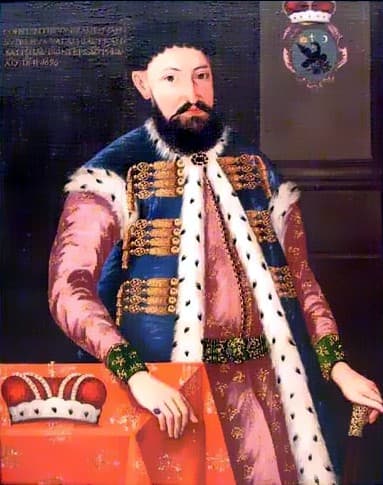
Brâncoveni Monastery is a religious site associated with the martyrdom of Prince Constantin Brâncoveanu and his sons, who were executed by the Ottoman Empire for refusing to renounce their Christian faith. The monastery, along with other significant constructions like Hurezi Monastery, is representative of the distinctive Brâncovenesc architectural style, which harmoniously blends local traditions with Neo-Byzantine and Renaissance influences. Following their martyrdom, Constantin Brâncoveanu and his family were canonized as saints by the Romanian Orthodox Church, with their feast day celebrated annually.

Ciolanu Monastery
Ciolanu Monastery is an Eastern Orthodox monastic community situated in Tisău commune, Buzău County, Romania. Founded around 1570 by the boyar Dumitru Ciolanu and the Sorescu family, it bears the name of its founder. The monastery complex includes a museum showcasing icons by Gheorghe Tattarescu and other religious artifacts.

Stavropoleos Monastery
Stavropoleos Monastery, also known as Stavropoleos Church, is an Eastern Orthodox monastery for nuns located in central Bucharest, Romania. Founded in 1724 by archimandrite Ioannikios Stratonikeas, its church is a prime example of Brâncovenesc architectural style. The monastery is renowned for its dedication to Byzantine music, housing Romania's largest collection of Byzantine music books and maintaining an active choir.