
Ramoche Temple
Ramoche Temple is a significant Buddhist monastery in Lhasa, Tibet, dating back to the seventh century. Considered the second most important temple in the city after Jokhang Temple, it has undergone multiple destructions and restorations throughout its history. The temple is known for its historical association with important statues and its role as an assembly hall for the Gyuto Order.
Key Facts
- ›Dates back to the seventh century.
- ›Considered the second most important temple in Lhasa after Jokhang Temple.
- ›Occupies an area of 4,000 square meters.
- ›The original temple was destroyed by fire and rebuilt in 1474.
- ›Served as the Assembly Hall for the Gyuto Order, housing 500 monks.
- ›Partially restored in 1986 after significant damage in 1959.

- Ten Pillars Displaying Local Relics and Symbols Near the Main Entrance
- Assembly Hall of the Gyuto Order
- Chapel With An Image of Buddha As King of the Nagas On the Second Floor
- Third Floor Sleeping Quarters Reserved For the Dalai Lama
XiǎOzhāO Sì
Bhrikuti
Destruction By Fire, Reconstruction In 1474, Damage During China's Cultural Revolution, Destruction In 1959 During Lhasa Uprising, Restoration In 1986
About Ramoche Temple
Ramoche Temple is a significant Buddhist monastery located in Lhasa, Tibet Autonomous Region, China. Its origins trace back to the seventh century, establishing it as one of the oldest and most important religious sites in the city, second only to the Jokhang Temple in prominence. The temple occupies an area of approximately 4,000 square meters and is situated in the northwestern part of Lhasa, strategically positioned east of the Potala Palace and north of the Jokhang Temple.
History and Significance
The history of Ramoche Temple is marked by periods of destruction and subsequent rebuilding. The original temple structure was lost to fire, leading to its reconstruction in 1474 as a three-storied building. Following this reconstruction, it became the Assembly Hall for the Gyuto Order, also known as the Upper Tantric College of Lhasa, and was home to a community of around 500 monks. This role underscore its importance as a center for tantric Buddhist studies and practice.
Destruction and Restoration
Ramoche Temple faced significant destruction in 1959 during the Lhasa uprising against Chinese occupation. The temple was gutted by fire, and a valuable bronze statue of the Buddha, brought to Lhasa by the Nepalese queen Bhrikuti, disappeared. Fortunately, the lower part of the statue was reportedly found in a Lhasa rubbish tip in 1983, with the upper half discovered in Beijing. Through the dedicated efforts of Ri 'bur sprul sku, these parts were rejoined at Ramoche Temple, and the site itself underwent partial restoration in 1986. A major restoration effort in the same year resulted in the temple regaining its three-story structure. Modern features include ten pillars near the entrance displaying local relics and symbols, a scripture hall and Buddha palace on the first floor, residential areas and a chapel on the second, and sleeping quarters reserved for the Dalai Lama on the third floor.
Source: Wikipedia ↗
Frequently Asked Questions
When was Ramoche Temple founded?
Ramoche Temple dates back to the seventh century. It has a long and complex history, including periods of destruction and rebuilding.
What is the significance of Ramoche Temple in Lhasa?
Ramoche Temple is considered the second most important temple in Lhasa, following only the Jokhang Temple. It has historically served as a significant religious center and assembly hall.
Has Ramoche Temple always been in its current form?
No, the temple has a history of destruction and restoration. The original structure was destroyed by fire and a new three-storied building was constructed in 1474. It was further damaged in 1959 and partially restored in 1986.
What happened to the Buddha statue at Ramoche Temple?
A small bronze statue of the Buddha, brought by Queen Bhrikuti, was badly damaged during China's Cultural Revolution. Its parts were later found and rejoined in the Ramoche Temple during its restoration.
What is the current status of Ramoche Temple?
Ramoche Temple underwent a major restoration in 1986 and currently features three stories. It remains an active religious site and a significant landmark in Lhasa.
Related Monasteries
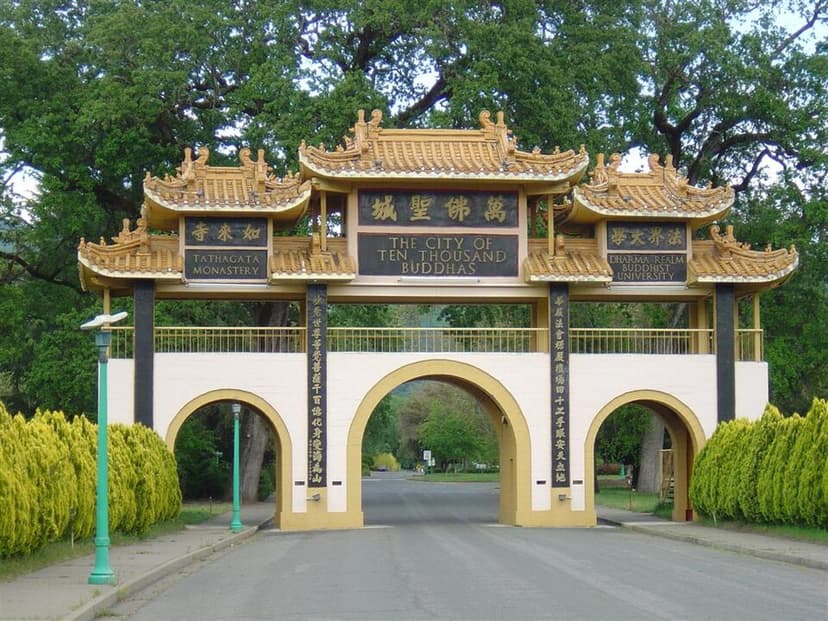
City of Ten Thousand Buddhas
The City of Ten Thousand Buddhas is a significant international Buddhist community and monastery in Talmage, California, founded by the influential figure Hsuan Hua. It was established as one of the first Chan Buddhist temples in the United States and is recognized for its strict adherence to traditional Buddhist monastic codes, including the vinaya. The community encompasses educational institutions, residential facilities, and an organic farm, serving as a major center for propagating Buddhist teachings in the Western Hemisphere.
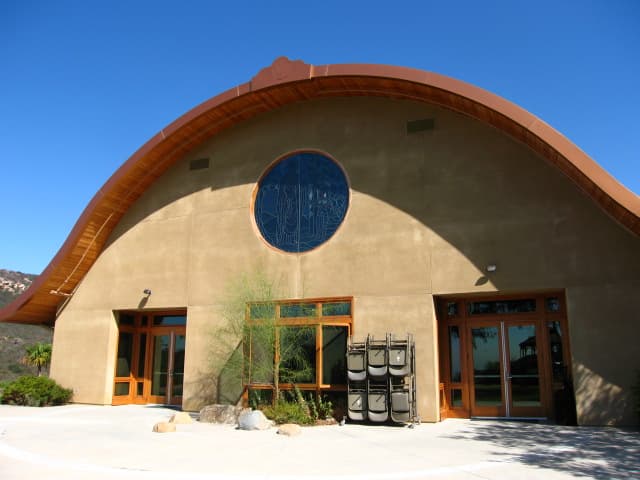
Deer Park Monastery
Deer Park Monastery is a 400-acre Buddhist monastery located in Escondido, California, founded in July 2000 by Thích Nhất Hạnh. It adheres to the Vietnamese Thiền tradition within the Plum Village Tradition and serves as a vibrant center for monastic practice and public mindfulness events. The monastery is organized into two hamlets, Solidity Hamlet for monks and laymen, and Clarity Hamlet for nuns and laywomen, fostering a growing community of ordained and lay practitioners.

Empty Cloud Monastery
Empty Cloud Monastery, established in 2019 in West Orange, New Jersey, is a gender-inclusive, non-sectarian Buddhist monastery. Co-founded by Ayyā Somā and Bhante Suddhāso, it operates under the non-profit Buddhist Insights, offering traditional Buddhist teachings free of charge. The monastery is situated on a 3-acre property that was formerly a Catholic monastery.