
Prohor Pčinjski Monastery
Prohor Pčinjski Monastery is an 11th-century Serbian Orthodox monastery located near the border with North Macedonia. It is the second-largest Serbian Orthodox monastery complex and is renowned for its historical significance, including being the site of the first session of the Anti-fascist Assembly for the National Liberation of Macedonia (ASNOM). The monastery houses the relics of Saint Prohor of Pčinja and has undergone numerous renovations throughout its history.
Key Facts
- ›Founded in the 11th century, traditionally between 1067-1071.
- ›Second largest Serbian Orthodox monastery complex after Hilandar.
- ›Houses the relics of Saint Prohor of Pčinja.
- ›Site of the first session of the Anti-fascist Assembly for the National Liberation of Macedonia (ASNOM) in 1944.
- ›Declared a Monument of Culture of Exceptional Importance in 1979.
- ›Includes a theological school and iconography training.

Relics of Saint Prohor of PčInja, Frescoes, Theological School, Iconography Training, King's Residence
Manastir Prepodobnog Prohora PčInjskog
Saint Prohor of PčInja, Romanus Iv, King Milutin of Serbia, King Peter I of Serbia, DičO Zograf
- Founded By Emperor Romanus Iv
- Renovated and Frescoes Painted Under King Milutin
- Destroyed By Ottomans After Battle of Kosovo, Later Rebuilt
- Plundered and Abandoned In 1817
- Burned In 1841
- Rebuilt and Expanded In the Mid-19th Century
- First Session of Asnom Held In 1944
- Declared Monument of Culture of Exceptional Importance In 1979
- Part of Roof Burnt Down In 2014
About Prohor Pčinjski Monastery
The Monastery of Venerable Prohor of Pčinja, commonly known as Prohor Pčinjski Monastery, is a significant 11th-century Serbian Orthodox religious site located in the southernmost part of Serbia, near the North Macedonian border. Situated in the village of Klenike, amidst the slopes of Mount Kozjak and beside the Pčinja River, it stands as the second-largest Serbian Orthodox monastery complex, surpassed only by Hilandar on Mount Athos.
History and Significance
Tradition holds that the monastery was founded between 1067 and 1071 by Byzantine Emperor Romanus IV, who was inspired by Saint Prohor of Pčinja's prophecy of his ascension to the throne. The relics of Saint Prohor are preserved within the monastery. The monastery has a rich and often tumultuous history, marked by periods of destruction and reconstruction. A significant renovation in the early 14th century saw the painting of new frescoes under King Milutin of Serbia. Following the Battle of Kosovo in 1389, the monastery was destroyed by the Ottomans but subsequently rebuilt. It faced further hardship in the 17th and 18th centuries, including being plundered and abandoned in 1817. A fire in 1841 destroyed the monastery and a relic of St. Prohor's hand. Despite these challenges, new buildings were erected in the mid-19th century, with further reworking of murals and expansion occurring in the late 19th century. King Peter I of Serbia financed a new residential building in 1913. The monastery has also been the site of important historical events, most notably hosting the first session of the Anti-fascist Assembly for the National Liberation of Macedonia (ASNOM) on August 2, 1944, where a Macedonian state was declared within Yugoslavia.
Modern Era and Features
Recent renovations have included the addition of residential buildings, a watermill, and a mini hydro power plant, with the King's residence undergoing renovation starting in 2013. An underground room from the Early Middle Ages was discovered in 2010, though further archaeological examination is pending due to funding limitations. For most of its history, Prohor Pčinjski operated as a male monastery, with a brief period as a female monastery from 1987 to 1992. In 1979, it was designated a Monument of Culture of Exceptional Importance and is protected by the state. The monastery currently houses a theological school and offers training in iconography. Despite a partial roof fire in 2014, efforts were made by the state and community to fund its reconstruction. A part of the roof was completely burnt down in 2014, with reconstruction efforts initiated in 2015.
Source: Wikipedia ↗
Frequently Asked Questions
When was Prohor Pčinjski Monastery founded?
According to tradition, the monastery was founded in the 11th century, specifically between 1067 and 1071. This founding is attributed to the Byzantine emperor Romanus IV.
What is the significance of Prohor Pčinjski Monastery?
The monastery is historically significant as the location of the first session of the Anti-fascist Assembly for the National Liberation of Macedonia (ASNOM) in 1944, where a Macedonian state within Yugoslavia was declared. It also holds the relics of Saint Prohor of Pčinja.
What religious tradition does Prohor Pčinjski Monastery belong to?
Prohor Pčinjski Monastery is a Serbian Orthodox monastery, adhering to that religious tradition.
Is Prohor Pčinjski Monastery still active?
Yes, the monastery is an active monastic community, although it has experienced periods of abandonment and rebuilding. It also houses a theological school and teaches iconography.
What historical events took place at Prohor Pčinjski Monastery?
A key historical event was the first session of the Anti-fascist Assembly for the National Liberation of Macedonia (ASNOM) held there on August 2, 1944. The monastery was also destroyed by the Ottomans after the Battle of Kosovo and rebuilt later.
Are there any unique architectural features or notable structures at the monastery?
While specific architectural styles are not detailed, the monastery complex includes residential buildings, a watermill, and a mini hydro power plant. A major renovation in the early 14th century saw the painting of frescoes, which were later redone.
Related Monasteries

Monastery of Saint Roman
The Monastery of Saint Roman is a Serbian Orthodox monastery located in the village of Praskovče, believed to be one of the oldest in Serbia, with its establishment possibly dating back to 1010. It is recognized as a cultural monument of great importance and is named after Saint Roman Sinait, a revered miracle worker and healer whose relics are housed within the monastery. The current church structure was rebuilt in 1795 by Đorđe Pile on an older foundation.
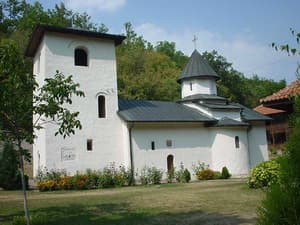
Voljavča monastery
Voljavča Monastery is a Serbian Orthodox monastery situated on the northeastern slopes of Mount Rudnik in central Serbia. Its church, dedicated to Saints Michael and Gabriel, was rebuilt in the early 15th century by nobleman Mihailo Končinović on the foundations of a 1050 church. The monastery holds significant historical importance as a refuge for Karađorđe during the First Serbian Uprising and as the site of the first meeting of the Serbian Minister Council in 1765.
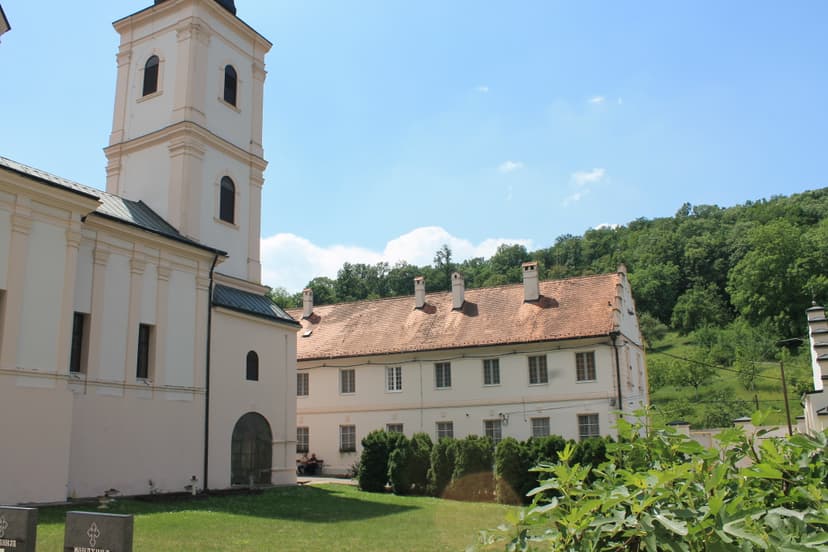
Beočin Monastery
Beočin Monastery is a Serbian Orthodox monastery situated on Fruška Gora mountain in Vojvodina, Serbia. While its exact founding date is unknown, it was first documented in 1566/1567. The monastery has undergone significant reconstruction, particularly between 1732 and 1740 for its church and in 1762 for its bell tower, and was declared a Monument of Culture of Exceptional Importance in 1990.