
Monastery of Saint Roman
The Monastery of Saint Roman is a Serbian Orthodox monastery located in the village of Praskovče, believed to be one of the oldest in Serbia, with its establishment possibly dating back to 1010. It is recognized as a cultural monument of great importance and is named after Saint Roman Sinait, a revered miracle worker and healer whose relics are housed within the monastery. The current church structure was rebuilt in 1795 by Đorđe Pile on an older foundation.
Key Facts
- ›Considered one of the oldest monasteries in Serbia, possibly founded in 1010.
- ›Named after Saint Roman Sinait, whose relics are interred on the premises.
- ›The monastery is mentioned in the Chrysovul of Emperor Basil II in 1011.
- ›The current church was rebuilt in 1795 by Đorđe Pile.
- ›Houses the tomb and relics of Saint Roman Sinait, who is venerated as a miracle worker and healer.
- ›Designated as an immovable cultural property and a cultural monument of great importance.

Tomb and Relics of Saint Roman Sinait, Hospital of Saint Roman Monastery
Manastir Sveti Roman
Saint Roman Sinait, Prince Lazar, Gregory Palamas, đOrđE Pile, Emperor Basil Ii
- Monastery Mentioned In the Chrysovul of Emperor Basil Ii .
- Second Official Mention In 1498.
- Rebuilt In 1795 By đOrđE Pile.
- Operated As the Hospital of Saint Roman Monastery During Wartime.
About Monastery of Saint Roman
The Monastery of Saint Roman is a significant Serbian Orthodox monastery situated in the village of Praskovče, within the Razanj municipality. It is recognized as an immovable cultural property and a cultural monument of great importance in Serbia.
History and Significance
The monastery is believed to be one of the oldest in Serbia, with its founding potentially dating back to 1010. It belongs to a group of monasteries established prior to the Nemanjić dynasty's rise to power. The earliest recorded mention of the monastery appears in the Chrysovul (endowment diploma) of Emperor Basil II in 1011, with a second official mention occurring in 1498. The monastery derives its name from Saint Roman Sinait (or Roman of Sinai), a monk who came to the region in 888 and is revered for his miraculous healing abilities. The tomb containing his relics is a sacred site within the monastery.
Architecture and Reconstruction
The current church structure was built by Đorđe Pile in 1795, who undertook the restoration in gratitude for being healed. This significant reconstruction was carried out on an older foundation and required a special decree from the Sultan, along with a payment of 300 golden ducats. The church features preserved paintings from 1795 in its choirs and domes, with speculation that older murals lie beneath the existing layers. A new layer of painting was added in 1831. Historically, the monastery also served as the Hospital of Saint Roman Monastery during periods of conflict.
Location
The Monastery of Saint Roman is located on the right bank of the South Morava river, adjacent to the road connecting Razanj and Kruševac. The nearest larger settlement is the village of Praskovce.
Source: Wikipedia ↗
Frequently Asked Questions
When was the Monastery of Saint Roman founded?
The monastery is believed to have been established in 1010, making it one of the oldest in Serbian territory. An endowment diploma from Emperor Basil II in 1011 provides an early mention of the monastery.
Who is Saint Roman Sinait and why is he important to the monastery?
Saint Roman Sinait, also known as Roman of Sinai, was a monk who lived in the region and is now a declared saint. The monastery is named in his honor, and his tomb with relics is preserved there. He is widely revered as a miracle worker and healer.
What is the history of the current church building?
The present-day church was erected by Đorđe Pile in 1795 on an older foundation. This rebuilding was done in gratitude for a healing, and it required a special decree from the Sultan and a significant payment.
What is the significance of the monastery's cultural status?
The Monastery of Saint Roman is recognized as an immovable cultural property and is designated as a cultural monument of great importance. This status highlights its historical and artistic value to Serbia.
Where is the Monastery of Saint Roman located?
The monastery is situated in the village of Praskovče, within the Razanj municipality, on the right bank of the South Morava river. It is located near the road connecting Razanj and Kruševac.
Related Monasteries

Prohor Pčinjski Monastery
Prohor Pčinjski Monastery is an 11th-century Serbian Orthodox monastery located near the border with North Macedonia. It is the second-largest Serbian Orthodox monastery complex and is renowned for its historical significance, including being the site of the first session of the Anti-fascist Assembly for the National Liberation of Macedonia (ASNOM). The monastery houses the relics of Saint Prohor of Pčinja and has undergone numerous renovations throughout its history.
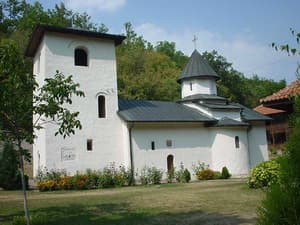
Voljavča monastery
Voljavča Monastery is a Serbian Orthodox monastery situated on the northeastern slopes of Mount Rudnik in central Serbia. Its church, dedicated to Saints Michael and Gabriel, was rebuilt in the early 15th century by nobleman Mihailo Končinović on the foundations of a 1050 church. The monastery holds significant historical importance as a refuge for Karađorđe during the First Serbian Uprising and as the site of the first meeting of the Serbian Minister Council in 1765.
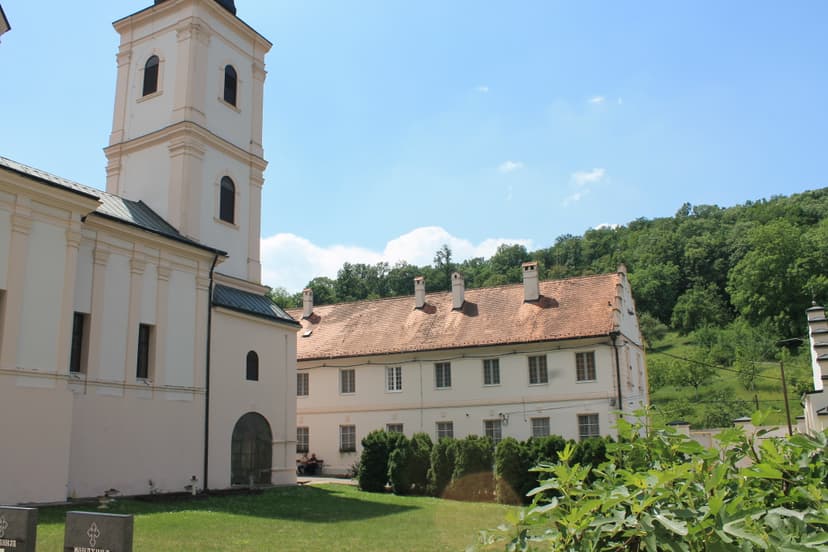
Beočin Monastery
Beočin Monastery is a Serbian Orthodox monastery situated on Fruška Gora mountain in Vojvodina, Serbia. While its exact founding date is unknown, it was first documented in 1566/1567. The monastery has undergone significant reconstruction, particularly between 1732 and 1740 for its church and in 1762 for its bell tower, and was declared a Monument of Culture of Exceptional Importance in 1990.