
Preetz Priory
Preetz Priory, originally founded as a Benedictine nunnery in 1211, is located in the town of Preetz, Schleswig-Holstein, Germany. Its founding is attributed to Graf Albrecht of Orlamünde, inspired by a mystical vision of a cross between the antlers of a deer. After being suppressed during the Protestant Reformation, it was re-established as an aristocratic Lutheran women's convent and continues to operate in this capacity today as a collegiate residence for ladies.
Key Facts
- ›Founded in 1211 by Graf Albrecht of Orlamünde.
- ›Originally a Benedictine nunnery.
- ›Re-established as an aristocratic Lutheran women's convent after the Reformation.
- ›Today operates as a collegiate residence for ladies (Stift).
- ›The founding vision involved a deer with a cross between its antlers.

Collegiate Residence For Ladies
Kloster Preetz
Graf Albrecht of OrlamüNde
Founding of the Nunnery, Suppression During the Protestant Reformation
About Preetz Priory
Preetz Priory, known in German as Kloster Preetz, is a significant historical religious institution located in the town of Preetz, Schleswig-Holstein, Germany. Its origins trace back to 1211 when it was founded as a Benedictine nunnery by Graf Albrecht of Orlamünde. The inspiration for its establishment stemmed from a profound mystical experience Graf Albrecht had while hunting, wherein he witnessed a vision of a gleaming cross between the antlers of a deer. He interpreted this as a divine sign, designating the location as the "Field of Mary" (Marienfelde) and subsequently founding the nunnery.
History and Transformation
The priory's early history was shaped by its Benedictine roots. However, the religious landscape of the region dramatically shifted during the 16th century with the advent of the Protestant Reformation. Like many religious houses, Preetz Priory was suppressed during this period. It was not abandoned but rather transformed, becoming an aristocratic Lutheran women's convent. This new identity aligned it with the Schleswig-Holstein knighthood, and it has continued to function in this capacity.
Modern Role
Today, Preetz Priory continues its long-standing tradition of providing a home and community for women. It operates as a collegiate residence for ladies, known as a Stift. This role reflects its historical evolution from a medieval Benedictine nunnery to a Lutheran institution for noblewomen, maintaining its presence and heritage within the town of Preetz.
Source: Wikipedia ↗
Frequently Asked Questions
When was Preetz Priory founded?
Preetz Priory was founded in 1211. The founding was initiated by Graf Albrecht of Orlamünde, who was inspired by a mystical vision.
What was the original religious tradition of Preetz Priory?
The priory was originally established as a Benedictine nunnery. This tradition guided its early operations and community.
What happened to Preetz Priory during the Protestant Reformation?
During the 16th century, Preetz Priory was suppressed due to the Protestant Reformation. It was later re-established in a different capacity.
What is the current function of Preetz Priory?
Today, Preetz Priory operates as a collegiate residence for ladies, known as a Stift. It continues its tradition as a home for aristocratic women.
What inspired the founding of Preetz Priory?
Graf Albrecht of Orlamünde founded the nunnery after experiencing a mystical vision of a gleaming cross between the antlers of a deer he was hunting. He believed the site of the vision was holy and named it the Field of Mary.
Related Monasteries

Dobbertin Abbey
Dobbertin Abbey, founded around 1220, began as a Benedictine monastery before transitioning to a nunnery and later a Lutheran collegiate foundation for noblewomen. Situated on a spit of land in the Dobbertiner See, it is notable for its unique two-towered church. After secularization and periods as a youth hostel and military post, it now serves as a care home for the physically handicapped, offering workshops, tours, and community services, with ongoing restoration efforts.
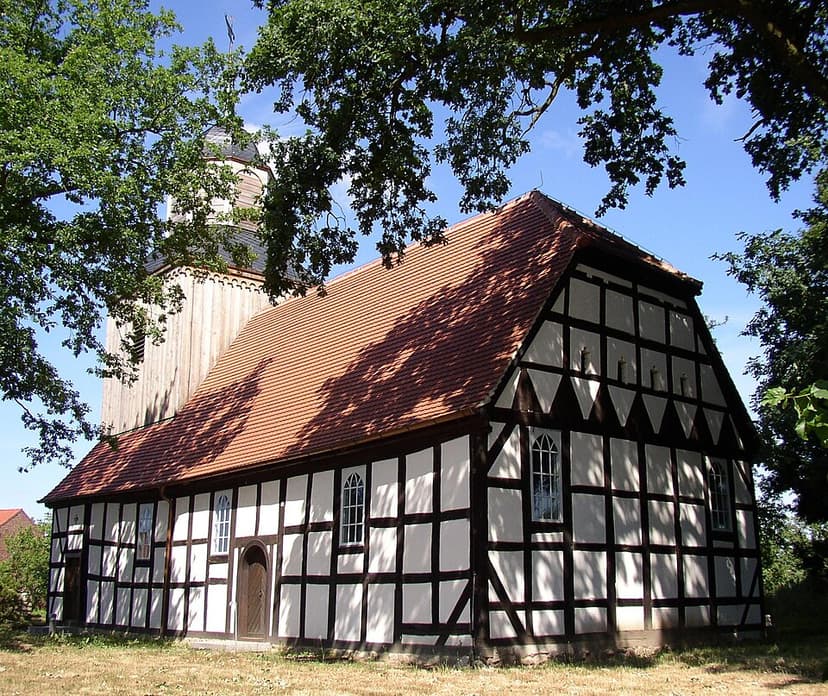
Heiligengrabe
Heiligengrabe is a municipality in Brandenburg, Germany, known for its historical abbey, which was founded as a Cistercian nunnery in 1289. The abbey gained prominence due to a relic of a Bleeding Host, attracting pilgrims and considerable wealth through donations. Following the Reformation, it transitioned into a Lutheran women's convent, maintaining its role of providing for unmarried noble women.

Itzehoe Abbey
Itzehoe Abbey was originally founded as a Cistercian monastery in the 1230s, later relocating to Itzehoe in 1263. Following the Reformation, it was transformed in 1541 into a noble Protestant ladies' convent, a status it maintains today. The convent continues to own significant land and forest properties, and its historical courtyard once formed an independent rural municipality within the city.