
Poganovo Monastery
Poganovo Monastery is a Serbian Orthodox monastery located in the gorges of the river Jerma, near the village of Poganovo in Serbia. Declared a Monument of Culture of Great Importance in 1979, it is protected by the state. The monastery is known for its frescoes, with inscriptions in Church Slavonic and some sources attributing their creation to masters from Northern Greece.
Key Facts
- ›Serbian Orthodox monastery situated in the gorges of the river Jerma.
- ›Located near the village of Poganovo, municipality of Dimitrovgrad, Serbia.
- ›Frescoes are noted, with inscriptions in Church Slavonic (Serbian Redaction).
- ›Attributed to masters from Northern Greece by some sources.
- ›Declared a Monument of Culture of Great Importance in 1979.
- ›Protected by the state.

Frescoes With Church Slavonic Inscriptions, Location In the Gorges of the River Jerma
Manastir Poganovo, манастир поганово
About Poganovo Monastery
Poganovo Monastery is a Serbian Orthodox monastery nestled within the scenic gorges of the river Jerma, close to the village of Poganovo in the municipality of Dimitrovgrad, Serbia. Its cultural and historical significance is recognized by its designation as a Monument of Culture of Great Importance in 1979, placing it under state protection.
Art and Architecture
The monastery is particularly noted for its frescoes. While the precise origin of the artists remains a subject of discussion, some historical accounts point to masters from Northern Greece as their creators. The inscriptions found within these frescoes are rendered in Church Slavonic, specifically the Serbian Redaction, offering insights into the linguistic and artistic exchanges of the period.
Historical Context
Details regarding the monastery's founding date and specific historical events are not extensively documented in available records. However, its status as a protected cultural monument underscores its enduring importance within Serbian heritage. The monastery continues to be an active religious site, preserving its traditions and artistic legacy.
Source: Wikipedia ↗
Frequently Asked Questions
Where is Poganovo Monastery located?
Poganovo Monastery is situated in the gorges of the river Jerma, near the village of Poganovo. It is located within the municipality of Dimitrovgrad in Serbia.
What is significant about Poganovo Monastery?
Poganovo Monastery is significant for its historical and cultural importance, particularly its frescoes. It was declared a Monument of Culture of Great Importance in 1979 and is protected by the state.
Who created the frescoes in Poganovo Monastery?
While the exact artists are not definitively known, some sources suggest that the frescoes were created by masters from Northern Greece. The inscriptions on the frescoes are in the Church Slavonic language, Serbian Redaction.
Related Monasteries

Ajdanovac Monastery
Ajdanovac Monastery is a Serbian Orthodox monastery situated in south-east Serbia on the slopes of Jastrebac. Its origins likely date to the period after the Ottoman invasion of the Balkans in 1485. After serving as a parish church, it was re-established as a monastery in 1936, following renovations in 1887.
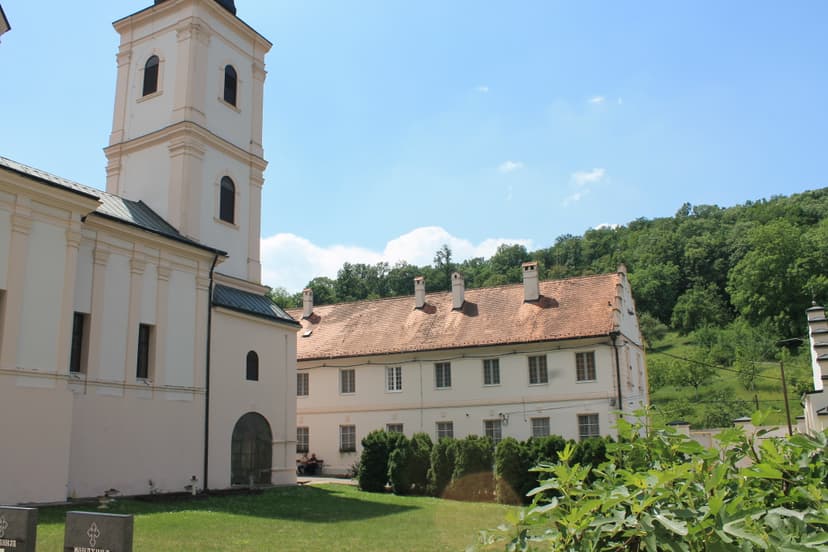
Beočin Monastery
Beočin Monastery is a Serbian Orthodox monastery situated on Fruška Gora mountain in Vojvodina, Serbia. While its exact founding date is unknown, it was first documented in 1566/1567. The monastery has undergone significant reconstruction, particularly between 1732 and 1740 for its church and in 1762 for its bell tower, and was declared a Monument of Culture of Exceptional Importance in 1990.

Berkasovo Monastery
The Berkasovo Monastery, dedicated to Saint Petka Trnovska, is a Serbian Orthodox monastery situated near the village of Berkasovo in Serbia's Srem region. Established as a monastery on August 8, 2008, its current church was founded in the latter half of the 19th century, built around a sacred spring believed to possess healing properties. Historically, the area was significant, with mentions of a fortified town in the possession of notable figures like Vuk Grgurević and Jovan Branković.