
Planinica Monastery
Planinica Monastery is a Serbian Orthodox monastery located near the village of Planinica, Serbia. While historical information is scarce, tradition attributes its endowment to King Milutin, and it was later rebuilt in the early 19th century by Karađorđe, leading to its alternative name, Karađorđe's Church. The monastery is renowned for its well-preserved 17th-century frescoes, considered a masterpiece of the era, and has been under state protection as a cultural monument since 1967.
Key Facts
- ›Belongs to the Eparchy of Niš of the Serbian Orthodox Church.
- ›Traditionally endowed by King Milutin and dedicated to the Nativity of the Blessed Virgin Mary.
- ›Rebuilt in 1811 by Karađorđe, hence known as Karađorđe's Church.
- ›Features significant fresco art from 1606, including a large Last Judgment composition.
- ›Designated a cultural monument under state protection since 1967.
- ›Served as a parish church until 1948 before becoming a monastery again.
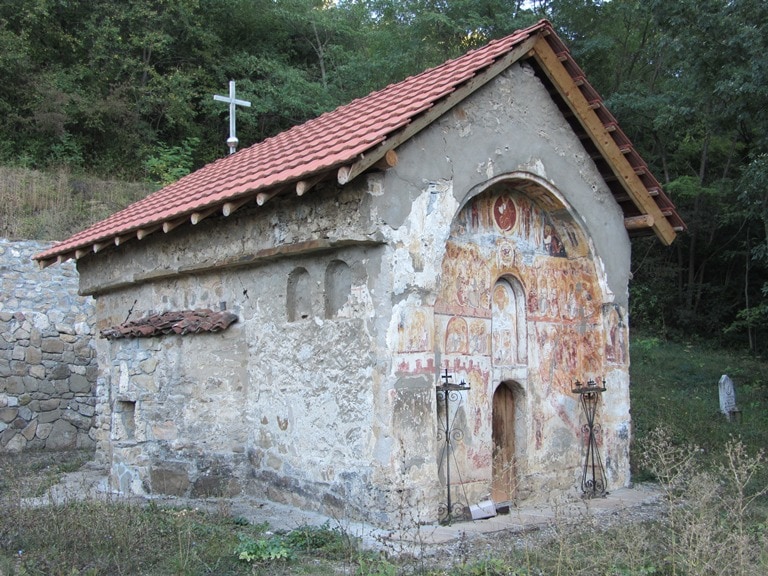
Triconchic
17th-Century Frescoes, Last Judgment Fresco, Triconchic Church Base
KarađOrđE's Church
King Milutin, KarađOrđE, Mile Radojković, Pimen Zografski
- Destruction By Krdzhalians At the End of the 18th Century
- Reconstruction By KarađOrđE In 1811
- Consecration of the Temple On December 6, 1812
- Became A Monastery Again In 1948
About Planinica Monastery
Planinica Monastery is a significant religious site belonging to the Eparchy of Niš of the Serbian Orthodox Church, located near the village of Planinica in Serbia. Situated on the right bank of the Jerma River, west of Dimitrovgrad, the monastery carries a rich, albeit sparsely documented, history.
History and Architecture
While precise details about its founding are limited, tradition holds that Planinica Monastery was endowed by King Milutin and dedicated to the Nativity of the Blessed Virgin Mary. The monastery church itself is small and features a triconchic base, dating back to the 16th century. Its artistic heart lies in the frescoes painted in 1606, which are remarkably preserved and considered a masterpiece of 17th-century fresco art. These vibrant paintings adorn all the wall surfaces and the western facade, notably including a large and striking composition of the Last Judgment. It is believed that these frescoes were created by Pimen Zografski of Sofia and his students.
The monastery's history also includes periods of destruction and rebuilding. The old monastery was reportedly destroyed by the Krdzhalians at the end of the 18th century and remained in ruins until the early 19th century. In a significant act of reconstruction, Karađorđe and his duke Mile Radojković rebuilt the monastery in 1811, a testament to their gratitude to God for the victory at Varvarin. This rebuilding is the reason why the monastery is also known as Karađorđe's Church. The temple was formally consecrated on December 6, 1812.
Later History and Status
Until 1948, the monastery served as a parish church. Following a blessing from the bishop of Niš, Jovan Ilić, it was re-established as a monastery. In recognition of its cultural and historical value, Planinica Monastery has been under state protection as a cultural monument since 1967. The monastery complex includes a ground-floor dormitory and other supporting facilities, contributing to its enduring presence as an active monastic community.
Source: Wikipedia ↗
Frequently Asked Questions
What is the history of Planinica Monastery?
Information about Planinica Monastery's early history is limited. Tradition suggests it was endowed by King Milutin. The old monastery was destroyed by Krdzhalians at the end of the 18th century and lay in ruins until it was rebuilt in 1811 by Karađorđe.
What is notable about the frescoes at Planinica Monastery?
The monastery's frescoes, painted in 1606, are largely preserved and are considered a masterpiece of 17th-century fresco art. They cover all wall surfaces and the western facade, prominently featuring a large composition of the Last Judgment.
What is the significance of Karađorđe's connection to the monastery?
Karađorđe, along with his duke Mile Radojković, rebuilt the monastery in 1811 as an expression of gratitude for the victory at Varvarin. This event led to the monastery also being known as Karađorđe's Church.
When did Planinica Monastery become a protected cultural monument?
Planinica Monastery has been under state protection as a cultural monument since 1967, recognizing its historical and artistic significance.
What is the architectural style of Planinica Monastery?
The monastery church has a triconchic base, dating from the 16th century. The complex also includes a ground-floor dormitory and other facilities.
Related Monasteries

Ajdanovac Monastery
Ajdanovac Monastery is a Serbian Orthodox monastery situated in south-east Serbia on the slopes of Jastrebac. Its origins likely date to the period after the Ottoman invasion of the Balkans in 1485. After serving as a parish church, it was re-established as a monastery in 1936, following renovations in 1887.
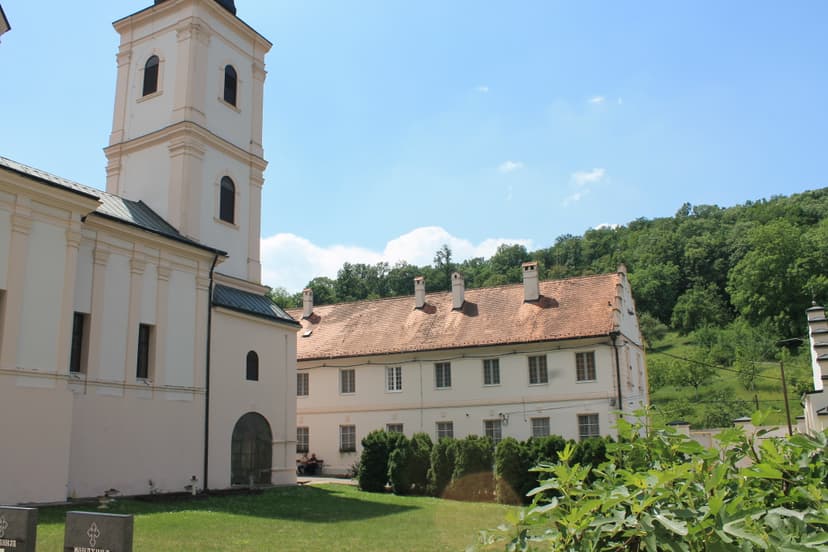
Beočin Monastery
Beočin Monastery is a Serbian Orthodox monastery situated on Fruška Gora mountain in Vojvodina, Serbia. While its exact founding date is unknown, it was first documented in 1566/1567. The monastery has undergone significant reconstruction, particularly between 1732 and 1740 for its church and in 1762 for its bell tower, and was declared a Monument of Culture of Exceptional Importance in 1990.

Berkasovo Monastery
The Berkasovo Monastery, dedicated to Saint Petka Trnovska, is a Serbian Orthodox monastery situated near the village of Berkasovo in Serbia's Srem region. Established as a monastery on August 8, 2008, its current church was founded in the latter half of the 19th century, built around a sacred spring believed to possess healing properties. Historically, the area was significant, with mentions of a fortified town in the possession of notable figures like Vuk Grgurević and Jovan Branković.