
Penrhys Grange
Penrhys is a Welsh village with a significant religious history, primarily known as a medieval Christian pilgrimage site dedicated to "Our Lady" at the holy well of Ffynnon Fair. Although the original shrine was destroyed during the English Reformation, the site has seen renewed interest and restoration efforts, culminating in the unveiling of a new statue of the Virgin Mary in 1953. Today, Penrhys continues to be a place of pilgrimage, recognized as part of the Cistercian Way.
Key Facts
- ›Penrhys was a significant Christian pilgrimage site from medieval times until the 16th-century English Reformation.
- ›The site's religious importance is centered around the holy well Ffynnon Fair and a shrine to "our Lady".
- ›The original shrine and statue of the Virgin Mary were destroyed in 1538 during the Dissolution of the Monasteries.
- ›A new statue of the Virgin Mary, carved from Portland stone, was unveiled in 1953, drawing over 20,000 attendees.
- ›Penrhys is part of the Cistercian Way, attracting pious pilgrimages annually.
- ›The village itself was largely redeveloped as a modern council housing estate starting in 1966.

Medieval
Ffynnon Fair, Shrine of "Our Lady", Modern Statue of the Virgin Mary, Remnants of Medieval Chapel and Hostelry
Penris Village
Rhys Ap Tewdwr, Iestyn Ap Gwrgant
- Destruction of the Shrine During the English Reformation
- Archaeological Dig At the Old Chapel
- Unveiling of A New Statue of the Virgin Mary
- First Burial At Penrhys Cemetery
- Starting Point For 'Red Sunday In Rhondda Valley' Hunger March
About Penrhys Grange
Penrhys is a village in Wales renowned for its deep religious history, particularly as a significant Christian pilgrimage site from medieval times until the 16th-century English Reformation. The heart of this pilgrimage was the shrine of "Our Lady" located at the holy well known as Ffynnon Fair. While the original shrine and its revered statue of the Virgin Mary were destroyed in 1538 during the Dissolution of the Monasteries, the spiritual importance of the site has endured. Modern efforts have led to the restoration of the holy well and the unveiling of a new statue of the Virgin Mary in 1953, drawing large crowds and reaffirming its status as a place of devotion. Penrhys is recognized as part of the Cistercian Way, continuing to attract pilgrims annually.
Historical Context
The history of Penrhys is intertwined with legends and historical events. While some traditions link its origins to the Welsh king Rhys ap Tewdwr, historical documents refer to the site as a 'manor' belonging to the Cistercian Abbey of Llantarnam. The manor, possibly an outlying grange, evolved into a pilgrimage destination by the 15th century, featuring a well, chapel, and hostelry to accommodate visitors. The destruction of the shrine in the 16th century marked a decline, but interest in its religious heritage resurfaced with industrialization in the Rhondda Valley during the 19th century. Archaeological investigations in the early 20th century and the subsequent erection of a new statue in the mid-20th century revitalized the site.
The Shrine and Holy Well
Ffynnon Fair, or St. Mary's Well, is the oldest recorded Christian site in the Rhondda, with potential pagan origins. The well's waters were believed to possess healing powers, particularly for ailments like rheumatism and poor eyesight. A vaulted stone building, largely constructed from local Pennant Sandstone, was built around the well and still exists today, albeit heavily restored. Legend recounts a miraculous statue of the Virgin Mary appearing in an oak tree near the well, resisting all attempts to move it until a chapel and shrine were built. The original statue's destruction was a significant event, leading to a period where little of the original shrine survived, until its revival in the 20th century.
Source: Wikipedia ↗
Frequently Asked Questions
What is Penrhys historically known for?
Penrhys is historically known as an important Christian pilgrimage site, particularly from medieval times until the 16th century. It was famous for the shrine of "Our Lady" located at the holy well Ffynnon Fair.
What happened to the original shrine at Penrhys?
The original shrine and its statue of the Virgin Mary were destroyed in 1538 during the English Reformation under Henry VIII. The statue was taken to London and publicly burned along with other Catholic artifacts.
Is Penrhys still a pilgrimage site today?
Yes, Penrhys continues to be a pilgrimage site. A new statue of the Virgin Mary was unveiled in 1953, and the site is recognized as part of the Cistercian Way, with many people making pious pilgrimages annually.
What is Ffynnon Fair?
Ffynnon Fair, also known as St. Mary's Well, is a holy well on the hillside overlooking Llwynypia. It has been the focal point of religious activity in Penrhys and is considered the oldest recorded Christian site in the Rhondda Valley. Its waters were believed to have healing properties.
What is the origin of the name Penrhys?
The village name, Penrhys, is linked to legends involving Rhys ap Tewdwr. One tradition suggests the name derives from tales of Rhys ap Tewdwr being beheaded or his head being interred at the site, with the original name possibly being Pen-Rhys-ap-Tewdwr.
Related Monasteries

Aberconwy Abbey
Aberconwy Abbey was a significant Cistercian monastery, initially founded near Caernarfon in 1186 before moving to Conwy. It rose to prominence as the most important abbey in North Wales during the 13th century, largely due to the patronage of Llywelyn the Great, who was buried there. The abbey was later forcibly relocated by King Edward I to Maenan to make way for Conwy Castle and was eventually suppressed in 1537.
Abergavenny Priory
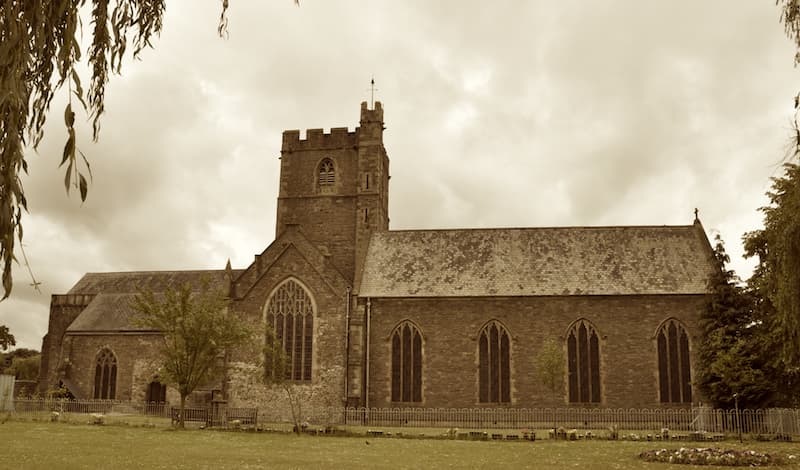
The Priory Church of St Mary, Abergavenny, is a significant parish church in Monmouthshire, Wales, often referred to as "the Westminster Abbey of Wales" due to its size and collection of high-status tombs. Originally established as a Benedictine priory in the late 11th century, it became a parish church after the Dissolution of the Monasteries. The church is renowned for its numerous medieval effigies and notable architectural features, including 15th-century choir stalls and a unique 15th-century wooden carving known as "The Jesse."

Bangor Monastery
Bangor Cathedral, dedicated to its founder Saint Deiniol, stands on a site of Christian worship since the sixth century. Originally established as St Deiniol's Monastery, it has a long and tumultuous history marked by destruction and rebuilding, evolving from its Norman origins to its current Gothic Revival appearance. The cathedral is a significant religious and historical landmark in Gwynedd, Wales, known for its architectural evolution and notable features.