
Our Lady of Joy Abbey
Our Lady of Joy Abbey is a Roman Catholic monastery on Lantau Island, Hong Kong, belonging to the Cistercian Order of the Strict Observance (Trappists). Founded by refugee monks fleeing persecution in mainland China, the abbey was officially established in its current location in 1956, adopting its current name in 2000. It is known for its dairy farm, which produces Trappist milk, and its scenic location along a popular hiking trail.
Key Facts
- ›Home to Roman Catholic monks of the Cistercian Order of the Strict Observance (Trappists).
- ›Originally named "Trappist Haven Monastery".
- ›Founded by refugee monks from our Lady of Consolation Abbey and our Lady of Joy Abbey in China.
- ›Established on Lantau Island, Hong Kong, in 1956.
- ›Known for producing Trappist milk from its dairy farm.
- ›Located on a scenic hiking trail, accessible by ferry and hiking.
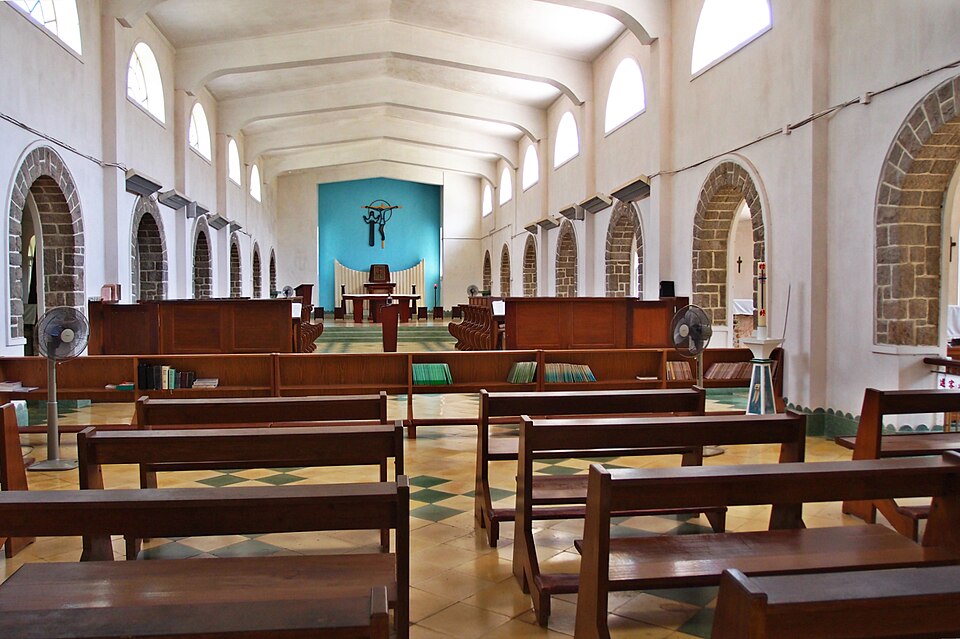
Dairy Farm Producing Trappist Milk, Located On A Scenic Hiking Trail
Trappist Haven Monastery
Father Paulin Li, Vincent Shi, Albert Wei, Father You, Bishop Enrico Valtorta, Dom. Clement Kong, Dom. Anastasius Li, Dom. Paul Kao
- Monks Became Refugees During the Chinese Communist Revolution and Chinese Civil War.
- Monastery In Hebei Destroyed In 1947.
- Monks Fled Szechwan In 1949 Due To Communist Invasion.
- Communists Occupied Chengtu Monastery On Christmas Day 1949.
- Monks Dispersed Across China Until Hong Kong Government Offered Land On Lantau Island.
- Official Opening of the Monastery On February 19, 1956.
- Adoption of the Official Name "Our Lady of Joy Abbey" On January 15, 2000.
About Our Lady of Joy Abbey
Our Lady of Joy Abbey is a significant Roman Catholic monastery situated in Tai Shui Hang, on Lantau Island in Hong Kong's New Territories. It serves as the home for a community of monks belonging to the Cistercian Order of the Strict Observance, more commonly known as Trappists.
History and Founding
The abbey's origins are rooted in tumultuous events in mainland China. During the Chinese Communist Revolution and Civil War, Trappist monks from Our Lady of Consolation Abbey and Our Lady of Joy Abbey became refugees. After their monasteries in Hebei and Sichuan provinces faced destruction and persecution, including the martyrdom of several monks, the surviving community sought refuge. In 1951, a group of these monks arrived in Hong Kong, and with the support of the Hong Kong government and Bishop Enrico Valtorta, they began establishing a new monastery on Lantau Island. The monastery was officially opened on February 19, 1956, and later formally adopted the name "Our Lady of Joy Abbey" on January 15, 2000.
Monastic Life and Features
Our Lady of Joy Abbey is an active monastic community. The monastery is particularly recognized for its dairy farm, responsible for producing Trappist milk, a well-known consumer product. The abbey's location is also notable; it is nestled along a scenic hiking trail that is popular with visitors, offering a peaceful resting point amidst natural beauty. Access to the monastery is possible via this hiking route or by kai-to ferry services.
Notable Figures
Several figures are associated with the abbey's history, including Father Paulin Li, who led some monks to safety. The community has also had several titular priors and abbots over the years, with Dom. Paul Kao currently serving as Abbot. The text also mentions Rev. Nicholas Kao Se Tseien among notable monks.
Source: Wikipedia ↗
Frequently Asked Questions
Where is Our Lady of Joy Abbey located?
Our Lady of Joy Abbey is located at Tai Shui Hang on Lantau Island in the New Territories, Hong Kong. It is situated on a scenic hiking trail.
What religious order does Our Lady of Joy Abbey belong to?
The monastery belongs to the Roman Catholic Cistercian Order of the Strict Observance, commonly known as the Trappists.
What is Our Lady of Joy Abbey known for producing?
The monastery is well-known for producing Trappist milk from its dairy farm. The brand is also referred to as Trappist Dairy.
What is the history behind the founding of Our Lady of Joy Abbey?
The abbey was founded by monks who were refugees fleeing persecution during the Chinese Communist Revolution. They had previously been part of monasteries in Hebei and Sichuan provinces in mainland China.
When was Our Lady of Joy Abbey officially opened?
The monastery was officially opened on February 19, 1956, though it had been established by monks who moved to Lantau Island in 1951.
How can one access Our Lady of Joy Abbey?
The monastery is accessible via a scenic hiking trail from Discovery Bay, or by kai-to ferry from Peng Chau or Discovery Bay (Nim Shue Wan). It serves as a resting point on a popular hiking route.
Related Monasteries

Mount Michael Abbey
Mount Michael Abbey is a Benedictine monastery located outside Elkhorn, Nebraska, within the Archdiocese of Omaha. Founded in 1952, it traces its roots to Engelberg Abbey in Switzerland and Conception Abbey in Missouri. The abbey's primary apostolate is education, operating an attached high school, and its community follows the Rule of Saint Benedict, balancing prayer with various forms of work.

Prinknash Abbey — former site
Prinknash Abbey is a Roman Catholic monastery belonging to the Benedictine Confederation, located in Gloucestershire, England. For nearly 900 years, the land has been associated with Benedictine monks, with parts of the current structure originating as a hunting lodge in the early 16th century. The monastery was re-established in 1928 by Benedictine monks from Caldey Island, and it is known for its historical production of church incense.
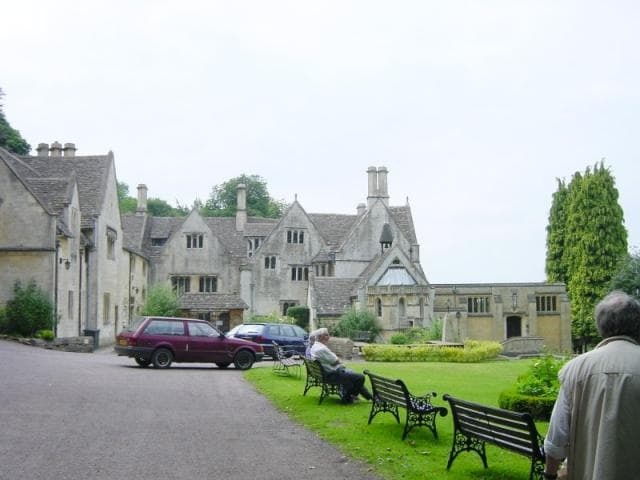
Prinknash Abbey
Prinknash Abbey is a Roman Catholic monastery belonging to the English Province of the Subiaco Cassinese Congregation, part of the worldwide Benedictine Confederation. Historically associated with Benedictine monks for nearly 900 years, the land was gifted to the Abbot of Gloucester in 1096. A significant portion of the current buildings originated as a hunting lodge built around 1520. The monastery was re-established in 1928 by Benedictine monks from Caldey Island, who converted the former hunting lodge into a functioning abbey.