
Our Lady of Guadalupe Trappist Abbey
Trappist (a branch of Cistercian)·United States·active·20th century
Our Lady of Guadalupe Trappist Abbey is a Trappist monastery situated in Yamhill County, Oregon, founded in 1948 in Pecos, New Mexico, before relocating to its current location in 1955. The abbey is known for its serene setting on 1,300 acres of forestland, which supports a sustainable forestry enterprise, and its various income-generating activities such as a book bindery, wine warehousing, and fruitcake bakery. It also functions as a spiritual sanctuary, offering a non-denominational retreat facility for guests.
Key Facts
- ›Founded in April 1948 in Pecos, New Mexico.
- ›Relocated to its present site in Oregon in March 1955.
- ›Located on 1,300 acres of forestland in the western Willamette Valley.
- ›Operates sustainable forestry, book bindery, wine warehousing, and fruitcake bakery enterprises.
- ›Features a non-denominational retreat facility for guests.
- ›A new church was built in 2007 combining traditional Cistercian and Pacific Northwest architectural styles.

Cistercian, Pacific Northwest
1,300 Acres of Forestland, Sustainable Forestry Enterprise, Book Bindery, Wine Warehouse, Fruitcake Bakery, Non-Denominational Retreat Facility, New Church Built In 2007
Foundation In Pecos, New Mexico, Relocation To Oregon
About Our Lady of Guadalupe Trappist Abbey
Our Lady of Guadalupe Trappist Abbey is a contemplative monastery belonging to the Trappist Order, located in Yamhill County, Oregon. Established in April 1948 in Pecos, New Mexico, it was a foundation from the Trappist community at Valley Falls, Rhode Island. The abbey's dedication to Our Lady of Guadalupe reflects the historical Mexican influence in the southwestern United States. Due to agricultural challenges in New Mexico, the community relocated to its current site in Oregon in March 1955.
Location and Setting
The abbey is situated on a substantial 1,300-acre property characterized by forestland within the low hills of the western Willamette Valley. This expansive wooded environment contributes significantly to the spiritual atmosphere, acting as a natural buffer from neighboring areas and facilitating cloistered retreat. The forest also underpins a sustainable forestry enterprise that provides a crucial source of income for the monks.
Enterprises and Retreats
Beyond forestry, Our Lady of Guadalupe Trappist Abbey engages in several other income-generating activities. These include a book bindery, a wine warehouse serving local wineries, and a fruitcake bakery. The abbey also functions as a spiritual sanctuary for guests, offering a non-denominational retreat facility. Visitors stay in small cottages and have access to a library and a meditation hall, fostering an environment for prayer and reflection.
Community and Architecture
As of early 2025, the abbey is home to approximately 12 monks who live communally, balancing their lives with prayer, work, reading, and contemplation. A new 10,000-square-foot church was completed in 2007, featuring a design that merges traditional Cistercian architectural principles with elements inspired by the Pacific Northwest.
Source: Wikipedia ↗
Frequently Asked Questions
When and where was Our Lady of Guadalupe Trappist Abbey founded?
Our Lady of Guadalupe Trappist Abbey was founded in April 1948. Initially, it was established in Pecos, New Mexico, but the community later moved to its present location in Oregon in March 1955.
What is the size and setting of the abbey?
The abbey is situated on 1,300 acres of forestland in the low hills of the western Willamette Valley. This extensive forest provides a secluded and spiritual environment for the monastic community.
How does the abbey generate income?
The monastery supports itself through several enterprises. These include a sustainable forestry operation, a book bindery, acting as a wine warehouse for local wineries, and a fruitcake bakery.
Does the abbey offer accommodations for visitors?
Yes, Our Lady of Guadalupe Trappist Abbey serves as a spiritual sanctuary and operates a non-denominational retreat facility. Guests can stay in small cottages and utilize the available library and meditation hall.
What can you tell me about the abbey's church?
A new church, measuring 10,000 square feet, was constructed in 2007. Its design harmoniously blends traditional Cistercian architecture with elements characteristic of the Pacific Northwest.
How many monks live at the abbey?
As of early 2025, the abbey is home to approximately 12 monks. They live communally and balance their days with prayer, work, reading, and contemplation.
Related Monasteries

Chuang Yen Monastery
Chuang Yen Monastery, meaning "Majestically Adorned," is a significant Buddhist temple located on 225 acres in Kent, New York. Established through a long-term lease and subsequent donation of land to the Buddhist Association of the United States, it is renowned for housing the largest indoor Buddha statue in the Western Hemisphere. The monastery's architecture largely reflects the Tang dynasty style of China and has been developed with various halls and facilities since its groundbreaking in 1981.

Dai Bosatsu Zendo Kongo-ji
Dai Bosatsu Zendo Kongo-ji is a Rinzai Zen monastery and retreat center situated in the Catskill Mountains of New York. Established in 1976 as part of the Zen Studies Society, it offers intensive spiritual training, daily services, and retreats. The monastery has faced controversy regarding its co-founder, Eido Shimano, leading to his resignation and a public statement from his claimed lineage sect disavowing him.
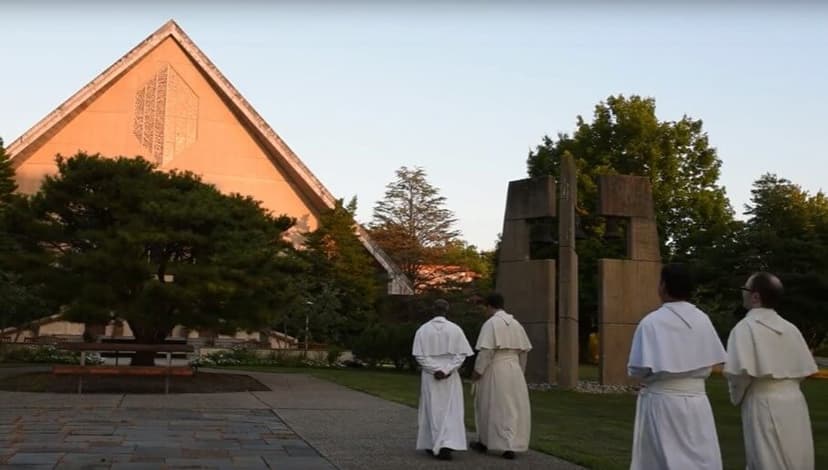
Daylesford Abbey
Daylesford Abbey is a Catholic monastery of the Norbertine order, located in Chester County, Pennsylvania. Founded in the 1950s to expand the Norbertine presence on the East Coast, it was established on the Cassatt Estate and later moved to its present 88-acre site in Paoli. The abbey is known for its solemn liturgies, adherence to the Rule of St. Augustine, and its ministries in education and social services, including a prominent role in supporting the homeless.