
Osek abbey
Cistercian·Czech Republic·National cultural monument·12th century
Osek Abbey is a historic Cistercian monastery located in Osek, Czech Republic, with origins dating back to the 13th century. Originally built in Romanesque-Gothic style, it was significantly transformed into its high-Baroque appearance during the early 18th century. While it experienced periods of prosperity and decline, including destruction during the Hussite Wars and later suppression under Communist rule, Osek Abbey was reestablished and designated a national cultural monument. Today, the monastery complex, featuring the Church of Assumption of Virgin Mary, a convent, and an abbot's residence, is no longer home to an active monastic community.
Key Facts
- ›Founded in the 13th century by Cistercian monks invited from Waldsassen Abbey.
- ›Relocated to Osek in 1198 with the support of Slávek of the HrabišICI family.
- ›Burned in 1421 during the Hussite Wars, leading to a period of decline.
- ›Rebuilt and transformed into its high-Baroque style in the early 18th century.
- ›Designated a national cultural monument of the Czech Republic in 1995.
- ›No longer houses an active monastic community.

Romanesque, Gothic, Baroque
Church of Assumption of Virgin Mary, Gothic Cloister, Early Gothic Stone Ambon, Abbot's Residence With Clock Tower, Active Brewery, Chapel of St. Catherine, Watermill
Osecký KlášTer, Kloster Ossegg
Milhošť, SláVek of the HrabišIci Family, Boreš Ii of Riesenburg, King John of Bohemia, Archbishop John Lohelius, Octavio Broggio, Abbot Eberhard Harzer, Abbot Bernhard Thebes
- Founded In 1198.
- Sacked By Future King Ottokar Ii.
- Made A Royal Abbey In the 14th Century.
- Burned By Hussite Armies In 1421.
- Dissolved By Pope Gregory Xiii In 1580.
- Reestablished In 1626.
- Rebuilt In Baroque Style In the Early 18th Century.
- Partially Requisitioned By the German Army During Wwii.
- Became An Internment Camp For Monks and Priests Under Communist Czechoslovakia.
- Cistercians Returned After 1989.
- Designated A National Cultural Monument In 1995.
About Osek abbey
Osek Abbey: A Rich History of Faith and Resilience
Osek Abbey, known in Czech as Osecký klášter and formerly as Kloster Ossegg in German, is a significant Cistercian monastery located in Osek within the Ústí nad Labem Region of the Czech Republic. Its origins trace back to the late 12th century, with its formal establishment in Osek occurring in 1198. The abbey's architectural journey is marked by a transition from its initial Romanesque-Gothic construction to a grand high-Baroque appearance, largely shaped by renovations in the early 18th century.
Founding and Early Fortunes
The monastery's founding was initiated by the nobleman Milhošť, who invited Cistercian monks from Waldsassen Abbey. However, financial difficulties led the monks to relocate to Osek in 1198, supported by Slávek of the Hrabišici family. The abbey flourished in the first half of the 13th century, even attempting to establish a daughter house. It faced adversity when sacked by Ottokar II due to its association with the Riesenburg family, though it later received a relic of St. John the Baptist from Boreš II of Riesenburg.
Royal Abbey and Periods of Decline
In the 14th century, King John of Bohemia elevated Osek to the status of a royal abbey, a period of prosperity that was tragically interrupted by the Hussite Wars. The abbey was burned in 1421, leading to a decline and the dispersal of its monks. By 1580, it was dissolved by Pope Gregory XIII. The property came under the Prague Archbishopric, and the monastery was reestablished in 1626, though it took until 1650 to appoint its own abbot.
Baroque Transformation and 20th Century Challenges
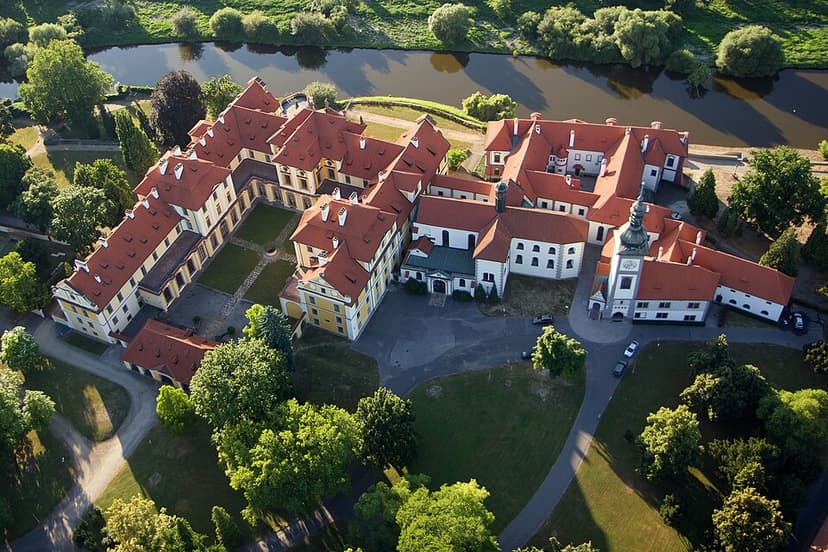
The early 18th century saw Osek Abbey transformed into its present high-Baroque form, a testament to the architectural vision of artists like Octavio Broggio. The complex, which includes the Church of the Assumption of the Virgin Mary, the convent, and the abbot's residence, is a significant example of Baroque ecclesiastical architecture. The 20th century brought further hardship: during World War II, parts were requisitioned by the German army, and after the war, monks faced unjust accusations and hard labor. The Communist era saw the abbey become an internment camp for clergy, followed by housing for religious sisters from various orders.
Contemporary Status
Following the Velvet Revolution, the Cistercians were able to return to Osek in 1991, with Abbot Bernhard Thebes leading a small community until his death in 2010. Currently, Osek Abbey does not host an active monastic community. However, it was recognized for its historical and architectural importance in 1995 when it was designated a national cultural monument of the Czech Republic. The complex, with its preserved structures and even an active brewery among its auxiliary buildings, continues to stand as a significant historical site.
Source: Wikipedia ↗
Frequently Asked Questions
When was Osek Abbey founded?
Osek Abbey was founded in the 13th century. The Cistercian monks initially settled on Milhošť's manor at the end of the 12th century, but the abbey was established in Osek in 1198.
What architectural styles are present at Osek Abbey?
The monastery began as a Romanesque-Gothic structure. It underwent a significant transformation into the high-Baroque style during the early 18th century, which defines its current appearance. The convent also retains Gothic elements like a cloister and chapter house.
Is Osek Abbey still an active monastery?
No, there is currently no monastic community living in Osek Abbey. The Cistercians were able to return after 1989 and had a community with an abbot until 2010, but it is no longer active.
What is the significance of Osek Abbey?
Osek Abbey is significant as a national cultural monument of the Czech Republic, showcasing centuries of architectural development from Romanesque-Gothic to Baroque. It played a role in Bohemian history, enduring periods of prosperity, destruction, and suppression, and its complex represents a substantial historical and architectural site.
What are the main parts of the Osek Abbey complex?
The monastery complex includes the Church of Assumption of Virgin Mary, the building of the convent, the abbot's residence (prelature) with a clock tower, and several auxiliary buildings. The brewery within the auxiliary buildings remains active today.
Related Monasteries

Porta coeli Convent
Porta coeli Convent, meaning "Heaven's Gate" in Latin, is a 13th-century Cistercian convent located in Předklášteří, Czech Republic. Founded in 1233 by Queen Constance of Hungary, it features a unique Western façade with a portal reminiscent of French cathedrals. The convent houses valuable Baroque furnishings and notable early Gothic vaulting in its cloister walk.
Zbraslav Monastery
The Cistercian Abbey of Zbraslav, also known as Aula Regia, was a prominent monastery in the Kingdom of Bohemia, founded by King Wenceslaus II in 1292. It served as the royal necropolis for the Přemyslid dynasty and was abolished in 1789 by Emperor Joseph II. The abbey is renowned for its abbot, Peter of Zittau, author of the Zbraslav Chronicle, and for the significant Gothic painting, the Madonna of Zbraslav.

Poděbrady
Poděbrady is a spa town in the Central Bohemian Region of the Czech Republic, recognized for its rich history and mineral springs, particularly the Poděbradka spring. It experienced its peak prosperity in the 15th century under the Poděbrady family and is famously associated with King George of Poděbrady, likely his birthplace. The town is protected as an urban monument zone, featuring a well-preserved historic center with its castle and a significant monument to King George.