
Oratory of the Good Shepherd
The Oratory of the Good Shepherd (OGS) is a dispersed international religious community within the Anglican Communion, founded in 1913 by Cambridge college chaplains seeking a disciplined life. Members are bound by a common rule of consecrated celibacy, prayer, fellowship, and "Labour of the Mind," which involves study. Though they do not typically live together, they meet regularly in chapter and retreat, supporting each other in individual ministries across the globe.
Key Facts
- ›Founded in 1913 by University of Cambridge college chaplains.
- ›Members practice consecrated celibacy and a disciplined spiritual life.
- ›The community is dispersed internationally with four provinces: Australia, Europe, North America, and South Africa.
- ›"Labour of the Mind," or study, is a characteristic expectation for members.
- ›The Oratory supports members in a wide variety of individual ministries, including clergy, academics, and lay roles.
- ›Nicholas Ferrar is considered a patron of the Oratory.
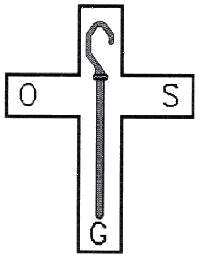
- "Seven Notes" Expressing the Spirit of the Oratory
- Structure Into Four Provinces: Australia, Europe, North America, and South Africa
- Companions Who Follow A Similar Rule of Life
Ogs
Bishop John How, Bishop Edward Wynn, Very Revd Eric Milner-White, Fr Alec Vidler, Fr Eric Mascall, Revd Canon Wilfred Knox, Revd Canon Alec Vidler, Revd Canon Eric Mascall, Revd Martin Thornton, Archbishop Robert Selby Taylor, Bishop George Briggs, Bishop Henry Hill, Bishop John Ruston, Bishop John William Salt, Revd Fr Henry R. T. Brandreth, Bishop Kenneth Mason, Bishop Lindsay Urwin, Bishop Dominic Walker, Bishop Bruce Myers, Archbishop Michael Ramsey, Bishop Rowan Williams, Nicholas Ferrar
- Founding In 1913
- Interruption By the First World War
- Re-Establishment After Wwi
- Oratory House In Cambridge Passed To Franciscans In 1939, Leading To No Permanent Base.
About Oratory of the Good Shepherd
The Oratory of the Good Shepherd
The Oratory of the Good Shepherd (OGS) is a dispersed international religious community operating within the Anglican Communion. Established in 1913 by a group of University of Cambridge college chaplains, its foundation was driven by a desire for a disciplined spiritual life amidst the prevailing academic environment. The Oratory's members are united by a common rule that emphasizes consecrated celibacy, regular prayer, fellowship, and a commitment to "Labour of the Mind," which encompasses various forms of study. While they do not typically reside together in communal living, members convene periodically for chapter meetings and retreats, offering mutual support and accountability in maintaining their rule.
History and Development
The nascent Oratory's development was interrupted by the First World War. Following the conflict, the chaplains reconvened, drawing inspiration from the historical Little Gidding community and refining their "Notes" and way of life. For a period, some brethren lived in the Oratory House in Cambridge, which was later transferred to the Franciscans in 1939, marking the Oratory's transition to a permanently dispersed existence. This shift meant the Oratory has had no single physical base since that time, with members often living and ministering individually or in small groups within parishes worldwide.
Structure and Membership
Internationally, the Oratory is organized into four provinces: Australia, Europe, North America, and South Africa. Each province comprises local "colleges" that meet regularly. The community is led by a superior general and a secretary-general, elected for three-year terms at a triennial general chapter. In addition to professed brethren, the Oratory includes "companions" who, after a probation period, commit to a rule of life that mirrors the brethren's, emphasizing prayer, study, and spiritual disciplines. The "Seven Notes" of the Oratory, which guide its spirit, are central to the life of both brethren and companions.
Spiritual Life and Ministry
The rule of the Oratory mandates celibacy, a regular accounting of one's life and finances, and commitment to daily Eucharist (when possible), morning and evening prayer, and an hour of private prayer. The "Labour of the Mind" encourages intellectual engagement and study. The Oratory actively supports its members in their diverse individual ministries, which span a wide range of roles within the Church and society. These have included bishops, parish priests, lecturers, missionaries, and others, demonstrating the broad scope of vocations embraced by the community. Notable figures associated with the Oratory include scholars like Fr Alec Vidler and Fr Eric Mascall, as well as various bishops and archbishops, including Archbishop Michael Ramsey as a former visitor and Bishop Rowan Williams as the current episcopal visitor.
Source: Wikipedia ↗
Frequently Asked Questions
When was the Oratory of the Good Shepherd founded?
The Oratory of the Good Shepherd was founded in 1913. It originated as a group of University of Cambridge college chaplains who sought a more disciplined way of life.
What is the religious tradition of the Oratory of the Good Shepherd?
The Oratory of the Good Shepherd is a religious community within the Anglican Communion. Its members belong to the Anglican tradition.
Do members of the Oratory of the Good Shepherd live together in community?
No, members of the Oratory of the Good Shepherd do not normally live together in community. They are a dispersed international religious community, bound by a common rule and discipline, meeting regularly for fellowship and accountability.
What are the core practices of the Oratory of the Good Shepherd?
The core practices include consecrated celibacy, daily Eucharist where possible, morning and evening prayer, an hour of private prayer, and "Labour of the Mind" which involves study. Members also pray for one another by name daily.
Who are some notable members or figures associated with the Oratory of the Good Shepherd?
Notable past members include Fr Alec Vidler and Fr Eric Mascall. Archbishop Michael Ramsey served as visitor for many years, and Bishop Rowan Williams is the current episcopal visitor.
What is the structure of the Oratory of the Good Shepherd?
Members are organized into local "colleges" within one of four provinces: Australia, Europe, North America, and South Africa. The Oratory is led by a superior general and secretary-general, elected at a general chapter.
Related Monasteries
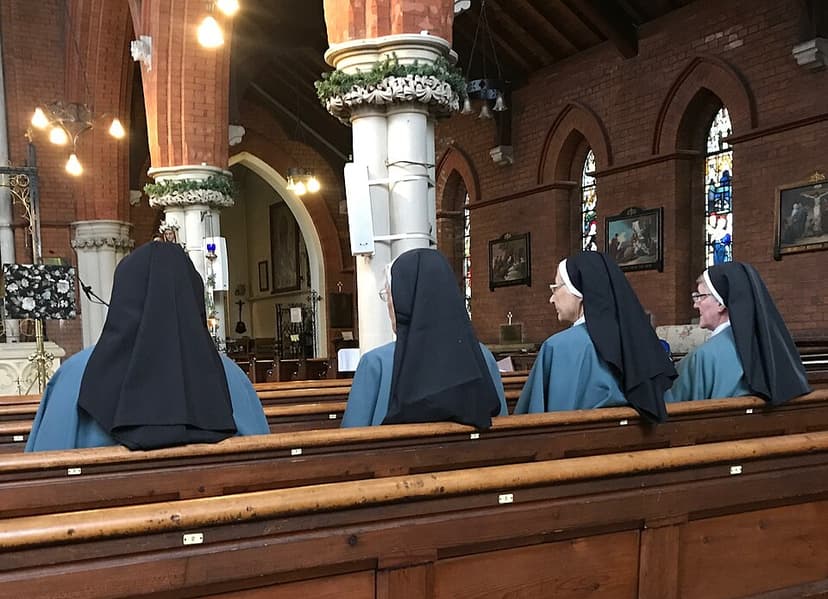
Community of the Sisters of the Church
The Community of the Sisters of the Church is an Anglican religious order of women founded in 1870 by Mother Emily Ayckbowm, who also established the Church Extension Association. The sisters dedicate themselves to a vowed life of poverty, chastity, and obedience, operating schools, orphanages, and providing support through ministries like parish work, counselling, and care for abused women and children. The order has a global presence with provinces in Australia, Canada, the Solomon Islands, and the United Kingdom, and is under the patronage of St Michael and All Angels.

Holy Cross Monastery
Holy Cross Monastery, the mother house of the Order of the Holy Cross, is an Anglican religious community located in West Park, New York. Designed by Ralph Adams Cram and Henry Vaughan, its architecture blends Mission/Spanish Revival and Tudorbethan styles. Established by Rev. James Otis Sargent Huntington, it serves as the order's house of formation and is recognized for its retreat facilities and commitment to social causes.
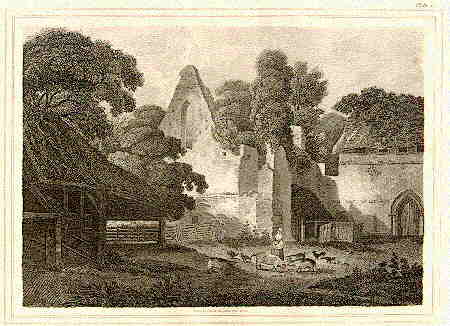
Burnham Abbey
Burnham Abbey was an Augustinian canonesses regular monastery founded in 1266 by Richard, 1st Earl of Cornwall, near Burnham in Buckinghamshire, England. Despite beginning with around twenty nuns, it was never a wealthy institution and housed only ten by the time of its dissolution in 1539. Since 1916, the surviving buildings have served as the home for the Society of the Precious Blood, an Anglican contemplative community that continues to use the name Burnham Abbey.