
Burnham Abbey
Burnham Abbey was an Augustinian canonesses regular monastery founded in 1266 by Richard, 1st Earl of Cornwall, near Burnham in Buckinghamshire, England. Despite beginning with around twenty nuns, it was never a wealthy institution and housed only ten by the time of its dissolution in 1539. Since 1916, the surviving buildings have served as the home for the Society of the Precious Blood, an Anglican contemplative community that continues to use the name Burnham Abbey.
Key Facts
- ›Founded in 1266 by Richard, 1st Earl of Cornwall.
- ›Originally housed Augustinian canonesses regular.
- ›Dissolved in 1539 with only ten nuns remaining.
- ›Surviving buildings are now home to an Anglican contemplative community.
- ›The Abbey is a Grade I listed building.

Chapter House, Sacristy, Parts of the Frater, Parts of the Infirmary
Richard, 1st Earl of Cornwall, Alice Baldwin
Foundation In 1266, Dissolution of the Monasteries In 1539
About Burnham Abbey
Overview
Burnham Abbey was an Augustinian canonesses regular monastery situated near Burnham in Buckinghamshire, England. Its foundation in 1266 was established by Richard, 1st Earl of Cornwall, who was also styled King of the Romans. The abbey initially comprised about twenty nuns, but it never achieved significant wealth, and by the time of its dissolution in 1539, its community had dwindled to ten nuns, along with two priests. The surrender document for Burnham Abbey is dated September 19, 1539, and was signed by Abbess Alice Baldwin and the remaining nine nuns.
Following its dissolution, the abbey's site passed through several private hands. In 1544, it was granted to William Tyldesley, and later Queen Elizabeth I leased the property to Paul Wentworth. The original church was demolished around 1570, and a house was subsequently constructed using much of the remaining monastic buildings. By the 18th century, the site functioned as a farm, with some structures, such as the refectory, in poor repair.
In 1913, architect and surveyor James Lawrence Bissley purchased the property and undertook restoration, converting the former chapter house into a chapel. In 1916, he sold Burnham Abbey to the Society of the Precious Blood, an Anglican contemplative community. This community, which retains the name Burnham Abbey, has occupied and continued to restore and extend the buildings for their own use. The Abbey itself is recognized as a Grade I listed building, with associated walls and structures designated Grade II. Key surviving elements of the medieval nunnery include the chapter house, sacristy, and portions of the frater and infirmary.
Source: Wikipedia ↗
Frequently Asked Questions
When was Burnham Abbey founded?
Burnham Abbey was founded in 1266 by Richard, 1st Earl of Cornwall. He was the brother of King Henry III and styled as King of the Romans.
What religious order was Burnham Abbey part of?
Burnham Abbey was originally a house of Augustinian canonesses regular. Today, the surviving buildings are occupied by an Anglican contemplative community, the Society of the Precious Blood.
When was Burnham Abbey dissolved?
Burnham Abbey was dissolved in 1539. Although it was eligible for closure in the first wave of the Dissolution of the Monasteries in 1536, a petition from local commissioners delayed its end.
What remains of the medieval nunnery?
The chapter house, sacristy, and parts of the frater and infirmary remain from the medieval nunnery. The church was demolished around 1570.
Is Burnham Abbey still active?
Yes, the surviving buildings of Burnham Abbey have been home to an active Anglican contemplative community, the Society of the Precious Blood, since 1916.
Related Monasteries

Reading Greyfriars
Greyfriars Church in Reading, England, is the oldest Franciscan church still in use as a place of worship in the UK and is considered a highly complete example of Franciscan architecture. Originally founded in 1233 as a friary to serve the poor, it was later dissolved and served various secular purposes including a town hall, hospital, and jail before being restored and re-established as a parish church in the 19th century.

Ely Cathedral Priory
Ely Cathedral, originally an abbey founded in 672 by St Æthelthryth, is an Anglican cathedral in Cambridgeshire, England. It evolved from an Anglo-Saxon monastery to a prominent Benedictine abbey before being refounded as a cathedral in 1109. Renowned for its monumental Romanesque architecture, it features a unique central Octagon tower and later additions in Decorated Gothic style, making it a significant historical and architectural landmark.
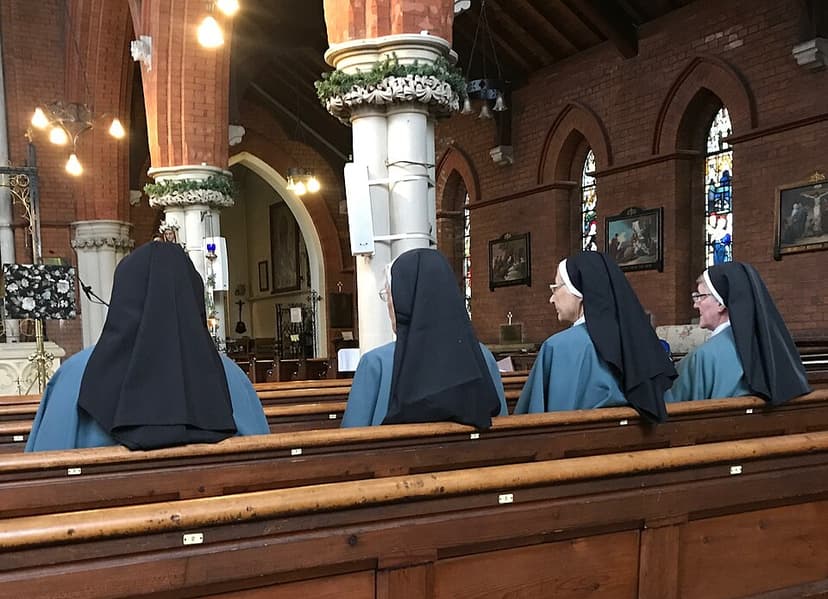
Community of the Sisters of the Church
The Community of the Sisters of the Church is an Anglican religious order of women founded in 1870 by Mother Emily Ayckbowm, who also established the Church Extension Association. The sisters dedicate themselves to a vowed life of poverty, chastity, and obedience, operating schools, orphanages, and providing support through ministries like parish work, counselling, and care for abused women and children. The order has a global presence with provinces in Australia, Canada, the Solomon Islands, and the United Kingdom, and is under the patronage of St Michael and All Angels.