
Oelenberg Abbey
Trappist·France·Mass is still celebrated on Sundays, but the monastic community has departed·11th century
Oelenberg Abbey is a Trappist monastery with a history stretching back to the 11th century, originally founded as an Augustinian priory. It has undergone significant transformations, including periods as a Jesuit college and a period of suppression during the French Revolution, before being re-established by Cistercian monks. The abbey is notable for its architectural blend of Romanesque, Gothic, and Baroque styles, and a significant historical discovery of an early manuscript of the Brothers Grimm's fairy tales.
Key Facts
- ›Founded in 1046 as an Augustinian priory by Heilwig of Dabo.
- ›The church was dedicated in 1049 by Pope Leo IX.
- ›The abbey was re-established by Cistercian monks in 1825.
- ›Suffered significant damage during both World War I and World War II.
- ›The 1810 Manuscript, an early version of Grimms' Fairy Tales, was discovered here in 1970.
- ›As of June 2024, the monastic community has left the abbey, though Mass is still celebrated on Sundays.
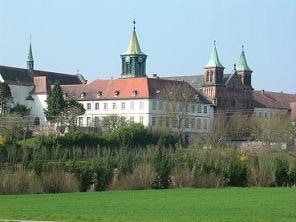
Romanesque, Gothic, Baroque
- 12th-Century Processional Cross
- 14th-Century Crucifix
- Statues of the Virgin Mary
- Three Chapels: Saint Michael, Saint Leo, and the Mount of Olives
- Organ Built By Georg Schwenkedel
Abbatia B.M.V. De Oelenberg, Abbaye Notre-Dame D'Oelenberg, Kloschter Vum Eelabarg
Heilwig of Dabo, Pope Leo Ix, JóZef Bohdan Zaleski, Brothers Grimm, Clemens Brentano
- Founded As An Augustinian Priory
- Church Dedicated By Pope Leo Ix
- Nuns Moved To Cernay
- Handed Over To Jesuit College of Freiburg Im Breisgau
- Suppressed and Sold During the French Revolution
- Re-Established By Cistercian Monks
- Founded Daughter House At Mariawald, Germany
- Founded Engelszell Abbey, Austria
- Damaged By Bombing In World War I
- Partly Destroyed In World War Ii
- Discovery of the 1810 Manuscript
- Monastic Community Departed
About Oelenberg Abbey
Oelenberg Abbey, also known in Latin as Abbatia B.M.V. de Oelenberg and in French as Abbaye Notre-Dame d'Oelenberg, is a Trappist monastery situated in Reiningue, near Mulhouse, France. Its history dates back to the 11th century, beginning as a priory for the Canons Regular of St. Augustine, founded in 1046 by Heilwig of Dabo, Countess of Eguisheim, and mother of Pope Leo IX, who dedicated its church in 1049. The abbey has a complex past, having transitioned through various religious orders and facing significant historical disruptions.
History and Transformations
Originally a double monastery, Oelenberg saw its nuns depart for Cernay in 1273. The abbey later passed to the Jesuit college of Freiburg im Breisgau in 1626 and subsequently to the University of Freiburg. During the French Revolution, the community was suppressed, and the site was sold as national property. In 1825, the monastery was re-established by a group of Cistercian monks from Kleinburlo Abbey. This period of Cistercian life saw the founding of a daughter house at Mariawald in Germany in 1862 and at Engelszell Abbey in Austria in 1925.
The abbey has endured significant destruction, particularly during the two World Wars. A major bombing on June 26, 1915, during World War I, caused extensive damage to the church, organ, and conventual buildings, necessitating a rebuilding in 1920. Further partial destruction occurred in November–December 1944 during World War II. Despite these challenges, the abbey continued its spiritual and daily life, guided by the Benedictine principle of "Ora et labora" (Pray and work), interpreted through the Cistercian tradition.
Architectural and Historical Significance
The abbatial church at Oelenberg Abbey showcases a blend of architectural styles, with Romanesque elements from the 12th century, late Gothic features from 1486, and Baroque additions from 1755. The interior is adorned with significant religious art, including a 12th-century processional cross, a 14th-century crucifix, and statues of the Virgin Mary from the 15th and 18th centuries. The three chapels—Saint Michael, Saint Leo, and the Mount of Olives—also contain elements dating back to the 12th century and 1486, with items originating from the dissolved Lucelle Abbey.
A particularly noteworthy historical event associated with Oelenberg Abbey was the discovery in 1970 of the "1810 Manuscript," also known as the Oelenberg Manuscript. This manuscript is the earliest known extant version of the Brothers Grimm's fairy tales, which had been sent to the writer Clemens Brentano in 1810 and subsequently lost. The manuscript is now housed at the Bodmer Library in Switzerland.
As of June 8, 2024, the monastic community has departed from Oelenberg Abbey. Despite this change, religious services, including Mass, continue to be celebrated every Sunday, maintaining a spiritual presence at the historic site.
Source: Wikipedia ↗
Frequently Asked Questions
When was Oelenberg Abbey founded?
Oelenberg Abbey was founded in 1046 as a priory of the Canons Regular of St. Augustine. The church was dedicated by Pope Leo IX in 1049.
What is the religious tradition of Oelenberg Abbey?
Oelenberg Abbey is a Trappist monastery, which is a branch of the Cistercian Order. It was re-established by Cistercian monks in 1825.
What are the notable architectural styles at Oelenberg Abbey?
The abbatial church features a blend of architectural styles, including Romanesque elements from the 12th century, late Gothic from 1486, and Baroque from 1755.
Has Oelenberg Abbey been damaged historically?
Yes, the abbey sustained considerable damage during World War I on June 26, 1915, and again in November-December 1944 during World War II.
What significant manuscript was discovered at Oelenberg Abbey?
In 1970, a manuscript containing 54 tales collected by the Brothers Grimm, known as the 1810 Manuscript or the Oelenberg Manuscript, was discovered. This is considered the first known extant version of Grimms' Fairy Tales.
Is there still an active monastic community at Oelenberg Abbey?
As of June 8, 2024, the monks have left the abbey. However, Mass is still celebrated every Sunday.
Related Monasteries
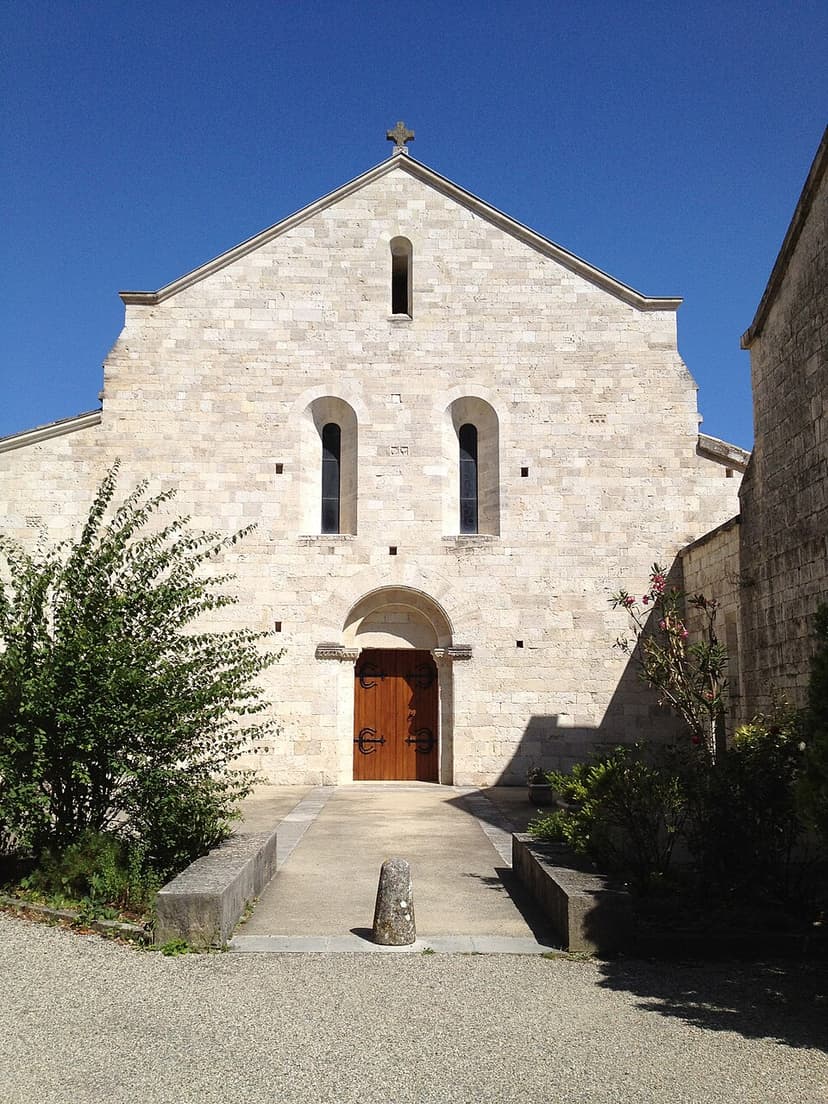
Aiguebelle Abbey
Aiguebelle Abbey, officially Abbaye Notre-Dame d'Aiguebelle, is a Trappist monastery located in the Drôme department of France, on the historical borders of Dauphiné and Provence. Originally founded as a Benedictine monastery in 1045, it was re-established as a Cistercian house in 1137 and later refounded as a Trappist monastery in 1815. The abbey is notable for preserving many of its medieval buildings and for its significant role in establishing numerous daughter houses across the globe.

Sept-Fons Abbey
Sept-Fons Abbey, also known as Notre-Dame de Sept-Fons, is a Trappist monastery located in Diou, France. Originally founded as a Cistercian monastery in 1132, it later underwent a significant Trappist reform in the 17th century before being suppressed during the French Revolution. Re-established in 1845, the abbey has since continued its monastic life and has established daughter houses in various parts of the world.

Timadeuc Abbey
Timadeuc Abbey, officially the Abbey of Notre-Dame de Timadeuc, is a Trappist monastery founded in 1841 in Bréhan, Brittany, France. It was established by monks from La Trappe Abbey, with its location chosen by Dom Joseph Hercelin. The abbey has a complex history, including periods of construction, damage from arson, and legal challenges, but also played a significant role in the French Resistance during World War II.