
North Macedonia
North Macedonia·active
North Macedonia, officially the Republic of North Macedonia, is a landlocked country in Southeast Europe with a rich and complex history shaped by various empires and conflicts. Its territory has been part of ancient kingdoms, the Roman and Byzantine Empires, and later the Bulgarian, Serbian, and Ottoman Empires. Following World War II, it became a constituent republic of communist Yugoslavia until its peaceful secession in 1991. The country is known for its diverse ethnic makeup, with ethnic Macedonians forming the majority and Albanians a significant minority.
Key Facts
- ›The territory of North Macedonia was part of ancient Paeonia and Pelagonia, later incorporated into the kingdom of Macedonia.
- ›Slavic tribes began settling in the region by the late 6th century CE, leading to mixed Byzantine-Slavic communities.
- ›The Ohrid Literary School, established in 886 by Saint Clement of Ohrid, was a major cultural center for spreading the Cyrillic script.
- ›The region was part of the Serbian Empire in the 14th century before falling under Ottoman rule for five centuries.
- ›The Ilinden–Preobrazhenie Uprising in 1903 against the Ottomans, which included the formation of the short-lived Kruševo Republic, is considered a precursor to the modern Macedonian state.
- ›The country officially changed its name to the Republic of North Macedonia following the Prespa agreement in 2018.

Ohrid Literary School, KrušEvo Republic
Republic of Macedonia, Macedonia
Saint Clement of Ohrid, Darius the Great, Philip Ii of Macedon, Alexander the Great, Tsar Boris I of Bulgaria, Tsar Samuil, Basil Ii, Tsar Stefan DušAn, Miladinov Brothers, Rajko žInzifov, Joakim KrčOvski, Kiril PejčInoviḱ, Gotse Delchev, Pitu Guli, Dame Gruev, Yane Sandanski, Todor Alexandrov, Aleksandar Protogerov, Ivan Mihailov, Vlado Chernozemski, Metodi Shatorov
- Subjugation By the Persian Empire
- Incorporation Into the Kingdom of Macedonia
- Roman Conquest of the Region
- Slavic Settlement In the Balkans
- Establishment of the Ohrid Literary School
- Byzantine Reconquest of the Balkans
- Part of the Serbian Empire
- Ottoman Conquest and Rule
- Ilinden–Preobrazhenie Uprising
- Balkan Wars
- Bulgarian Occupation During World War I
- Part of the Kingdom of Serbs, Croats and Slovenes / Kingdom of Yugoslavia
- Bulgarian Occupation During World War Ii
- Establishment As A Constituent State of Communist Yugoslavia
- Peaceful Secession From Yugoslavia
- Name Change To Republic of North Macedonia
About North Macedonia
North Macedonia: A Historical Crossroads
North Macedonia, officially the Republic of North Macedonia, is a landlocked country situated in Southeast Europe, at the crossroads of historical empires and cultural influences. Its territory has been a significant locale since antiquity, initially corresponding to ancient regions like Paeonia and Pelagonia. The area was successively incorporated into the kingdom of Macedonia, the Roman province of Macedonia, and then became a key territory within the Byzantine Empire. The arrival of Slavic tribes by the late 6th century CE marked a pivotal demographic and cultural shift, leading to the formation of mixed Byzantine-Slavic communities.
Medieval and Ottoman Eras
During the medieval period, the region was contested and often ruled by the First and Second Bulgarian Empires, with the Byzantines also exerting control at various times. The establishment of the Ohrid Literary School in 886 by Saint Clement of Ohrid was a crucial development, becoming a major center for the dissemination of the Cyrillic script and Slavic literacy. The 14th century saw the territory become part of the Serbian Empire, with Skopje serving as its capital. This was followed by five centuries of Ottoman rule, beginning in the late 14th century, during which the region was part of the Eyalet of Rumelia and experienced significant administrative and cultural changes.
Modern Nationhood and Identity
The 19th century witnessed the rise of Macedonian autonomist movements, with the Ilinden–Preobrazhenie Uprising in 1903 against Ottoman rule being a defining moment; this uprising and the formation of the short-lived Kruševo Republic are considered foundational to the eventual establishment of the Macedonian state. Following the Balkan Wars and World War I, the territory was divided and came under Serbian rule, enduring periods of Bulgarisation and Serbianisation policies. After World War II, it became a constituent republic of communist Yugoslavia. The country achieved peaceful secession in 1991, initially proclaiming itself the 'Republic of Macedonia'. A significant geopolitical development occurred in 2018-2019 with the Prespa agreement, which led to the official name change to the 'Republic of North Macedonia', resolving a long-standing naming dispute and paving the way for closer integration with Western alliances.
Source: Wikipedia ↗
Frequently Asked Questions
What is the historical significance of the name 'Macedonia'?
The name 'Macedonia' derives from the ancient Greek adjective 'makednós', meaning 'tall' or 'taper'. It was the name of an ancient kingdom and later a region. The name was largely forgotten during the Byzantine and Ottoman eras but was revived by nationalist movements in the 19th century and officially adopted for the state after World War II.
What were the major empires that ruled the territory of North Macedonia?
The territory of present-day North Macedonia was part of the Persian Empire, the kingdom of Macedonia, the Roman Empire, and the Byzantine Empire. It later came under the control of the Bulgarian Empire, the Serbian Empire, and for five centuries, the Ottoman Empire.
When did North Macedonia become an independent state?
Following the breakup of Yugoslavia, the federal entity declared independence and proclaimed its official name as the 'Republic of Macedonia' in 1991. It became a member of the United Nations in 1993.
What role did the Ohrid Literary School play in history?
Established in Ohrid in 886 by Saint Clement of Ohrid, the Ohrid Literary School was one of the two major cultural centers of the First Bulgarian Empire. It was instrumental in spreading the Cyrillic script and played a significant role in Slavic literacy and culture.
What led to the country's name change to North Macedonia?
The country officially changed its name to the Republic of North Macedonia following the Prespa agreement in June 2018. This change was ratified by parliament and entered into force in February 2019, resolving a long-standing dispute with Greece.
Related Monasteries

Abbaye de la Fille-Dieu
The Abbaye de la Fille-Dieu is a Cistercian monastery near Romont in Switzerland, continuously occupied by nuns since its founding in 1268. Initially a Benedictine priory, it later affiliated with the Trappists and has undergone significant restorations, including a notable 1990s modernization and the preservation of medieval murals. The abbey is recognized as a Swiss heritage site of national significance.
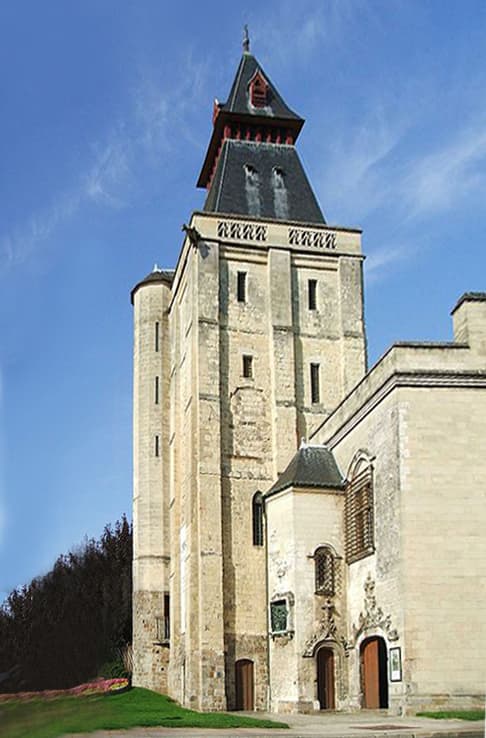
Abbeville
Abbeville is a historic commune in northern France, located on the Somme River and serving as the historical capital of the County of Ponthieu. Its strategic location made it a significant crossing point and trading port throughout history, experiencing periods of both prosperity and conflict during the Middle Ages and beyond. The town is also notable for its connection to early prehistory due to the discovery of Paleolithic stone tools.

Abbey of Gethsemani
The Abbey of Our Lady of Gethsemani is a historic Catholic monastery in Kentucky, founded in 1848 by French Trappists. It is the oldest continuously operating Trappist monastery in the United States and serves as the motherhouse for Trappist and Trappistine monasteries in the country. Known for its contemplative life, working farm, and products like fruitcake and fudge, Gethsemani was also famously the home of author Thomas Merton.