
Nantes
Nantes is a historic French city located on the Loire River, known for its significant role in trade, particularly the Atlantic slave trade in the 18th century. It served as a primary residence for the Dukes of Brittany and later became a major industrial hub, especially in shipbuilding and food processing. Despite periods of economic decline and wartime destruction, Nantes has transformed into a service-oriented city, recognized for its quality of life and environmental initiatives.
Key Facts
- ›Nantes was the capital of the Namnetes, a Gaulish tribe, and its ancient name was Condevincum.
- ›It served as the primary residence for the 15th-century dukes of Brittany.
- ›Nantes was France's largest port in the 18th century and a major center for the French Atlantic slave trade.
- ›The city was a stronghold of the Catholic League during the French Wars of Religion and the Edict of Nantes was signed here.
- ›Nantes experienced significant industrial growth in the late 19th century, with shipbuilding and food processing as key industries.
- ›The city was heavily bombed during World War II but has since developed a service-based economy and is known for its green initiatives.

Castle of the Dukes of Brittany, Loire River Channels, Neoclassical Squares and Public Buildings, HôTels Particuliers
Naoned, Venice of the West, La Cité Des Ducs
Lambert Ii of Nantes, Roland, Nominoe, Alan Ii, Duke of Brittany, Francis Ii, Duke of Brittany, Anne of Brittany, Charles Viii of France, Francis I of France, Duke of MercœUr, Henry Iv of France, Jean-Baptiste Colbert, Jacques Cathelineau, FrançOis De Charette, Jean-Baptiste Carrier, Jean-Marc Ayrault
Capture By the Bretons In 851, Viking Incursion and Bishop's Death In 843, Part of the Viking Realm In 919, Norse Expulsion In 937, Union of Brittany and France In 1532, French Wars of Religion, Signing of the Edict of Nantes In 1598, French Revolution, Battle of Nantes, Drownings At Nantes, World War Ii Air Raids, Postwar Strikes and Deindustrialization, European Green Capital Award
About Nantes
Overview of Nantes
Nantes is a historically significant city in western France, located on the Loire River, approximately 50 kilometers from the Atlantic coast. Its origins trace back to antiquity as a settlement of the Gaulish tribe known as the Namnetes, evolving through Roman and early medieval periods. The city is recognized for its rich ducal history, having served as a primary residence for the Dukes of Brittany, earning it the nickname "the City of the Dukes."
Historical Significance and Development
Nantes played a crucial role in French history, particularly during the 18th century when it became the largest port in France and a principal hub for the French Atlantic slave trade. The city was also the site where the Edict of Nantes, a landmark decree granting religious freedoms, was signed in 1598. Following periods of industrial growth, especially in shipbuilding and food processing in the late 19th century, Nantes experienced significant destruction during World War II. In the postwar era, it has undergone a transformation into a modern service-oriented city, celebrated for its commitment to environmental sustainability, as evidenced by its receipt of the European Green Capital Award in 2013.
Source: Wikipedia ↗
Frequently Asked Questions
What is the historical significance of Nantes in the slave trade?
During the 18th century, Nantes became the largest port in France and was responsible for nearly half of the French Atlantic slave trade. Its merchants sold approximately 450,000 African slaves in the West Indies, making it a major center for this lucrative but brutal trade.
What is Nantes known for historically regarding the Dukes of Brittany?
Nantes was a primary residence for the 15th-century dukes of Brittany, and it served as the home for their council, treasury, and chancery. The city is often referred to as 'the City of the Dukes' due to this historical connection.
When was the Edict of Nantes signed in Nantes?
The Edict of Nantes, which legalized Protestantism in France and concluded the French Wars of Religion, was signed in the town in 1598. This event marked a significant moment in French religious history, although Nantes itself remained fervently Catholic.
What were the main industries in Nantes during the 19th century?
By the mid-19th century, Nantes lagged behind other industrial cities, but it later became a major industrial center. By 1900, its two main industries were food processing, notably the canning industry, and shipbuilding, with several large shipyards.
How has Nantes changed since World War II?
Following extensive damage from Allied bombing raids during World War II, Nantes experienced a period of strikes and deindustrialization in the latter half of the 20th century. It has since transitioned to a service-oriented economy and has focused on improving its quality of life and implementing environmental initiatives, earning the European Green Capital Award in 2013.
Related Monasteries
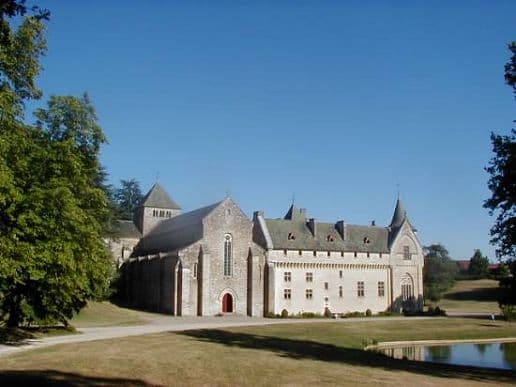
Abbey of Loc-Dieu
Abbey of Loc-Dieu is a Cistercian abbey situated in Aveyron, France, founded in 1123 on a site historically known as "devil's place" before being renamed "place of God" by its monastic inhabitants. Despite facing destruction and rebuilding, it became a significant Gothic architectural site and, during World War II, served as a safe haven for artworks from the Louvre, including the Mona Lisa. Today, the abbey and its park are open to the public.

Abbey of Saint-Germain-des-Prés
The Abbey of Saint-Germain-des-Prés, originally a Benedictine abbey founded in 558, is one of the oldest churches in Paris. It served as a significant center for scholarship, producing illuminated manuscripts, and was a royal necropolis. Despite destruction by Vikings and damage during the French Revolution, the church has undergone numerous rebuilds and restorations, incorporating Romanesque, Gothic, and later decorative styles, and remains an active Catholic parish church.

Abbey of Sénanque
Sénanque Abbey is a Cistercian monastery founded in 1148 in Provence, France, renowned for its remarkably preserved Romanesque architecture. Initially thriving, it experienced decline and was suppressed during the French Revolution, only to be re-established in 1854 and later reactivated in 1988. Today, it houses an active monastic community and is known for its lavender fields and spiritual retreats.