
Moutier-Grandval Abbey
Moutier-Grandval Abbey was a significant Benedictine monastery located in the Bernese Jura region of Switzerland, founded around 640. Initially a dependency of Luxeuil Abbey, it grew to become a powerful secular ruler of a considerable territory. The abbey's history is marked by disputes over its property and privileges, and it ultimately ceased to exist following the French Revolutionary Wars. Although the main abbey buildings have disappeared, some remnants and associated artifacts, like the Moutier-Grandval Bible, survive.
Key Facts
- ›Founded around 640 CE as a dependency of Luxeuil Abbey.
- ›Saints Germanus of Granfelden and Randoald of Grandval were its first abbot and prior, respectively, and were martyred in 675.
- ›By the 9th or 10th century, it held property and influence across a wide area, from Lake Biel to the Balsthal valley.
- ›In 999, it was granted to the Bishop of Basel, establishing the Prince-Bishopric of Basel.
- ›The abbey's buildings have largely disappeared, with only some 12th-century remains discovered in 2008.
- ›The famous Moutier-Grandval Bible, an illuminated manuscript from around 840, was once owned by the abbey.

Moutier-Grandval Bible, Chapelle De ChalièRe
Saint Waldebert, Saint Germanus of Granfelden, Saint Randoald of Grandval, Gundoin, Duke of Alsace, Adalrich, Duke of Alsace, Conrad of Burgundy, Luitfrid, Rudolph Iii of Burgundy, Johann Burchard
- Founding of the Abbey Around 640.
- Martyrdom of Saints Germanus and Randoald In 675.
- Grant To Count Luitfrid In 968.
- Presentation To the Bishop of Basel In 999, Establishing the Prince-Bishopric of Basel.
- Monks Fled To DeléMont During the Swiss Reformation.
- End of the Abbey and Prince-Bishopric By French Revolutionary Armies In 1792.
About Moutier-Grandval Abbey
Moutier-Grandval Abbey was a historically significant Benedictine monastery situated in the Bernese Jura region of Switzerland, near the villages of Moutier and Grandval. Its foundations date to approximately 640 CE, established on land granted by Gundoin, Duke of Alsace, as a dependency of Luxeuil Abbey. The abbey's early leadership included Saint Germanus of Granfelden as its first abbot and Saint Randoald of Grandval as prior; both figures met a tragic end, martyred in 675.
Over centuries, Moutier-Grandval Abbey evolved from a monastic center into a secular ruler of a substantial territory, exerting influence from Lake Biel to the Balsthal valley. Its history was often marked by protracted disputes over property and privileges, and it eventually fell under the control of the Dukes of Burgundy, who appointed lay abbots. In 999, the abbey and its vast lands were presented to the Bishop of Basel, instrumental in forming the Prince-Bishopric of Basel as a secular entity. Despite its importance, the abbey's monastic community was dispersed during the Swiss Reformation, and its buildings were largely destroyed following the arrival of French Revolutionary armies in 1792.
Although the main abbey structures have vanished, archaeological discoveries have unearthed 12th-century remains, and the Carolingian chapelle de Chalière in Perrefitte, featuring 11th-century wall paintings, is a surviving architectural testament to the abbey's past. The abbey's legacy is also preserved through artifacts such as the renowned Moutier-Grandval Bible, an illuminated manuscript from around 840, now housed in the British Library, and the relics of Saints Germanus and Randoald, which were transferred to Delémont.
Source: Wikipedia ↗
Frequently Asked Questions
When was Moutier-Grandval Abbey founded?
Moutier-Grandval Abbey was founded around 640 CE. It was established as a dependency of Luxeuil Abbey on land granted by Gundoin, Duke of Alsace.
Who were the first leaders of Moutier-Grandval Abbey?
The first abbot was Saint Germanus of Granfelden, who served for 35 years. Saint Randoald of Grandval served as his prior. Both were later martyred.
What happened to the abbey's buildings?
The main buildings of the abbey have disappeared, particularly after the French Revolutionary Wars. However, some 12th-century building remains were discovered under the town in 2008.
What is the Moutier-Grandval Bible?
The Moutier-Grandval Bible is a significant illuminated manuscript dating from approximately 840 CE. It was likely written in Tours, France, and was owned by the abbey until its dissolution. It is now housed in the British Library.
What is the current status of Moutier-Grandval Abbey?
The abbey as an institution and its main buildings no longer exist. The monks fled during the Swiss Reformation, and the arrival of French Revolutionary armies in 1792 marked the end of the abbey and the Prince-bishopric.
Are there any surviving structures associated with the abbey?
Yes, the chapelle de Chalière in Perrefitte, used as a cemetery chapel, is a Carolingian building attributed to the abbey. It features faded 11th-century wall paintings.
Related Monasteries

Aruchavank
Aruchavank, also known as the Cathedral of Aruch or Surb Grigor, is a significant medieval Armenian church located on a plateau near Mount Aragats. Commissioned by Prince Grigor Mamikonian and his wife Heghine between 661 and 682 AD, it stands as one of the largest and most architecturally important churches of its era in Armenia. Despite damage from earthquakes and its use as a fortress, the church has undergone restoration, though its drum and cupola are now collapsed.

Cathedral of Talin
The Cathedral of Talin is a seventh-century Armenian cathedral complex located in the Aragatsotn Province of Armenia. The complex includes the main Katoghike Church, which is largely in ruins, and the smaller S. Astvatsatsin Church, commissioned by Prince Nerseh Kamsarakan. Both structures are noted for their 7th-century architectural styles, with remnants of frescoes and inscriptions providing historical context.
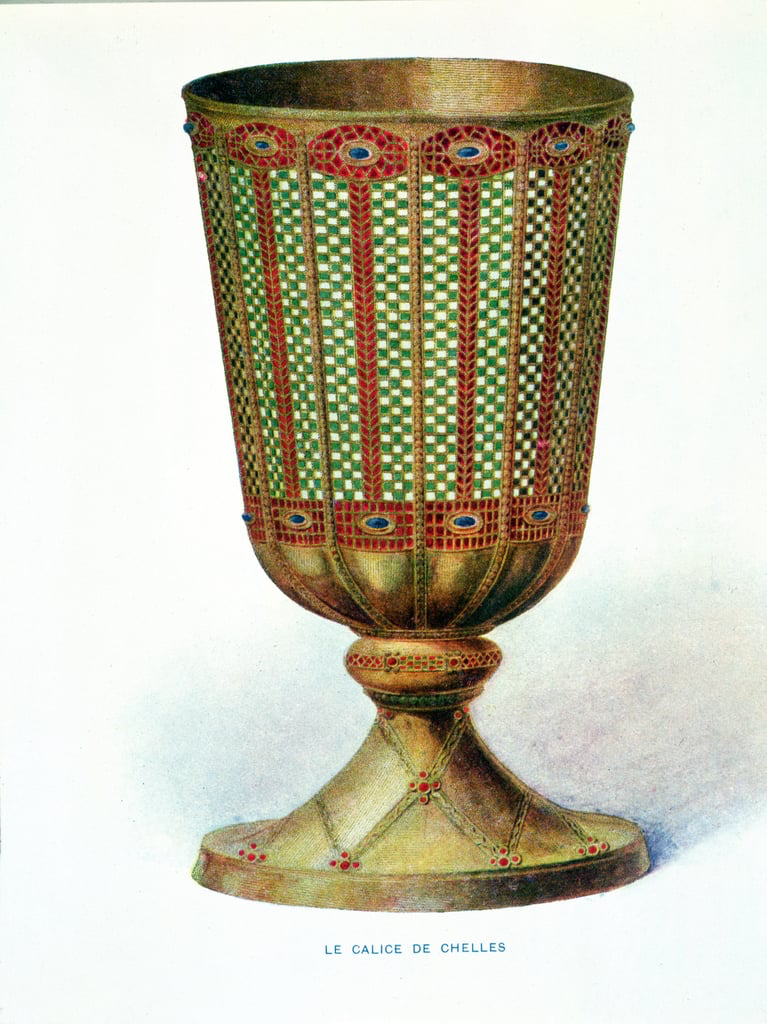
Chelles Abbey
Chelles Abbey was a significant Frankish monastery founded around 657/660, initially for women and later expanding into a double monastery due to its reputation for learning. It held strong royal connections throughout the Carolingian era and was renowned for its scriptorium. The abbey was dissolved during the French Revolution in 1790 and subsequently destroyed, with its remains incorporated into the modern town hall of Chelles.