
Luxeuil Abbey
Christian·France·Active (church as parish church, conventual buildings exist)·6th century
Luxeuil Abbey, officially known as Abbaye Saint-Pierre et Saint-Paul, was a prominent monastery in Franche-Comté, France, founded around 590 by Saint Columbanus. It became a significant center of monastic life and learning in Gaul, known for its intellectual stimulation and adherence to both Celtic and Benedictine traditions. Despite periods of decline and destruction by raids, the abbey's church and conventual buildings survived the French Revolution and continue to exist today, with the church serving as the parish church.
Key Facts
- ›Founded circa 590 by the Irish missionary Saint Columbanus.
- ›Became the most important and flourishing monastery in Gaul, known for its perpetual chanting (laus perennis).
- ›The monastic school under Saints Eustace and Waldebert established a high reputation.
- ›Suffered devastation by Vikings in the late 9th century and by Hungarians in the early 10th century.
- ›Its Gothic church, built in the 14th century, survived the French Revolution and is now the Basilica of St. Pierre.
- ›The conventual buildings were used as a seminary until 1901 and still remain in existence.

Gothic
Thermal Baths, Extensive Library and Scriptorium, Gothic Church, Cloisters and Conventual Buildings
Abbaye Saint-Pierre Et Saint-Paul
Saint Columbanus, Saint Eustace of Luxeuil, Saint Waldebert, Saint Ansegisus
- Founded Circa 590 By Saint Columbanus.
- Became A Major Monastic Center In Gaul.
- Devastated By Vikings Circa 886.
- Sacked By Hungarians In 917.
- Reformed By Emperor Louis the Pious In 816.
- Survived the French Revolution.
- Conventual Buildings Used As A Seminary Until 1901.
About Luxeuil Abbey
Luxeuil Abbey, known officially as the Abbaye Saint-Pierre et Saint-Paul, stands as one of the most historically significant monastic foundations in the Franche-Comté region of France. Its origins trace back to approximately 590 CE, when the Irish missionary Saint Columbanus, accompanied by his followers, established a community on the site of the ruined Gallo-Roman settlement of Luxovium. This location, now known for the thermal baths of Luxeuil-les-Bains, was chosen for its strategic advantages, despite being overgrown and bearing remnants of pagan worship.
Founding and Early Flourishing
The abbey church was constructed with a sense of triumph over the former pagan site. Under the intellectual and spiritual guidance of its Irish founders, Luxeuil Abbey rapidly evolved into the foremost monastery in Gaul. Its community was so substantial that the monastic office was chanted continuously, a practice known as laus perennis, imported from Agaunum. The monastic rule initially drew from Celtic traditions, later incorporating elements of the more formalized Benedictine Rule.
Intellectual Center and Expansion
Following Saint Columbanus's exile, Saint Eustace of Luxeuil became abbot, leading a monastic school that gained a distinguished reputation. Under his successor, Saint Waldebert, the abbey's extensive library and scriptorium are first documented. The influence of Luxeuil extended significantly, contributing to the conversion of the Burgundians and serving as a model for the foundation of other monasteries, including Bobbio in Italy, Saint-Valéry, and Remiremont. Prominent monastic figures from other abbeys, such as Lérins Abbey, visited Luxeuil to study its practices.
Periods of Decline and Resilience
Despite its early success, Luxeuil Abbey faced considerable challenges. It experienced a decline in the mid-8th century, with a cessation of book production. The monastery and its surrounding town suffered devastating raids by Vikings around 886 and by Hungarians in 917. From the 15th century onwards, the practice of appointing non-resident commendatory abbots led to a further decline in discipline. However, the abbey saw a period of reform in the modern era, joining the Congregation of St. Vanne in 1634.
Survival and Legacy
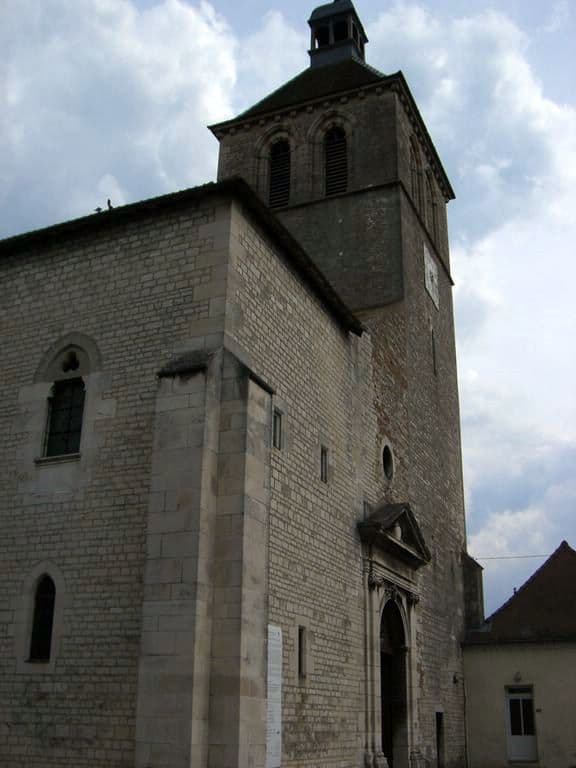
During the French Revolution, the monastic community was dispersed. While much of the abbey's original site has been built over by the modern town, its 14th-century Gothic church, known today as the Basilica of St. Pierre, was preserved. The cloisters and conventual buildings also survived and were utilized as a seminary for the diocese of Besançon until 1901. The Basilica of St. Pierre continues to serve as the parish church for Luxeuil-les-Bains, ensuring the enduring presence of this ancient monastic site.
Source: Wikipedia ↗
Frequently Asked Questions
When was Luxeuil Abbey founded?
Luxeuil Abbey was founded around the year 590 by Saint Columbanus, an Irish missionary. He established it on the ruins of a Gallo-Roman settlement.
What was the significance of Luxeuil Abbey in its early history?
Under the guidance of Saint Columbanus and his successors, Luxeuil Abbey quickly became the most important and flourishing monastery in Gaul. It was renowned for its intellectual and spiritual life, with a community so large that services were conducted continuously day and night.
What religious traditions influenced Luxeuil Abbey's rule?
The earliest monastic rule observed at Luxeuil was derived from Celtic monastic traditions. This was later supplemented by the more formalized Benedictine Rule, which was common throughout the West.
Did Luxeuil Abbey face any destruction or decline?
Yes, Luxeuil Abbey experienced periods of decline and destruction. It was devastated by Vikings around 886 and sacked by the Hungarians in 917. The institution of non-resident commendatory abbots from the 15th century also contributed to a decline in discipline.
What remains of Luxeuil Abbey today?
The fine Gothic church, built in the 14th century, survived the French Revolution and is now known as the Basilica of St. Pierre, serving as the parish church of Luxeuil-les-Bains. The cloisters and conventual buildings also remain and were formerly used as a seminary.
Who were some notable figures associated with Luxeuil Abbey?
Key figures include its founder, Saint Columbanus, and his successors as abbots, Saint Eustace of Luxeuil and Saint Waldebert. The abbey also contributed to the conversion of the Burgundians and sent out monks to found other monasteries.
Related Monasteries
Abbey of Saint-Marcel-lès-Chalon
The Abbey of Saint-Marcel-lès-Chalon was a significant Benedictine monastery founded around 590 CE near Chalon-sur-Saône in eastern France. It later became part of the Congregation of Cluny between 979 and 988, transitioning to a priory. The monastery is historically notable as the place where the philosopher Peter Abelard died in 1142. Although suppressed during the French Revolution and its monastic buildings demolished, the church remains standing as a parish church.

Abbey of St Genevieve
The Abbey of Saint Genevieve was a prominent monastery in Paris, reportedly founded in 502 by King Clovis I. It evolved into a significant center for religious scholarship and housed a large library, contributing to the formation of the University of Paris. The abbey church, rebuilt in the 18th century by Jacques-Germain Soufflot, was later transformed into the Panthéon after its suppression during the French Revolution, with much of its religious significance lost.

Holy Cross Abbey
The Abbey of the Holy Cross was a significant French Benedictine nunnery founded in the 6th century, notable for being the first women's monastery in the Frankish Empire and for its association with Queen Radegund. Although destroyed during the French Revolution, a new monastery with the same name was established in the 19th century for Canonesses of St. Augustine of the Mercy of Jesus, continuing its legacy of religious life.