
Monastery of the Dominican Sisters of the Perpetual Rosary
Christian·United States·Abandoned/Endangered Historic Site·19th century
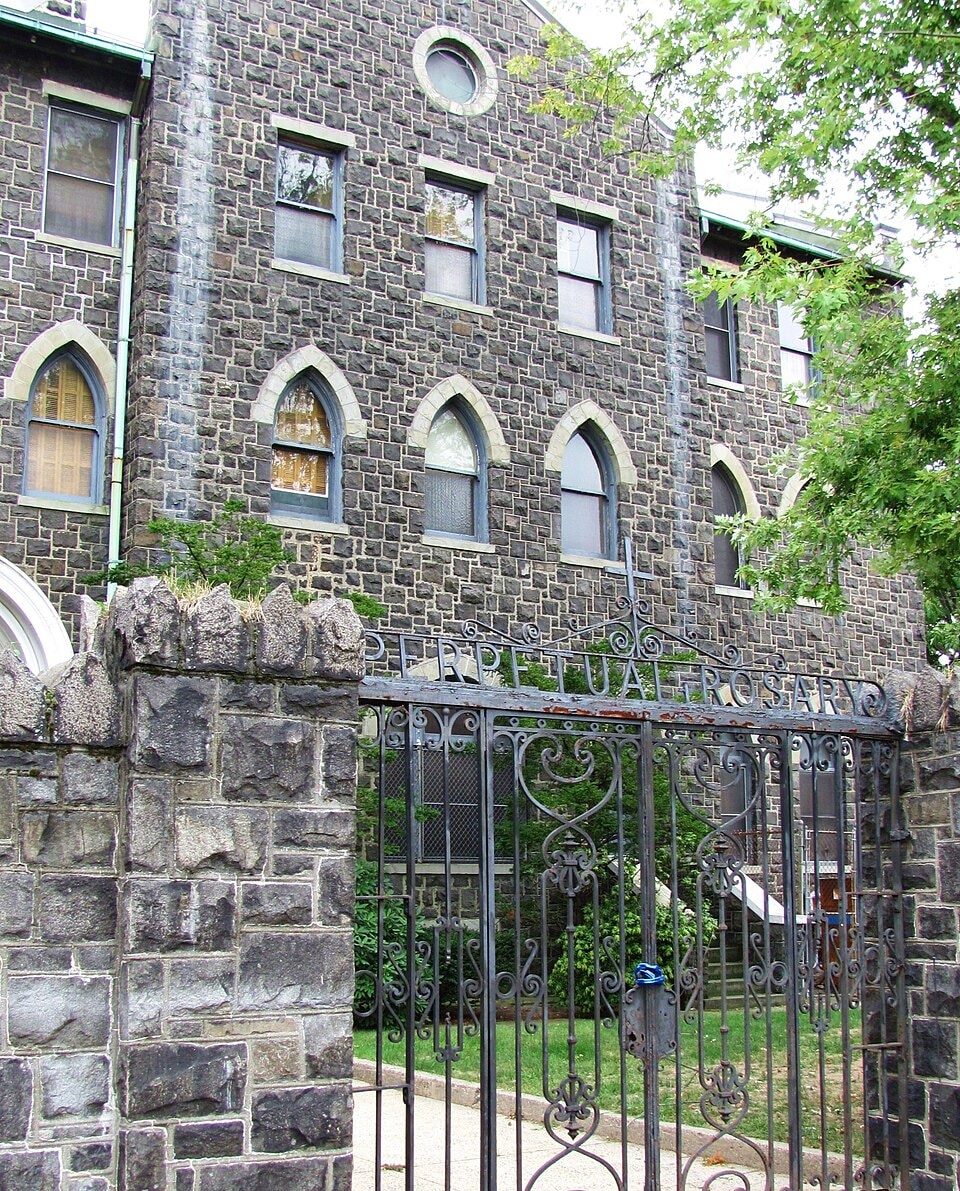
The Monastery of the Dominican Sisters of the Perpetual Rosary, often referred to as the Blue Chapel, was a significant religious institution established in Union City, New Jersey, in 1891. It served as the American motherhouse for Dominican Nuns dedicated to the Perpetual Rosary and was notable for its Gothic Revival architecture and distinctive blue-tinted chapel windows. Since its abandonment in 2008, the monastery complex, including its cemetery, faces an uncertain future, though preservation efforts are underway.
Key Facts
- ›Established in 1891 as the American branch of Dominican Nuns of the Perpetual Rosary.
- ›The Gothic Revival complex was constructed between 1912 and 1914.
- ›Known for its chapel with blue-tinted windows, originally thought to be German but made in Buffalo, New York.
- ›The monastery housed relics, including those of the True Cross and fragments of Saint Dominic's bone.
- ›The property includes landscaped grounds and a cemetery with approximately 65 graves of nuns.
- ›Considered one of New Jersey's most endangered historic sites by Preservation New Jersey.
Gothic Revival
Blue-Tinted Chapel Windows, Stained Glass Windows By Leo P. Frohe, Relics of the True Cross, Fragments of Saint Dominic's Bone, Cemetery With Approximately 65 Graves
Blue Chapel
Father Damien-Marie Saintourens, Sister Mary of the Compassion, Leo P. Frohe, Tony Squire
- Establishment of the American Branch of Dominican Nuns of the Perpetual Rosary
- Construction of the Monastery Complex
- Abandonment of the Monastery
- Discovery of the Origin of the Stained Glass Windows
About Monastery of the Dominican Sisters of the Perpetual Rosary
Monastery of the Dominican Sisters of the Perpetual Rosary (Blue Chapel)
The Monastery of the Dominican Sisters of the Perpetual Rosary, commonly known as the Blue Chapel, is a former monastic complex located in Union City, Hudson County, New Jersey. Founded in 1891 by Father Damien-Marie Saintourens of the Order of Preachers, it became the American motherhouse for Dominican Nuns dedicated to the practice of the Perpetual Rosary. The Gothic Revival style buildings, constructed between 1912 and 1914, represent the first monastery in the United States specifically built for this devotional purpose.
History and Architecture
The monastery is distinguished by its chapel, which features unique blue-tinted stained glass windows. While initially believed to be imported from Germany, research revealed they were crafted in Buffalo, New York, by Leo P. Frohe of Buffalo Glass Works, in the spirit of the historic Munich School style. The complex also housed significant religious relics, including pieces of the True Cross and fragments of Saint Dominic's bone. The grounds, enclosed by a stone wall, span 1.4 acres and contain a cemetery with approximately 65 graves of the nuns. The Passionist fathers of St. Michael's Monastery and Church served as chaplains.
Current Status and Preservation Efforts
Following financial and demographic decline, the monastery was vacated in 2009 and has since fallen into disrepair, exacerbated by water damage and lack of heat. Attempts by the order to redevelop the property into apartments met with community opposition. The monastery is not currently listed on any national or state historic registers. However, Preservation New Jersey has identified it as one of the state's most endangered historic sites. The city has shown interest in its preservation, installing a historic site marker and incorporating protective zoning stipulations, with ongoing research potentially supporting its designation as a significant work of art or historical site.
Source: Wikipedia ↗
Frequently Asked Questions
When was the Monastery of the Dominican Sisters of the Perpetual Rosary founded?
The American branch of the Dominican Nuns of the Perpetual Rosary was established in 1891. The monastery complex itself was constructed between 1912 and 1914.
What is the significance of the 'Blue Chapel' name?
The monastery is known as the Blue Chapel due to the distinctive blue-tinted windows that were a prominent feature of its original chapel. These windows were created in Buffalo, New York, by artist Leo P. Frohe.
What is the current status of the monastery?
The monastery was abandoned in 2008 and has since fallen into disrepair. Its future remains uncertain, although preservation efforts are being made, and the city has expressed interest in protecting the site.
Does the monastery have any historical landmark status?
Currently, the monastery is not listed on the New Jersey Register of Historic Places or the National Register of Historic Places. However, research into the stained glass artist may support future landmark designation.
What notable relics were kept at the monastery?
The convent housed several important relics, including relics of the True Cross and fragments of a bone belonging to Saint Dominic.
Related Monasteries
Benedictine Sisters of Perpetual Adoration
The Benedictine Sisters of Perpetual Adoration are a religious congregation founded in 1874 in Clyde, Missouri, dedicated to the Rule of St. Benedict and daily Eucharistic adoration. Originating from a Swiss foundation, the sisters established a motherhouse in Clyde and have since expanded to multiple locations across the United States. They are known for their contemplative life, ecclesiastical embroidery, plainchant, and the production of artisanal goods like soaps and low-gluten altar breads.

Saint Benedict's Monastery
Saint Benedict's Monastery, located in St. Joseph, Minnesota, is a significant institution of the Sisters of the Order of Saint Benedict. Founded from roots in Bavaria, it grew to become the world's largest Benedictine community of women, playing a crucial role in education and healthcare. The monastery is also recognized for its Sacred Heart Chapel, a Beaux-Arts architectural gem that has been renovated to reflect modern Benedictine spirituality.

St. Paul's Episcopal Church
The former St. Paul's Episcopal Church is a historic Gothic Revival church in Cleveland, Ohio, known for its grand architecture and prominent location on Millionaire's Row. Founded in 1846 as an Episcopal parish, it was rebuilt multiple times before its current structure was completed in the 1870s. Although the Episcopal congregation moved out in the 1920s, the building was acquired by a Catholic monastic group, the Poor Clares, and continues to be used for monastic purposes today, with a new Catholic parish dedicated to St. Paul established on the site in 1949.