
Saint Benedict's Monastery
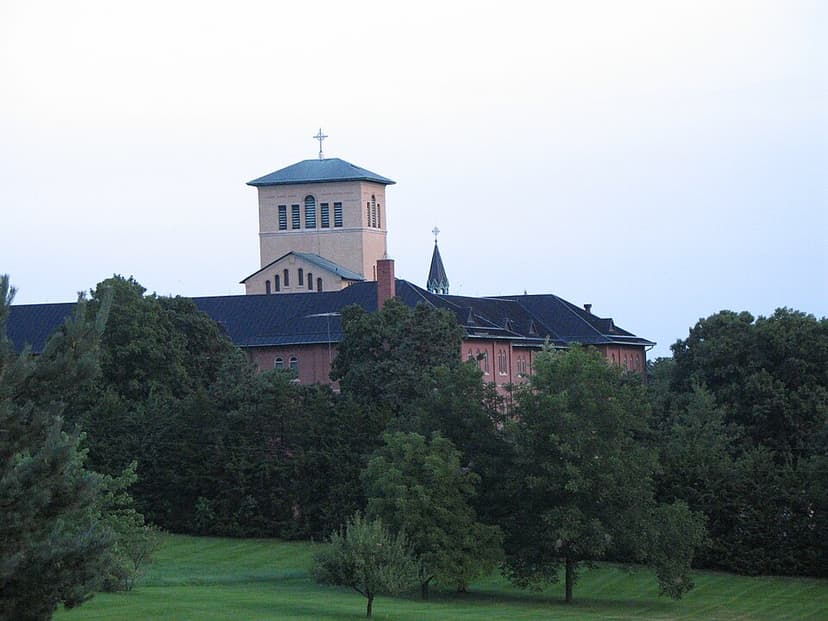
Saint Benedict's Monastery, located in St. Joseph, Minnesota, is a significant institution of the Sisters of the Order of Saint Benedict. Founded from roots in Bavaria, it grew to become the world's largest Benedictine community of women, playing a crucial role in education and healthcare. The monastery is also recognized for its Sacred Heart Chapel, a Beaux-Arts architectural gem that has been renovated to reflect modern Benedictine spirituality.
Key Facts
- ›Founded by Mother Benedicta Riepp, a pioneer of Benedictine women's communities in the us.
- ›Grew to be the largest Benedictine community of women globally, with a peak of 1,278 members in 1946.
- ›Established Saint Benedict's Academy in 1878, which evolved into the College of Saint Benedict.
- ›Its central core, the St. Benedict's Convent and College Historic District, is listed on the National Register of Historic Places.
- ›Features the Sacred Heart Chapel, a Beaux-Arts style building with a prominent ribbed dome.
- ›Operates a Spirituality Center offering retreats, spiritual direction, and centering prayer workshops.

Beaux-Arts
Sacred Heart Chapel, Spirituality Center, Haehn Museum, Whitby Gift Shop and Gallery, Subiaco Hermitage
Mother Benedicta Riepp, Sister Annella Zervas, Sister Karen Rose
- Emigration From Bavaria To Minnesota
- Founding of Saint Benedict's Academy
- Transfer of Ownership of the College of Saint Benedict
- Merger With Saint Bede Monastery
About Saint Benedict's Monastery
Saint Benedict's Monastery, situated in St. Joseph, Minnesota, is a prominent religious institution belonging to the Sisters of the Order of Saint Benedict. Its history traces back to Bavarian roots, with foundational efforts by Mother Benedicta Riepp, recognized as the founder of Benedictine women's communities in the United States. The monastery experienced significant growth, becoming the world's largest Benedictine community of women at its peak and continuing to be a substantial community in the United States.
History and Growth
The community's origins lie with six sisters who emigrated from Eichstätt, Bavaria, to St. Cloud, Minnesota, in 1857, later relocating to St. Joseph in 1863. A key development in its history was the establishment of Saint Benedict's Academy in 1878, which eventually evolved into the College of Saint Benedict in 1913. In 1961, ownership of the college was transferred, establishing it as a separate entity, though the monastery and college campuses remain adjacent.
The monastery's size and influence are notable, having been the largest Benedictine community of women globally, with a membership of 1,278 in 1946. In 2010, it was the largest such community in the U.S. with nearly 300 members. The monastery also integrated the Benedictine Sisters of Saint Bede's Monastery in Eau Claire, Wisconsin, in 2012.
Architecture and Facilities
The central core of the convent and college was recognized for its historical significance by being listed on the National Register of Historic Places in 1989. This district comprises 14 buildings and structures dating from 1882 to the late 1920s, reflecting the growth of the community.
A significant architectural feature is the Sacred Heart Chapel, originally opened in 1914. Designed in the Beaux-Arts style by George Stauduhar, it is distinguished by a 135-foot ribbed dome. The chapel underwent extensive renovation in the early 1980s to align with modern Benedictine spirituality, incorporating an oratory and archival space in its western addition, known as the Gathering Place.
Outreach and Ministries
Saint Benedict's Monastery has a strong commitment to education and healthcare. The Sisters have established and staffed numerous schools, both in Central Minnesota and abroad, including in Native American communities. They have also been instrumental in the creation and staffing of healthcare facilities such as St. Cloud Hospital and Queen of Peace Hospital.
Furthermore, the monastery plays a vital role in the wider Benedictine network, being a member of the Federation of St. Benedict and having founded independent Benedictine women's houses and Native American missions. The Spirituality Center operates within the monastery, providing resources for retreats, spiritual direction, and programs like centering prayer, along with a hermitage for individual retreats.
Notable Figures
Sister Annella Zervas (1900–1926), a nun of St. Benedict's known for her inspirational battle against a severe skin affliction, has been recognized as a Servant of God, with preliminary steps taken towards her Roman Catholic sainthood. The monastery also maintains a list of its Prioresses, with Sister Karen Rose being the 18th and current Prioress, installed in June 2023.
Source: Wikipedia ↗
Frequently Asked Questions
When was Saint Benedict's Monastery founded?
The Sisters trace their roots to Bavaria, with six emigrating to St. Cloud, Minnesota, in 1857 and moving to St. Joseph in 1863. Mother Benedicta Riepp is considered the founder of Benedictine women's communities in the United States.
What is the significance of Saint Benedict's Monastery?
It was historically the largest Benedictine community of women in the world and remains a prominent community in the United States. The monastery has been instrumental in the founding of other Benedictine communities and has made significant contributions to education and healthcare.
What is notable about the Sacred Heart Chapel?
The Sacred Heart Chapel, designed in the Beaux-Arts style, is a prominent building with a 135-foot high ribbed dome. It was renovated in the early 1980s to align with modern Benedictine spirituality, featuring an oratory and the monastery's archives in its addition, the Gathering Place.
What kind of outreach does Saint Benedict's Monastery engage in?
The Sisters are committed to education, staffing schools locally and abroad, and have been involved in establishing and staffing healthcare institutions like St. Cloud Hospital. They also found other independent houses of Benedictine women and run programs connecting students with the monastery.
Is Saint Benedict's Monastery an active community?
Yes, Saint Benedict's Monastery houses an active community of the Sisters of the Order of Saint Benedict. Sister Karen Rose is the current prioress, installed in June 2023.
Related Monasteries
Benedictine Sisters of Perpetual Adoration
The Benedictine Sisters of Perpetual Adoration are a religious congregation founded in 1874 in Clyde, Missouri, dedicated to the Rule of St. Benedict and daily Eucharistic adoration. Originating from a Swiss foundation, the sisters established a motherhouse in Clyde and have since expanded to multiple locations across the United States. They are known for their contemplative life, ecclesiastical embroidery, plainchant, and the production of artisanal goods like soaps and low-gluten altar breads.

St. Paul's Episcopal Church
The former St. Paul's Episcopal Church is a historic Gothic Revival church in Cleveland, Ohio, known for its grand architecture and prominent location on Millionaire's Row. Founded in 1846 as an Episcopal parish, it was rebuilt multiple times before its current structure was completed in the 1870s. Although the Episcopal congregation moved out in the 1920s, the building was acquired by a Catholic monastic group, the Poor Clares, and continues to be used for monastic purposes today, with a new Catholic parish dedicated to St. Paul established on the site in 1949.

Abbey of Gethsemani
The Abbey of Our Lady of Gethsemani is a historic Catholic monastery in Kentucky, founded in 1848 by French Trappists. It is the oldest continuously operating Trappist monastery in the United States and serves as the motherhouse for Trappist and Trappistine monasteries in the country. Known for its contemplative life, working farm, and products like fruitcake and fudge, Gethsemani was also famously the home of author Thomas Merton.