
Benedictine Sisters of Perpetual Adoration
The Benedictine Sisters of Perpetual Adoration are a religious congregation founded in 1874 in Clyde, Missouri, dedicated to the Rule of St. Benedict and daily Eucharistic adoration. Originating from a Swiss foundation, the sisters established a motherhouse in Clyde and have since expanded to multiple locations across the United States. They are known for their contemplative life, ecclesiastical embroidery, plainchant, and the production of artisanal goods like soaps and low-gluten altar breads.
Key Facts
- ›Founded in 1874 by five sisters led by Mary Anselma Felber.
- ›Motherhouse and largest community located in Clyde, Missouri.
- ›Practices daily Eucharistic adoration and follows the Rule of St. Benedict.
- ›Known for ecclesiastical embroidery and the singing of plainchant.
- ›Develops and produces low-gluten altar breads approved by the Catholic Church.
- ›Supports itself through the sale of handmade soaps, liturgical vestments, and gourmet popcorn.
- ›As of 2016, the congregation had sixty-one members.
Daily Eucharistic Adoration, Ecclesiastical Embroidery, Singing of Plainchant, Production of Low-Gluten Altar Breads, Handmade Soaps and Lotions, Gourmet Popcorn
Mary Anselma Felber
- Founding of the Benedictine Convent of Perpetual Adoration In 1874
- Establishment of Multiple Monasteries Across the Us Since the Early 1900s
- Suspension of Altar Bread Operation In 2021
About Benedictine Sisters of Perpetual Adoration
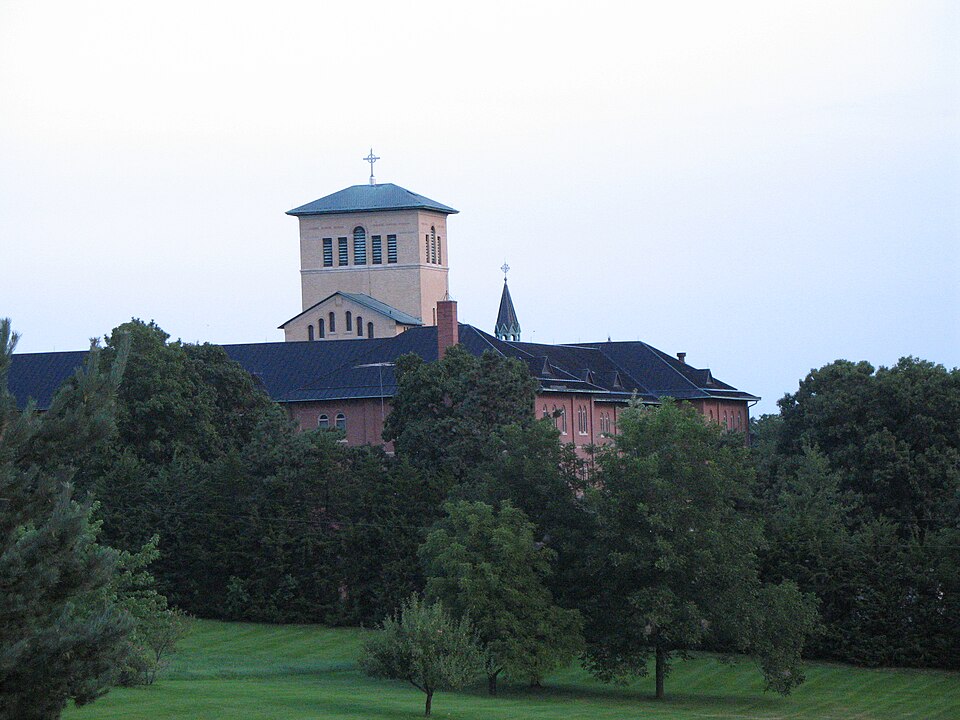
The Benedictine Sisters of Perpetual Adoration are a religious congregation that adheres to the Rule of St. Benedict and is distinguished by its practice of daily Eucharistic adoration. The congregation's motherhouse and largest community are situated in Clyde, Missouri, where the original monastery was founded in 1874.
History and Foundation
The foundation in Clyde was established by five sisters, led by Mary Anselma Felber, who journeyed from the relatively young monastery of Maria-Rickenbach in Switzerland. Their move was influenced by the departure of monks from Engelberg Abbey, who subsequently founded Conception Abbey nearby. At its inception, the Benedictine Convent of Perpetual Adoration in Clyde, like its Swiss predecessor, cultivated expertise in ecclesiastical embroidery and the solemn singing of plainchant. The sisters also engaged in educational and charitable work, teaching immigrant children and operating an orphanage, eventually establishing St. Joseph's Academy.
Expansion and Present Day Operations
Since the early 20th century, the congregation has expanded its presence, founding additional monasteries in various states across the United States, including Washington, Illinois, Arizona, and Oklahoma. The sisters maintain a contemplative lifestyle guided by the Rule of St. Benedict. As of 2016, the community comprised sixty-one members. To sustain their community, they are known for producing artisanal goods such as handmade soaps, liturgical vestments, and gourmet popcorn, sold under the "Monastery Creations" brand. A significant development in their production is the creation of low-gluten altar breads, which have received approval from the Catholic Church for sacramental use and are considered safe for celiac sufferers.
Notable Contributions
Beyond their spiritual practices, the Benedictine Sisters of Perpetual Adoration have made notable contributions through their craft in ecclesiastical embroidery and their commitment to preserving plainchant. Their development of low-gluten hosts addresses a specific need within the Catholic community, ensuring accessibility for individuals with gluten sensitivities. The production of their goods, including soaps and lotions derived from onsite facilities that once housed a dairy operation, showcases a blend of tradition and practical enterprise.
Source: Wikipedia ↗
Frequently Asked Questions
When were the Benedictine Sisters of Perpetual Adoration founded?
The congregation was founded in 1874. The original monastery, the Benedictine Convent of Perpetual Adoration, was established in Clyde, Missouri, by a group of five sisters who came from Switzerland.
Where is the motherhouse of the Benedictine Sisters of Perpetual Adoration?
The motherhouse and largest community of the congregation is located in Clyde, Missouri. This site also serves as the original monastery founded in 1874.
What is the primary religious practice of the Benedictine Sisters of Perpetual Adoration?
The sisters follow the Rule of St. Benedict and are dedicated to daily Eucharistic adoration. This devotion is a central aspect of their contemplative way of life.
What kind of products do the Benedictine Sisters of Perpetual Adoration produce?
The sisters support themselves through the production of various goods, including ecclesiastical embroidery, liturgical vestments, handmade soaps and lotions under the "Monastery Scents" brand, gourmet popcorn, and notably, low-gluten altar breads suitable for celiacs.
Are the low-gluten altar breads safe for people with celiac disease?
Yes, the low-gluten hosts are developed to be safe for celiacs and have been approved by the Catholic Church for use at Mass. They are made in a dedicated wheat-free/gluten-free environment, and analysis has found no detectable gluten, with a reported gluten content of 0.01% at the limit of detection.
Have the Benedictine Sisters of Perpetual Adoration established other monasteries?
Yes, since the early 1900s, the congregation has established monasteries in various locations across the United States, including Chewelah, Washington; Mundelein, Illinois; Tucson, Arizona; Kansas City, Missouri; St. Louis, Missouri; San Diego, California; and Sand Springs, Oklahoma. The San Benito Monastery in Dayton, Wyoming, was established in 1989 and closed in 2014.
Related Monasteries

Saint Benedict's Monastery
Saint Benedict's Monastery, located in St. Joseph, Minnesota, is a significant institution of the Sisters of the Order of Saint Benedict. Founded from roots in Bavaria, it grew to become the world's largest Benedictine community of women, playing a crucial role in education and healthcare. The monastery is also recognized for its Sacred Heart Chapel, a Beaux-Arts architectural gem that has been renovated to reflect modern Benedictine spirituality.

St. Paul's Episcopal Church
The former St. Paul's Episcopal Church is a historic Gothic Revival church in Cleveland, Ohio, known for its grand architecture and prominent location on Millionaire's Row. Founded in 1846 as an Episcopal parish, it was rebuilt multiple times before its current structure was completed in the 1870s. Although the Episcopal congregation moved out in the 1920s, the building was acquired by a Catholic monastic group, the Poor Clares, and continues to be used for monastic purposes today, with a new Catholic parish dedicated to St. Paul established on the site in 1949.

Abbey of Gethsemani
The Abbey of Our Lady of Gethsemani is a historic Catholic monastery in Kentucky, founded in 1848 by French Trappists. It is the oldest continuously operating Trappist monastery in the United States and serves as the motherhouse for Trappist and Trappistine monasteries in the country. Known for its contemplative life, working farm, and products like fruitcake and fudge, Gethsemani was also famously the home of author Thomas Merton.