
Millstatt Abbey
Christian·Austria·Partially active as a museum and cultural venue; church is a parish church.·11th century
Millstatt Abbey, established around 1070 by Benedictine monks, is a significant Romanesque structure in Carinthia, Austria. For centuries, it served as a vital spiritual and cultural hub for Upper Carinthia and was one of the largest monastic institutions in the region. Over its history, the abbey transitioned through various religious orders, including the Knights of Saint George and the Society of Jesus, before its dissolution in 1773.
Key Facts
- ›Founded as a proprietary monastery by the Chiemgau count Aribo II and his brother Poto.
- ›Established as a Benedictine monastery around 1070, with the first verified abbot around 1122.
- ›Succeeded by the knightly Order of Saint George in 1469.
- ›Transferred to the Society of Jesus (Jesuits) in 1598.
- ›Dissolved in 1773 under Emperor Joseph II.
- ›The church building, erected in the second quarter of the 12th century, is a notable example of Romanesque architecture.

Romanesque, Gothic, Baroque, Renaissance
- Romanesque Church With Twin Steeples and Figurative Decoration
- Cloister With 12th-Century Capitals
- Millstatt Monastery Museum
- Chapter House Used For Art Exhibitions
- Former Castle of the Grand Master
- Way of the Cross Leading To Calvary Hill Chapel
Stift Millstatt
Aribo Ii, Poto, Gebhard of Salzburg, Otto I, Engelbert, Meinhardiner Dynasty, Frederick Iii, Paul Ii, Ferdinand Ii, Clement Xiv, Joseph Ii
- Foundation As A Proprietary Monastery.
- Benedictine Establishment and Initial Prosperity.
- Dissolution of the Nunnery In the 15th Century.
- Establishment of the Military Order of the Knights of Saint George In 1469.
- Devastation By Ottoman and Hungarian Troops.
- Transfer To the Society of Jesus In 1598.
- Peasant Revolt Against the Jesuits In 1737.
- Suppression of the Jesuits and Dissolution of the Convent In 1773.
About Millstatt Abbey
Millstatt Abbey, known in German as Stift Millstatt, is a former monastery situated in Millstatt, Austria. Its origins trace back to approximately 1070 when it was established as a proprietary monastery by Count Aribo II and his brother Poto. The abbey quickly became a significant center for Benedictine monasticism and is recognized as one of the most important Romanesque buildings in the state of Carinthia. For centuries, Millstatt Abbey played a crucial role as the spiritual and cultural heart of Upper Carinthia, amassing considerable possessions and influence across the region.
History and Transitions
The Benedictine monks, who may have descended from Hirsau Abbey, were the initial custodians of Millstatt. During their tenure, the abbey enjoyed papal protection and housed a notable scriptorium, although the famed Millstatt Manuscript is not definitively believed to have originated there. The abbey also included a nunnery, which was dissolved in the 15th century. The Benedictine period faced challenges, including periods of decay exacerbated by imperial interregnums and dynastic struggles.
In 1469, Emperor Frederick III, finding the monastic community diminished and the buildings decayed, secured a papal bull to establish the military order of the Knights of Saint George. This order was vested with the abbey's assets to aid in defense against Ottoman incursions. However, the knights struggled with debts and the upkeep of the premises, facing further devastation from Turkish and Hungarian campaigns. The order's influence waned, and by the mid-16th century, the estates were administered by imperial officials.
The Society of Jesus (Jesuits) took over Millstatt in 1598, with the aim of financing their college in Graz through the abbey's estates and furthering the Counter-Reformation. The Jesuits' strict measures to reassert Catholicism and enforce public charges led to local discontent, culminating in a revolt in 1737. Despite efforts, Protestantism remained deeply rooted in the surrounding areas. The Jesuit era concluded abruptly in 1773 with the order's suppression by Pope Clement XIV and the dissolution of the convent under Emperor Joseph II. The abbey's estates then passed to the public administration of the Habsburg monarchy.
Architectural Significance and Legacy
The monastery church, now the parish church of Christ the Savior and All Saints, was primarily erected in the second quarter of the 12th century, replacing an earlier church from the Carolingian period. It stands as a testament to Romanesque architecture, featuring a distinctive westwork with twin steeples, added between 1166 and 1177. The church's interior showcases a Romanesque basilica nave, a Gothic apse, and later Baroque additions, including a high altar from 1648. The cloister, dating back to the 12th century, was later furnished with a Late Gothic vault and frescoes.
Today, the church serves both parochial and cultural functions, hosting concerts as part of the Millstatt Music Weeks. Most other buildings of the former abbey are owned by the Austrian state and are managed by the Austrian State Forestry Commission. These structures now house the Millstatt monastery museum, serve as venues for art exhibitions and events, and have been repurposed into apartments and galleries, preserving the historical site for contemporary use.
Source: Wikipedia ↗
Frequently Asked Questions
When was Millstatt Abbey founded?
Millstatt Abbey was founded as a proprietary monastery by the Chiemgau count Aribo II and his brother Poto. Although no charter is preserved, a tithe agreement from about 1070 between Aribo and Archbishop Gebhard of Salzburg suggests the foundation took place before 1077. It was definitely established before 1122, as it was mentioned in a deed issued by Pope Callixtus II.
What religious orders have occupied Millstatt Abbey?
Millstatt Abbey was initially established by Benedictine monks. In 1469, the Benedictine monastery was disestablished and the buildings and assets were vested with the military order of the Knights of Saint George. In 1598, the Society of Jesus (Jesuits) took over the abbey.
What is the architectural style of Millstatt Abbey?
Millstatt Abbey is considered among the most important Romanesque buildings in Carinthia. The monastery church features Romanesque basilica architecture, a westwork with twin steeples, and a Romanesque portal with figurative decoration. Later additions include Baroque onion domes and a Gothic apse.
What happened to Millstatt Abbey after the Jesuits left?
The rule of the Jesuits at Millstatt came to an end in 1773 when the order was suppressed by Pope Clement XIV and the convent was dissolved under Emperor Joseph II. The Jesuits had to leave the monastery, and their estates passed to the public administration of the Habsburg monarchy.
What is the current status of the Millstatt Abbey buildings?
Since 1977, the church of Millstatt Abbey is property of the local parish of the Gurk diocese. Most other buildings of the former abbey belong to the Austrian state and are administered by the Austrian State Forestry Commission. Many buildings are now used for cultural purposes, including a museum and art exhibitions.
Related Monasteries
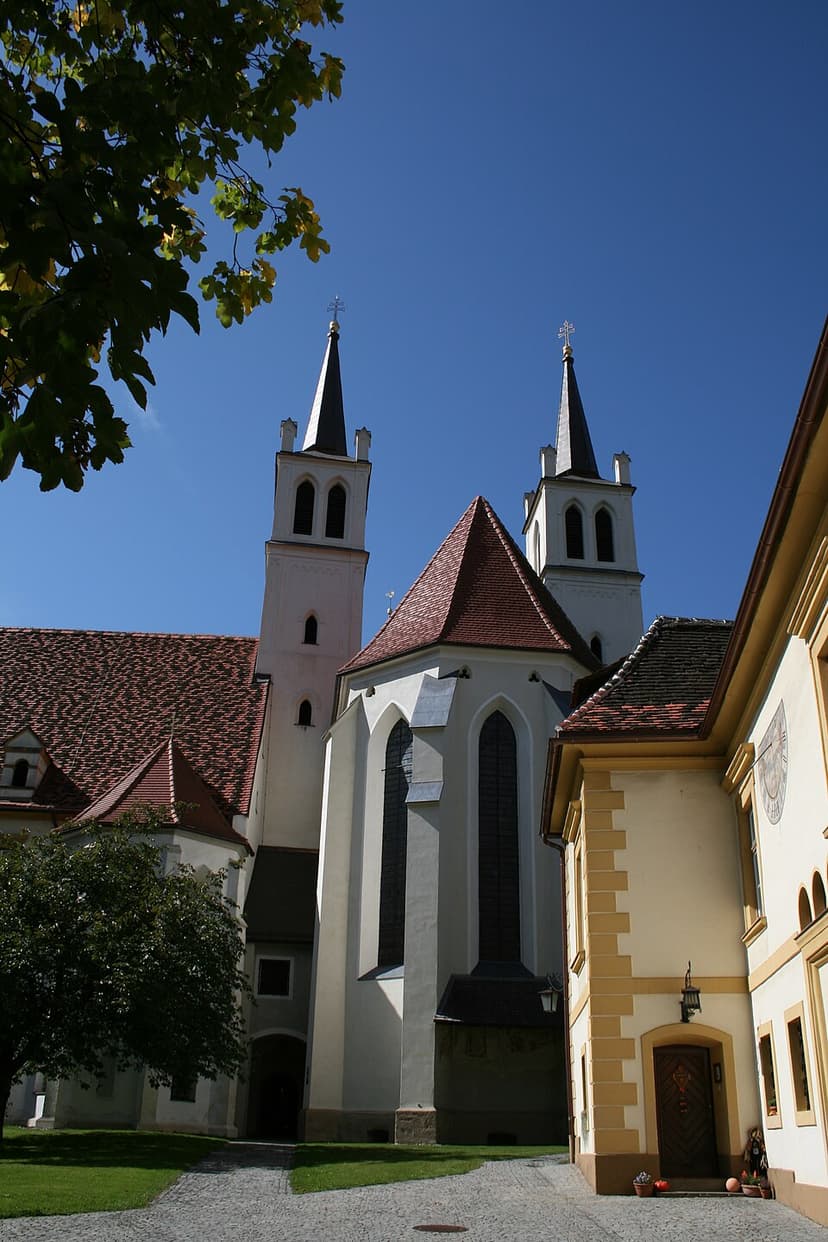
Göss Abbey
Göss Abbey, originally a Benedictine nunnery founded in 1004, served for centuries as an educational center for aristocratic daughters. Dissolved in 1782, its former church briefly became the cathedral for the Bishopric of Leoben before the premises were sold and repurposed, most notably as a brewery. The site retains significant architectural elements, including a Romanesque crypt and early Gothic frescoes.
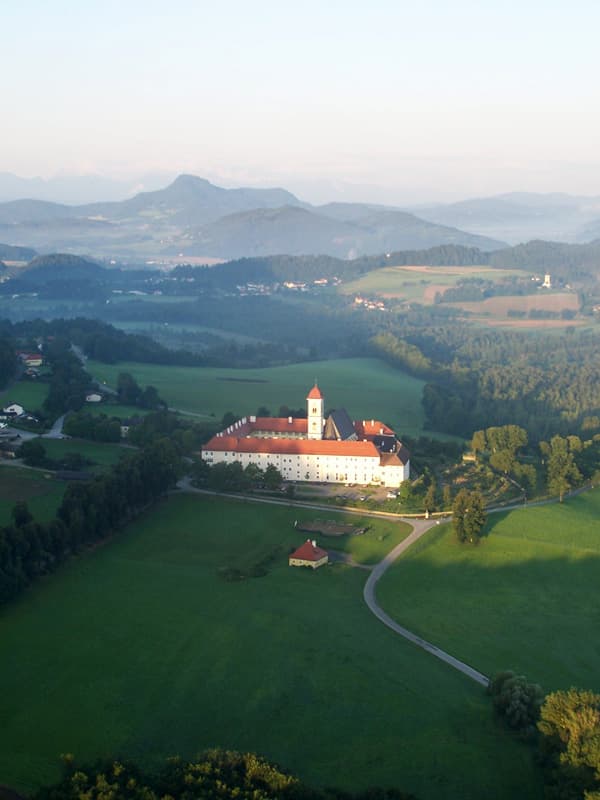
St. George's Abbey on the Längsee
St. George's Abbey on the Längsee is a historic monastic complex in Carinthia, Austria, founded as a Benedictine nunnery between 1002 and 1008 by Countess Wichburg. It underwent reforms, survived periods of economic hardship and the Protestant Reformation, and was dissolved in 1783. After various ownerships, including serving as a Count's seat and a military hospital, it was acquired by the Diocese of Gurk in 1959 and today houses a church, an educational establishment, a hotel, and seminar facilities.

St. Paul's Abbey in the Lavanttal
St. Paul's Abbey in Lavanttal is a Benedictine monastery founded in 1091 in Carinthia, Austria. Originally centered on a Romanesque church, it was largely rebuilt in the Baroque style in the 17th century. The abbey has a complex history, including dissolutions by Emperor Joseph II and the National Socialists, but has been continuously resettled and remains the oldest operational monastery in Carinthia.