
Göss Abbey
Christian·Austria·Former abbey church is a parish church; parts of premises are a brewery·11th century
Göss Abbey, originally a Benedictine nunnery founded in 1004, served for centuries as an educational center for aristocratic daughters. Dissolved in 1782, its former church briefly became the cathedral for the Bishopric of Leoben before the premises were sold and repurposed, most notably as a brewery. The site retains significant architectural elements, including a Romanesque crypt and early Gothic frescoes.
Key Facts
- ›Founded in 1004 by Adula of Leoben and her son.
- ›Was an imperial abbey, made so by Henry IV in 1020.
- ›Educated daughters of the Styrian aristocracy, with entry limited to nobility.
- ›Dissolved in 1782 during the reforms of Joseph II.
- ›Its former church served as the cathedral for the short-lived Bishopric of Leoben.
- ›Parts of the former abbey are now used as a brewery, Brauerei Göß.
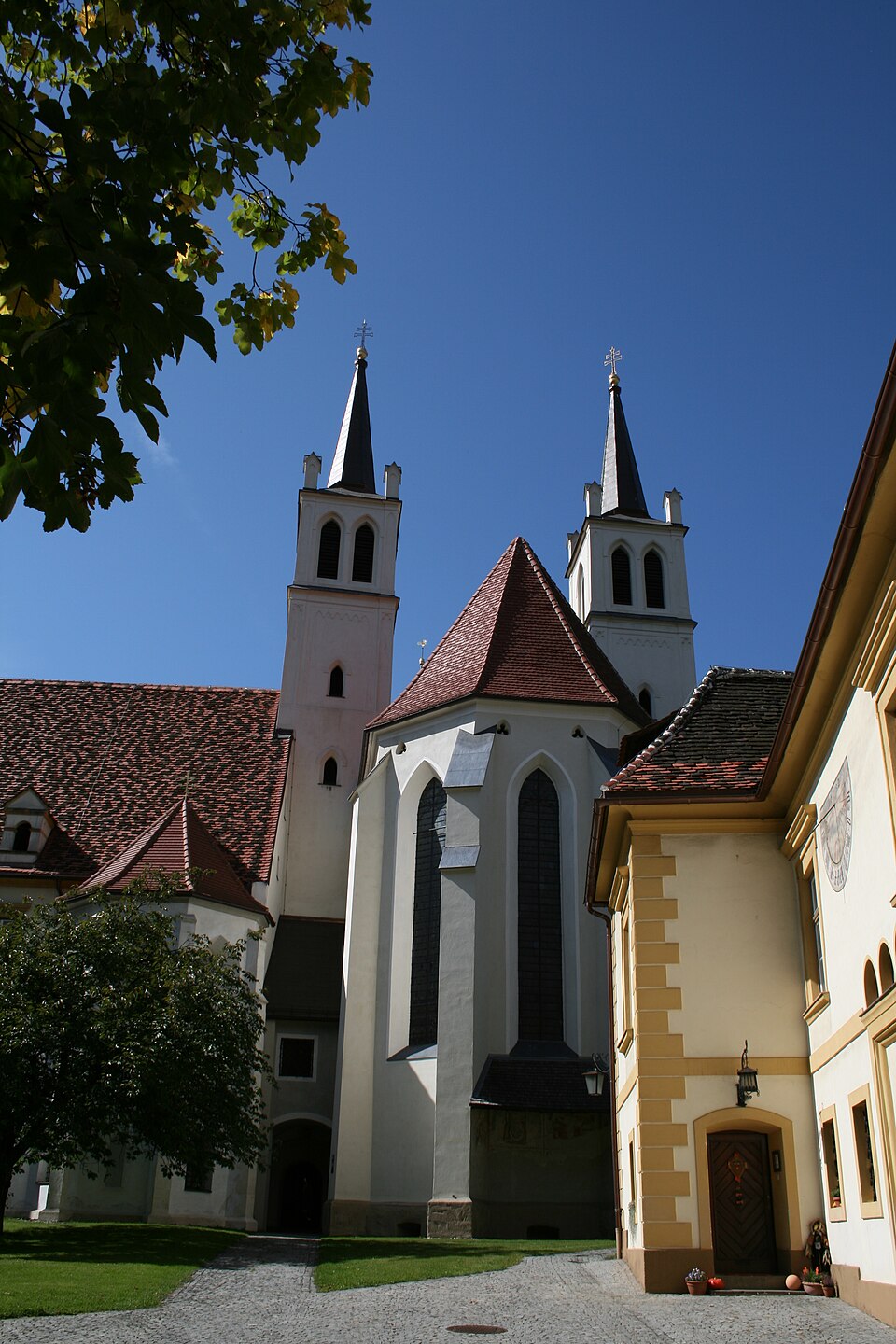
Romanesque, Gothic
- Early Romanesque Crypt
- Early Gothic Frescoes In the Chapel of Saint Michael
- BrunnhöFl
- Reusable Coffin of 1784
Stift Göß
Adula of Leoben, Aribo I, Aribo, Kunigunde, Henry Iv, Holy Roman Emperor, Joseph Ii, Holy Roman Emperor
- Imperial Abbey Status Granted By Henry Iv
- Dissolution of the Nunnery
- Seat of the Bishopric of Leoben
- Premises Auctioned Off and Acquired By Wheelwrights' Co-Operative
- Buildings Acquired By A Brewer and Used As Brauerei Göß
About Göss Abbey
Göss Abbey, known in German as Stift Göß, is a significant former Benedictine nunnery situated in Göss, now a part of Leoben in Styria, Austria. Founded in 1004 by Adula of Leoben and her son Aribo, it was established on family ancestral lands and initially settled by canonesses from Nonnberg Abbey. The nunnery was elevated to the status of an imperial abbey by Henry IV in 1020, solidifying its importance. For centuries, Göss Abbey served a crucial role in Styrian society, functioning as an educational institution and residence exclusively for daughters of the nobility.
The introduction of the Benedictine Rule in the 12th century further shaped its monastic life. However, the abbey's long history came to an end in 1782 when it was dissolved during the rationalist reforms initiated by Emperor Joseph II. Following its dissolution, the former abbey church, dedicated to Saint Mary and Saint Andrew, became the seat of the short-lived Bishopric of Leoben from 1786 until 1800.
Buildings and Contents
The former abbey church, which briefly served as the cathedral of Leoben, is now a functioning parish church. It is a substantial late Gothic structure that preserves remarkable earlier elements. Beneath the choir lies an early Romanesque crypt, offering a glimpse into an earlier architectural phase. The chapel of Saint Michael within the church is adorned with significant early Gothic frescoes, notable for their distinctive Zackenstil or "zigzag style." The building also features an imposing roof.
Other historically significant elements associated with Göss Abbey include the Brunnhöfl, also known as the "fountain courtyard," which remains largely intact. A curious artifact preserved from the period of Josephine rationalism is a reusable coffin from 1784, designed with an opening bottom for depositing bodies into common graves. This measure, intended to reduce costs for pauper funerals, proved deeply unpopular and was withdrawn shortly after its introduction.
The famous Göss chasuble, a valuable example of Romanesque silk embroidery, is no longer housed at the abbey but is instead preserved in the Museum für angewandte Kunst in Vienna. Following its secularization, the premises of Göss Abbey were eventually acquired by a brewer from Graz in 1860 and have since been utilized as a brewery, known as Brauerei Göß.
Source: Wikipedia ↗
Frequently Asked Questions
When was Göss Abbey founded?
Göss Abbey was founded in 1004. It was established on the ancestral lands of the family of Adula of Leoben and her son, Aribo.
What was the primary purpose of Göss Abbey?
For centuries, Göss Abbey functioned as a center for the Styrian aristocracy to educate and accommodate their daughters. Entry was strictly limited to members of the nobility.
What happened to Göss Abbey after its dissolution?
The nunnery was dissolved in 1782. From 1786, its church served as the cathedral for the newly founded Bishopric of Leoben. Later, the premises were sold and eventually used as a brewery.
What notable architectural or artistic features does the former abbey church have?
The former abbey church, now a parish church, features an early Romanesque crypt beneath the choir. It also contains important early Gothic frescoes in the chapel of Saint Michael, executed in the Zackenstil or 'zigzag style'.
Is the Göss chasuble still at the abbey?
No, the famous Göss chasuble, a valuable piece of Romanesque silk embroidery, is no longer at the abbey. It is now preserved in the Museum für angewandte Kunst in Vienna.
What is the 'reusable coffin' mentioned at Göss Abbey?
A rare specimen of a reusable coffin from 1784 is displayed at the premises. It had an opening bottom designed to deposit bodies into a common grave, a rationalist measure intended to save costs for pauper funerals, but it was unpopular and withdrawn.
Related Monasteries

Millstatt Abbey
Millstatt Abbey, established around 1070 by Benedictine monks, is a significant Romanesque structure in Carinthia, Austria. For centuries, it served as a vital spiritual and cultural hub for Upper Carinthia and was one of the largest monastic institutions in the region. Over its history, the abbey transitioned through various religious orders, including the Knights of Saint George and the Society of Jesus, before its dissolution in 1773.
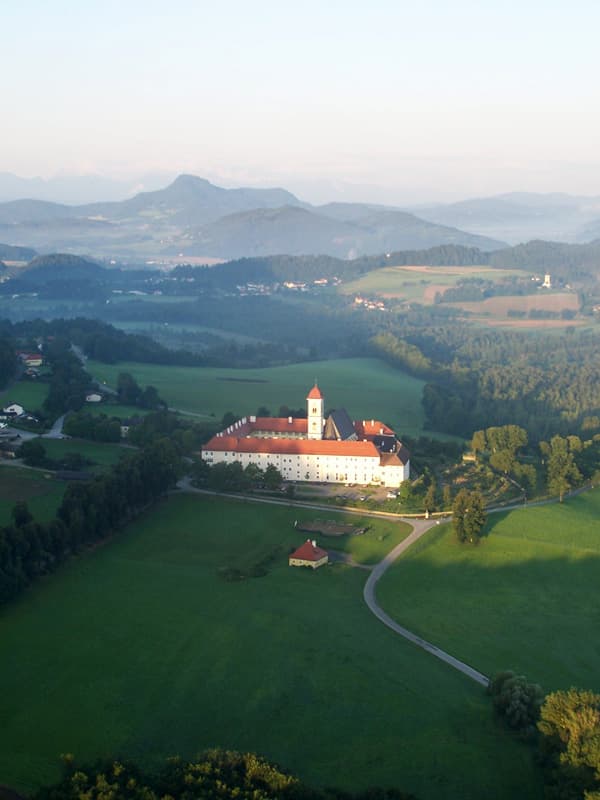
St. George's Abbey on the Längsee
St. George's Abbey on the Längsee is a historic monastic complex in Carinthia, Austria, founded as a Benedictine nunnery between 1002 and 1008 by Countess Wichburg. It underwent reforms, survived periods of economic hardship and the Protestant Reformation, and was dissolved in 1783. After various ownerships, including serving as a Count's seat and a military hospital, it was acquired by the Diocese of Gurk in 1959 and today houses a church, an educational establishment, a hotel, and seminar facilities.

St. Paul's Abbey in the Lavanttal
St. Paul's Abbey in Lavanttal is a Benedictine monastery founded in 1091 in Carinthia, Austria. Originally centered on a Romanesque church, it was largely rebuilt in the Baroque style in the 17th century. The abbey has a complex history, including dissolutions by Emperor Joseph II and the National Socialists, but has been continuously resettled and remains the oldest operational monastery in Carinthia.