
Metz
Metz is a historic city in northeastern France with a 3,000-year history, evolving from a Celtic oppidum to a significant Gallo-Roman city, Merovingian capital, and the birthplace of the Carolingian dynasty. It is renowned for its rich cultural heritage, blending French and German influences, and notable architectural landmarks such as its Gothic cathedral with the world's largest stained-glass expanse. Recognized for its urban ecology and extensive green spaces, Metz is also a vital economic and cultural hub in the Lorraine region.
Key Facts
- ›Founded as an oppidum of the Celtic Mediomatrici tribe before Roman conquest.
- ›Served as the Merovingian capital of Austrasia and the birthplace of the Carolingian dynasty.
- ›Became a republic in the 12th century, existing until the 15th century.
- ›Possesses the Basilica of Saint-Pierre-aux-Nonnains, recognized as the oldest church in France.
- ›Features the Gothic Saint-Stephen Cathedral, boasting the largest area of stained-glass windows globally.
- ›Submitted to France's UNESCO World Heritage Tentative List due to its historical, cultural, and architectural significance.

Gothic, Renaissance, Neoclassical, Germanic Architecture, Art Nouveau, Art Deco, Alsatian, Mock-Bavarian, Modern, Postmodern
- Saint-Stephen Cathedral With World's Largest Stained-Glass Expanse
- Basilica of Saint-Pierre-Aux-Nonnains
- Imperial Station Palace
- Opera House
- Arsenal Concert Hall
- Centre Pompidou-Metz Museum
- Extensive Open Grounds and Public Gardens
- Largest Commercial Pedestrian Areas In France
- Gallo-Roman Vestiges
- Medieval Bridge Castle
- Citadel Fortifications
- Fortifications From the SéRé De RivièRes System and Maginot Line
Divodurum Mediomatricum, Mettis, MèS
Paul Verlaine, Ambroise Thomas, Jean-Victor Poncelet, FrançOis Rabelais, Cardinal Mazarin, Alexis De Tocqueville, Louis Le Prince, Marquis De La Fayette, Robert Schuman, Jacques-FrançOis Blondel, Charles-Louis CléRisseau, Wilhelm Ii, JüRgen KröGer, Roger-Henri Expert, Georges-Henri Pingusson, Jean Dubuisson, Ricardo Bofill, Paul Chemetov, Shigeru Ban, Christian De Portzamparc, Nicolas Michelin, Jean-Paul Viguier, Jean-Michel Wilmotte, Philippe Starck, Rudy Ricciotti, Jean-Marie Pelt, Hermann Von MüNster, ThéObald of Lixheim, Valentin Bousch, Charles-Laurent MaréChal, Roger BissièRe, Jacques Villon, Marc Chagall
- Conquest of Gaul By Julius Caesar
- Integration Into the Roman Empire
- Transfer To the Franks
- Residence of Merovingian Kings of Austrasia
- Treaty of Verdun
- Integration Into the Holy Roman Empire
- Establishment of the Republic of Metz
- Treaty of Chambord
- Treaty of Westphalia
- Creation of Departments By the Estates-General
- Franco-Prussian War
- Treaty of Frankfurt
- Annexation By Nazi Germany
- Attack By the U.S. Third Army
- Creation of Lorraine Region
- Creation of the European Community and European Union
About Metz
Metz: A City of Rich History and Cultural Crossroads
Metz is a city in northeastern France with a profound and complex history spanning over 3,000 years. Situated at the confluence of the Moselle and Seille rivers, it has been a significant urban center since antiquity, evolving from a Celtic oppidum to a vital Gallo-Roman city. Its strategic location has shaped its identity, leading to periods of both French and German cultural influence, and it played crucial roles as the Merovingian capital of Austrasia and the birthplace of the Carolingian dynasty. Metz also holds the distinction of being a cradle of Gregorian chant and once housed one of Europe's oldest republics.
Historical Trajectory and Governance
Before Roman conquest, Metz was the oppidum of the Mediomatrici tribe. Integrated into the Roman Empire, it became a principal town of Gaul. Following its transfer to the Franks, it served as a royal residence for Austrasian Merovingian kings. After the Treaty of Verdun in 843, Metz became the capital of Lotharingia and later gained semi-independent status within the Holy Roman Empire. The city established itself as a republic in the 12th century, a status it maintained until the 15th century. Its history includes periods under French rule following the Treaty of Chambord in 1552, and significant shifts due to conflicts such as the Franco-Prussian War and both World Wars, leading to periods of German annexation before its final return to France.
Architectural and Environmental Heritage
Metz is recognized for its rich architectural tapestry, blending styles from its Gallo-Roman past through Gothic, Renaissance, Neoclassical, and more modern influences, including distinctive Germanic styles from its periods under German rule. The city is celebrated for its yellow limestone architecture, derived from Jaumont stone. Notable landmarks include the Gothic Saint-Stephen Cathedral, famed for having the largest expanse of stained-glass windows in the world, and the Basilica of Saint-Pierre-aux-Nonnains, considered the oldest church in France. The city has also been submitted to France's UNESCO World Heritage Tentative List due to its historical and cultural depth. Beyond its built heritage, Metz is known as 'The Green City' for its extensive public gardens and open spaces, a result of pioneering urban ecology policies initiated in the 1970s, emphasizing the integration of nature within the urban environment.
Source: Wikipedia ↗
Frequently Asked Questions
What is the historical significance of Metz?
Metz has a history spanning over 2,000 years, having been a Celtic oppidum, an important Gallo-Roman city, the Merovingian capital of Austrasia, and the birthplace of the Carolingian dynasty. It was also one of Europe's oldest republics and a cradle of Gregorian chant.
What are the most notable architectural landmarks in Metz?
Key architectural sites include the Gothic Saint-Stephen Cathedral with its extensive stained-glass windows, the Basilica of Saint-Pierre-aux-Nonnains (the oldest church in France), the Imperial Station Palace, and the historic Opera House, which is the oldest working opera house in France.
What is Metz known for in terms of urban planning and environment?
Metz is nicknamed 'The Green City' (La Ville Verte) due to its extensive open grounds and public gardens. It pioneered urban ecology policies in the 1970s, focusing on integrating humans with their environment and developing large pedestrian areas.
How has Metz's history been influenced by its location?
Its strategic location near the tripoint of France, Germany, and Luxembourg has led to significant German cultural influence alongside its French heritage. The city has changed hands multiple times between France and Germany throughout history, including periods under Roman, Frankish, Holy Roman Empire, and French rule, as well as annexation by the German Empire and Nazi Germany.
What is the significance of the local law in Metz?
Metz operates under a specific 'local law' system that preserves French laws from before 1870 and includes German laws enacted between 1871 and 1918. Notably, it maintains provisions regarding religion, where public subsidies are provided to Roman Catholic, Lutheran, Calvinist churches, and the Jewish religion, differing from strict secularism elsewhere in France.
Related Monasteries
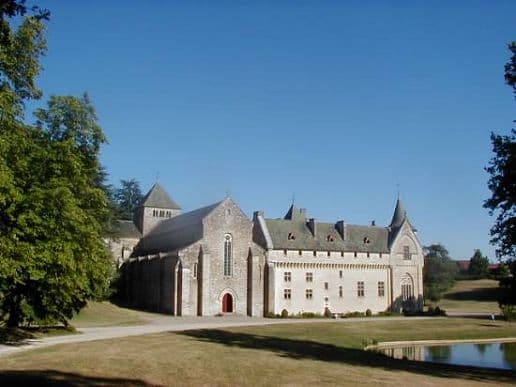
Abbey of Loc-Dieu
Abbey of Loc-Dieu is a Cistercian abbey situated in Aveyron, France, founded in 1123 on a site historically known as "devil's place" before being renamed "place of God" by its monastic inhabitants. Despite facing destruction and rebuilding, it became a significant Gothic architectural site and, during World War II, served as a safe haven for artworks from the Louvre, including the Mona Lisa. Today, the abbey and its park are open to the public.

Abbey of Saint-Germain-des-Prés
The Abbey of Saint-Germain-des-Prés, originally a Benedictine abbey founded in 558, is one of the oldest churches in Paris. It served as a significant center for scholarship, producing illuminated manuscripts, and was a royal necropolis. Despite destruction by Vikings and damage during the French Revolution, the church has undergone numerous rebuilds and restorations, incorporating Romanesque, Gothic, and later decorative styles, and remains an active Catholic parish church.

Abbey of Sénanque
Sénanque Abbey is a Cistercian monastery founded in 1148 in Provence, France, renowned for its remarkably preserved Romanesque architecture. Initially thriving, it experienced decline and was suppressed during the French Revolution, only to be re-established in 1854 and later reactivated in 1988. Today, it houses an active monastic community and is known for its lavender fields and spiritual retreats.