
Mélan Charterhouse
Carthusian·France·Departmental cultural center·13th century
Mélan Charterhouse, originally a Carthusian nunnery founded in 1282 by Beatrice of Faucigny, served as both a dynastic mausoleum and a religious institution. After a period of impoverishment and a fire in the 16th century, it was repurposed through various stages, including a minor seminary, a departmental orphanage, and currently operates as a departmental cultural center. The site is recognized for its Gothic architectural elements, particularly its church and cloister, and has been listed as a historical monument since 1911.
Key Facts
- ›Founded in 1282 by Beatrice of Faucigny as a Carthusian nunnery.
- ›Intended as a burial place for Beatrice's son, John I, and later for Beatrice herself.
- ›Suffered a fire in 1528, leading to the rebuilding of the cloister in the Flamboyant Gothic style.
- ›Expelled its nuns and priests during the French Revolution in 1793 and was sold as national property.
- ›Later served as a minor seminary, a departmental orphanage, and is now a departmental cultural center.
- ›The church and cloister are designated historical monuments.

Gothic, Flamboyant Gothic
- Church With Restored Parquet Flooring and Contemporary Stained-Glass Windows
- Two Side Chapels With 15th-Century Wall Paintings
- 16th-Century Gothic Cloister
- Park With Contemporary Sculptures
- Forest With A Stream Designated As A Sensitive Natural Area
Chartreuse De MéLan
Beatrice of Faucigny, John I, Heir To the Dauphiné
- Fire In 1528
- Suppression and Sale During the French Revolution In 1793
- Fire In 1967 That Destroyed Much of the Complex
About Mélan Charterhouse
Mélan Charterhouse, known in French as Chartreuse de Mélan, is a former Carthusian monastery located in Taninges, Haute-Savoie, France. Its history began in 1282 when Beatrice of Faucigny established it as a nunnery, intending it to serve as both a religious institution and a dynastic mausoleum for her family.
History and Transformation
The foundation of Mélan Charterhouse was a significant event, intended to house Carthusian nuns and provide a final resting place for Beatrice's son, John I, and later herself. Despite substantial initial endowments, the community often struggled with poverty. The monastery experienced a fire in 1528, after which its cloister was rebuilt in the Flamboyant Gothic style. During the French Revolution, the nuns and priests were expelled in 1793, and the property was sold as national assets. Following this period, the site was repurposed multiple times: it became a minor seminary, then a departmental orphanage, and tragically, a fire in 1967 destroyed much of the complex, though the church and cloister were preserved.
Architecture and Current Status
Architecturally, Mélan Charterhouse is a notable example of Gothic style in the Haute-Savoie region. The remaining structures include the church, built in 1290, featuring a rectangular plan, ribbed vaults, and contemporary stained-glass windows. Adjacent are two side chapels adorned with 15th-century wall paintings. The cloister, rebuilt in the late Gothic style, is a significant feature. Today, Mélan Charterhouse functions as a departmental cultural center, hosting temporary exhibitions and offering guided heritage tours. Its historical importance is recognized, with various parts of the complex listed as historical monuments since the early 20th century.
Source: Wikipedia ↗
Frequently Asked Questions
When was Mélan Charterhouse founded?
Mélan Charterhouse was founded in 1282 by Beatrice of Faucigny. The founding charter was executed on June 3, 1285, and the first nuns arrived in June 1288.
What was the original purpose of Mélan Charterhouse?
The charterhouse was established as a religious foundation for Carthusian nuns and also intended to serve as a dynastic mausoleum for Beatrice of Faucigny's son, John I, and for Beatrice herself.
What happened to Mélan Charterhouse during the French Revolution?
During the French Revolution, the forty nuns and seven priests of Mélan Charterhouse were expelled in 1793, and the monastery was sold as national property. The charterhouse was vandalized and looted during the winter of 1793–1794.
What is the current function of Mélan Charterhouse?
Mélan Charterhouse currently functions as a departmental cultural center. It hosts temporary exhibitions and guided heritage tours.
What are the notable architectural features of Mélan Charterhouse?
The site is a representative example of Gothic architecture. Notable features include its church with a rectangular plan and ribbed vaults, two side chapels with 15th-century wall paintings, and a 16th-century Gothic cloister.
Is Mélan Charterhouse still an active monastery?
No, Mélan Charterhouse is a former monastery. It no longer houses an active monastic community and currently operates as a cultural center.
Related Monasteries
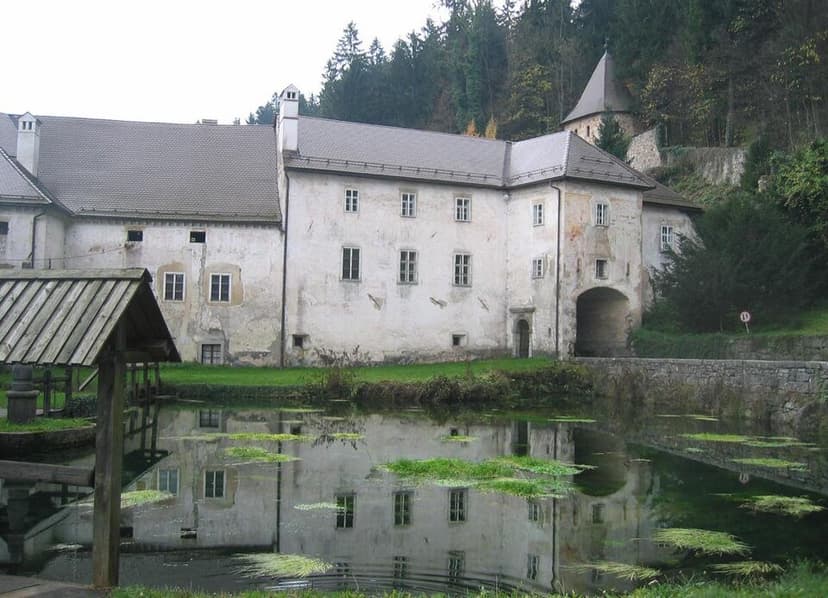
Bistra
Bistra is a settlement in Slovenia, best known for the Bistra Charterhouse, the first monastery in Carniola, founded in 1260. This complex, also referred to as "Bistra Castle," operated as a monastery until its dissolution in 1782. Today, the site houses the Technical Museum of Slovenia, featuring collections related to various technical fields and historical vehicles.
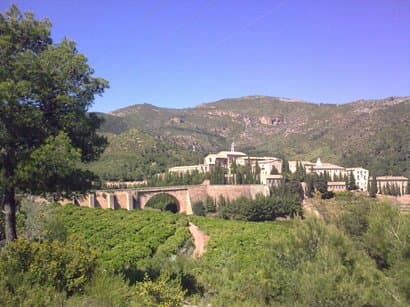
Porta Coeli Charterhouse
Porta Coeli Charterhouse, also known as Cartuja de Porta Coeli or Cartuja Santa María de Porta Coeli, is a functioning Carthusian monastery established in 1272 in the province of Valencia, Spain. Its name, meaning "door of heaven," reflects its spiritual significance. Over centuries, it has developed an eclectic architectural style, featuring Gothic and Baroque elements, and has been a mother house for other Carthusian foundations. Despite periods of suppression and repurposing, it was reoccupied by the Carthusian order in the mid-20th century and remains a vital monastic center.

Padula Charterhouse
Padula Charterhouse, also known as Certosa di San Lorenzo di Padula, is the largest Carthusian monastery in Italy, located in Padula within the Cilento National Park. Founded in 1306 and dedicated to Saint Lawrence, its construction spanned 450 years, resulting in a principal Baroque architectural style. The monastery is renowned for its immense size, the world's largest cloister, and significant artistic features, while also serving various roles in Italian military history.