
Marseille
Marseille, historically known as Massalia, is France's oldest city, founded by Greek settlers around 600 BC. It has long served as a vital trading port on the Mediterranean, experiencing significant commercial growth, particularly in the 19th century. Today, it is a vibrant, cosmopolitan city known for its rich cultural heritage, maritime economy, and status as a major European port.
Key Facts
- ›Founded circa 600 BC by Greek settlers from Phocaea.
- ›One of Europe's oldest continuously inhabited settlements.
- ›Historically known as Massalia to the Greeks and Massilia to the Romans.
- ›The oldest city in France.
- ›Remains France's leading port by cargo tonnage.
- ›The second-most populous city proper in France.

- Old Port
- Notre-Dame De La Garde Basilica
- Calanques National Park
- ChâTeau D'If
- Museum of European and Mediterranean Civilisations
Marselha, Massalia, Massilia
Julius Caesar
- Founding As Greek Colony of Massalia
- Sided With Roman Republic Against Carthage In Second Punic War
- Roman Siege of Massilia
- Sack By Charles Martel's Forces
- Black Death
- Sack By the Crown of Aragon
- Great Plague of Marseille
- Focal Point of the French Revolution
- Occupation By German Wehrmacht
- Damaged During World War Ii
About Marseille
Marseille, a city steeped in millennia of history, stands as France's oldest urban settlement, founded around 600 BC by Greek colonists from Phocaea. Originally named Massalia, it quickly established itself as a vital trading port on the Mediterranean, a role it continues to fulfill today. Its strategic location has fostered a deeply cosmopolitan character, marked by centuries of cultural and economic exchange with diverse regions surrounding the Mediterranean Sea.
Historical Context
The city's early years were defined by its status as a preeminent Greek polis in southern Gaul. It navigated complex alliances, notably siding with the Roman Republic during the Second Punic War, which helped preserve its independence and commercial empire. However, this autonomy was eventually lost following the Roman Siege of Massilia in 49 BC during Caesar's Civil War, ushering in a period of Gallo-Roman influence. Throughout subsequent centuries, Marseille maintained its importance as a maritime hub, albeit with periods of decline, such as following invasions and the devastating Black Death in the 14th century. The 15th century saw renewed prosperity under René of Anjou, who bolstered the city's defenses. The 18th century brought another significant blow with the Great Plague of Marseille, but the city rebounded, becoming a key site during the French Revolution, with volunteers from Marseille singing the national anthem that would bear their city's name.
The Industrial Revolution and the expansion of the French colonial empire in the 19th century propelled Marseille into a prosperous industrial and trading city. Its port infrastructure expanded, and it became a crucial link to French colonies in North Africa. The 20th century brought new challenges, including occupation during World War II and subsequent damage. In recent decades, Marseille has undergone significant urban renewal and economic development projects, aiming to enhance its attractiveness and modern infrastructure.
Economy and Culture
Marseille's economy has historically been driven by its port, which remains the largest in France and a significant player in Europe. The city is a major center for trade, industry, and increasingly, the service sector and high-tech industries. Its rich cultural tapestry is evident in its numerous museums, theaters, and vibrant arts scene, earning it the title of European Capital of Culture in 2013. The city is also renowned for its unique culinary traditions, including the famous Marseille soap, whose manufacture began centuries ago. Marseille's enduring openness to the Mediterranean has shaped its identity as a melting pot of cultures, attracting diverse communities from across Europe, Africa, and Asia throughout its long history.
Source: Wikipedia ↗
Frequently Asked Questions
When was Marseille founded?
Marseille was founded as the Greek colony of Massalia around 600 BC by settlers from Phocaea. This makes it the oldest city in France and one of Europe's oldest continuously inhabited settlements.
What was Marseille known as in ancient times?
In ancient times, Marseille was known as Massalia to the Greeks and Massilia to the Romans. These names reflect its Greek origins and its long history under Roman influence.
What is Marseille's significance as a port?
Marseille has been a major trading port since antiquity. Today, it is the first French port, the second Mediterranean port, and the fifth European port by cargo tonnage, playing a crucial role in regional and national economic activity.
What is the origin of the name Marseille?
The name Marseille most likely derives from Massalia, the name given to the ancient Greek city. Variations of this name have been used throughout history in different languages, including Latin and Occitan.
What historical events shaped Marseille?
Marseille's history includes its founding as a Greek colony, its role in the Punic Wars, Roman rule, invasions by Visigoths and Umayyad Caliphate forces, the Black Death, the French Revolution, and damage during World War II. It has also been a significant gateway for immigrants.
Related Monasteries

Mantua
Mantua, a historic city in Lombardy, Italy, rose to prominence under the House of Gonzaga from 1328 to 1708, becoming a leading center of art, culture, and music in Northern Italy. It is renowned for its significant contributions to the history of opera, its architectural treasures, and its medieval and Renaissance cityscape. The city's strategic defense system, created in the 12th century, consists of three artificial lakes surrounding it.
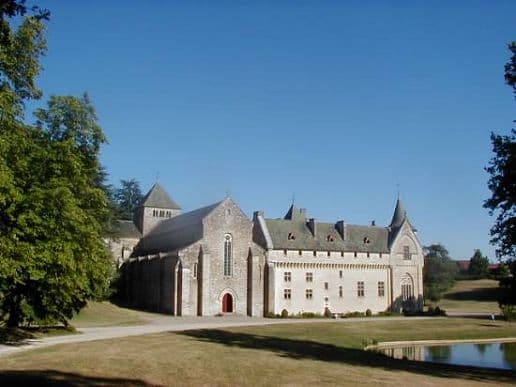
Abbey of Loc-Dieu
Abbey of Loc-Dieu is a Cistercian abbey situated in Aveyron, France, founded in 1123 on a site historically known as "devil's place" before being renamed "place of God" by its monastic inhabitants. Despite facing destruction and rebuilding, it became a significant Gothic architectural site and, during World War II, served as a safe haven for artworks from the Louvre, including the Mona Lisa. Today, the abbey and its park are open to the public.

Abbey of Saint-Germain-des-Prés
The Abbey of Saint-Germain-des-Prés, originally a Benedictine abbey founded in 558, is one of the oldest churches in Paris. It served as a significant center for scholarship, producing illuminated manuscripts, and was a royal necropolis. Despite destruction by Vikings and damage during the French Revolution, the church has undergone numerous rebuilds and restorations, incorporating Romanesque, Gothic, and later decorative styles, and remains an active Catholic parish church.