
Marienberg Abbey
Marienberg Abbey is a Benedictine monastery located in Mals, South Tyrol, northern Italy, founded in 1149 or 1150. It is notable for being Europe's highest-standing abbey at 1,340 meters and for its long tradition of education. The abbey retains a Baroque architectural style with Romanesque elements and features well-maintained frescos, having undergone periods of destruction and restoration throughout its history.
Key Facts
- ›Founded in 1149 or 1150 by Ulrich von Tarasp.
- ›Europe's highest abbey, situated at 1,340 meters above sea level.
- ›Maintains a long tradition of education and adult learning programs.
- ›Features a Baroque architectural style with Romanesque influences.
- ›Has been rebuilt and restored multiple times throughout its history, including after fires in 1418 and 1656.
- ›Currently administered by monks who specialize in adult education and retreats.

Baroque, Romanesque
Europe's Highest Abbey, Well-Maintained Frescos, Library
Abbazia Monte Maria
Ulrich Von Tarasp, Abbot Konrad Iii, Abbot Hermann, Ulrich of Matsch, Abbot Wyho, Goswin, Duke Leopold Iii of Austria, Abbot Mathias Lang, Jacob Grafinger, Abbot Johann Baptist Murr, Abbot Placidus Zobel
- Founded In 1149 Or 1150
- Sacked Twice By Nobles Under Abbot Konrad Iii
- Abbot Hermann Killed By Ulrich of Matsch In 1304
- Devastated By the Black Death
- Burned Down In 1418
- Reformed By Abbot Mathias Lang In the 17th Century
- Joined the Benedictine Congregation of Swabia In 1634
- Burned Down Again In 1656
- Dissolved By the Bavarian Government In 1807
- Restored By Emperor Francis Ii In 1816
About Marienberg Abbey
Marienberg Abbey, known in Italian as Abbazia Monte Maria, is a significant Benedictine monastery situated in Mals, within the Vinschgau Valley of South Tyrol, northern Italy. Founded in 1149 or 1150 by Ulrich von Tarasp and other nobles, it holds the distinction of being Europe's highest-standing abbey, perched at an elevation of 1,340 meters.
History and Architecture
The abbey's history is intertwined with earlier Benedictine foundations in the region, tracing roots back to Charlemagne's establishment of a monastery in Müstair. Over centuries, Marienberg Abbey has experienced periods of prosperity, conflict, and destruction. It was sacked by nobles, faced devastation from the Black Death, and was rebuilt after significant fires in 1418 and 1656. The abbey was dissolved by the Bavarian government in 1807 but was subsequently restored by Emperor Francis II in 1816.
Architecturally, Marienberg Abbey presents a blend of styles, retaining a Baroque appearance with notable Romanesque elements. It is also recognized for its well-maintained frescos, contributing to its historical and artistic value.
Education and Current Status
Marienberg Abbey has maintained a long and consistent tradition of education. In contemporary times, the monks actively engage in adult education, hosting weekend courses and longer retreats. The abbey remains an active monastic community and is open to the public for tours, continuing its spiritual and educational mission from its elevated and historic setting.
Source: Wikipedia ↗
Frequently Asked Questions
When was Marienberg Abbey founded?
Marienberg Abbey was founded in 1149 or 1150. The history of its establishment is linked to earlier Benedictine foundations dating back to Charlemagne.
What is special about Marienberg Abbey's location?
Marienberg Abbey is distinguished as Europe's highest-standing abbey, located at an altitude of 1,340 meters. This elevated position is a key characteristic of the monastery.
What is the architectural style of Marienberg Abbey?
The abbey retains a Baroque architectural style, incorporating Romanesque elements from earlier periods. It is also noted for its well-maintained frescos.
What educational role does Marienberg Abbey play?
Marienberg Abbey has a long-standing tradition of education. Today, the monks specialize in adult education, offering weekend courses and longer retreats, and the abbey is available for tours.
Has Marienberg Abbey always been in its current location?
No, the community was re-settled on the hill near the village of Burgeis in 1149 or 1150 under the name Marienberg. This followed earlier monastic establishments and reorganizations in the region.
What historical challenges has Marienberg Abbey faced?
The abbey has faced significant challenges, including being sacked twice by nobles, the death of an abbot in a conflict, and being ravaged by the Black Death. It also suffered damage from fires in 1418 and 1656, and was dissolved by the Bavarian government in 1807 before being restored in 1816.
Related Monasteries
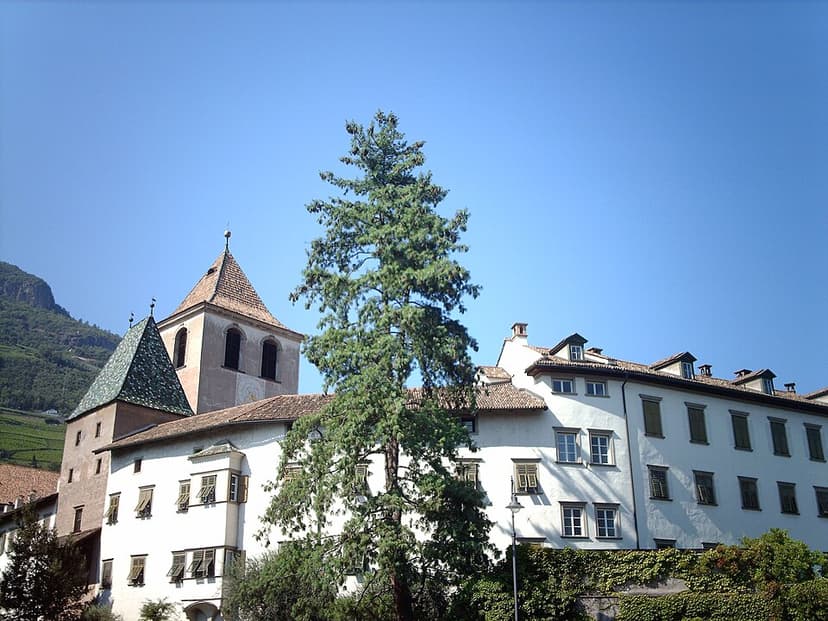
Muri-Gries Abbey
Muri-Gries Abbey is a Benedictine monastery located in Bolzano, South Tyrol, Italy, established in 1845 as an offshoot of the former Muri Abbey in Switzerland. It is known for its wine-making and houses a valuable library and a Nativity Scene Museum. The abbey traces its history back to an Augustinian foundation in the area in 1163.

Innichen Abbey
Innichen Abbey, originally a Benedictine monastery founded in the 8th century in Innichen, South Tyrol, is now a former abbey. Its collegiate church, dedicated to Saint Candidus and largely rebuilt in Romanesque style during the 12th and 13th centuries, is renowned as the most significant Romanesque structure in Tyrol and the Eastern Alps. The church features a notable 13th-century fresco cycle depicting the History of Creation within its dome and a 13th-century sculpture of the patron saints.

Pesio Charterhouse
The Certosa di Pesio is a Carthusian monastery with a long construction history spanning from 1173 to 1802. Situated in the Pesio Valley, within the municipality of Chiusa di Pesio in the Piedmont region of Italy, it is a significant historical religious complex. The monastery's extended building period reflects centuries of development and adaptation.