
Malmedy Abbey
The Princely Abbey of Stavelot-Malmedy was an ecclesiastical principality of the Holy Roman Empire, governed by the Benedictine abbot of the imperial double monastery of Stavelot and Malmedy. Founded in 651 by Saint Remaclus, it played a significant role in the cultural and religious life of Lotharingia. The principality was abolished in 1795 and its territory incorporated into France, later becoming part of Belgium and Prussia.
Key Facts
- ›Founded in 651 by Saint Remaclus as an imperial double monastery.
- ›Served as an ecclesiastical principality of the Holy Roman Empire, led by a prince-abbot.
- ›The abbey church in Malmedy was dedicated to St Benedict, and the first church in Stavelot to saints Martin, Peter, and Paul.
- ›Suffered significant damage during Norman invasions in 881 and French military actions in the 17th century.
- ›Was a major center for Mosan art, particularly in goldsmith metalwork.
- ›Abolished in 1795 and its territory incorporated into the French Republic.

Romanesque
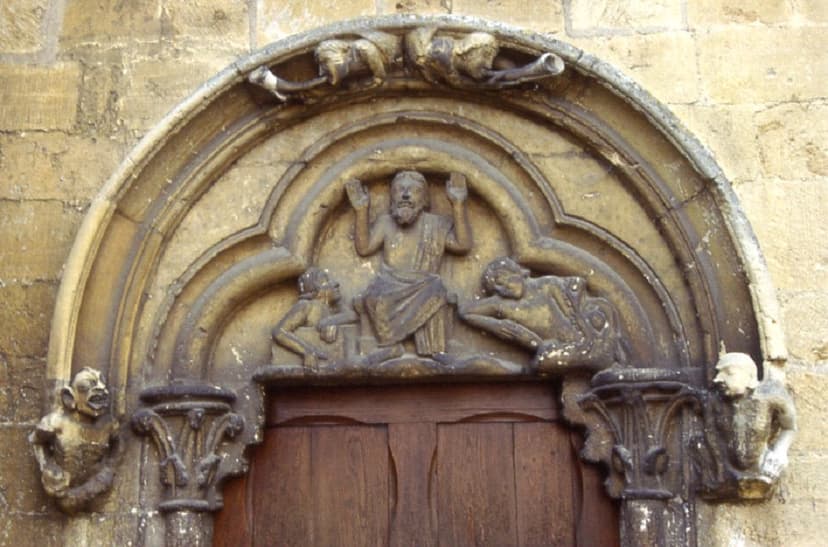
Stavelot Abbey Church Foundations, Two Surviving Cloisters, Western Doorway of the Malmedy Abbey Church, Mosan Art, Stavelot Bible
Princely Abbey of Stavelot-Malmedy, Principality of Stavelot-Malmedy, Stablo
Saint Remaclus, Sigebert Iii, Grimoald the Elder, Carloman, Charles the Bald, Lothair Ii of Lotharingia, Charles the Fat, Notker, Pope Alexander Ii, Wibald, William of Manderscheid, Christopher of Manderscheid, Maximilian Henry of Bavaria, Nicolas Catinat, Pope Pius Vii, Godefroid De Claire
- Founding of the Abbeys of Stavelot and Malmedy .
- Norman Invasions and Burning of the Abbeys .
- Rebuilding of the Abbeys After Invasions.
- Development of Mosan Art During the Rule of Prince-Abbot Poppo and Abbot Wibald .
- Razing of Stavelot and Malmedy By French Troops During the Nine Years' War .
- Abolition of the Principality and Incorporation Into the French Republic .
About Malmedy Abbey
Overview
The Princely Abbey of Stavelot-Malmedy, also known as the Principality of Stavelot-Malmedy or by its German name Stablo, was a significant ecclesiastical principality within the Holy Roman Empire. Its governance was vested in the Benedictine abbot of the imperial double monastery of Stavelot and Malmedy. The foundation of these monasteries is attributed to Saint Remaclus around 650 CE, with Malmedy Abbey potentially being slightly older, dating its claim to 648.
History and Significance
Saint Remaclus established the Abbey of Stavelot on the Amblève river, with Malmedy Abbey located a few kilometers to the east in the Ardennes forest. These foundations received support and land grants from Sigebert III, king of Austrasia, and his Mayor of the Palace, Grimoald the Elder. The abbeys played a crucial role in the evangelization and development of Lotharingia, particularly in the 9th century under abbot Christian. They also served as hospices for pilgrims and the sick. The dual monastic structure allowed for the exercise of princely power by the abbot, who held a seat on the Ecclesiastical Bench of the Imperial Diet, casting a full vote among the ruling princes.
Throughout its history, the principality faced numerous threats and devastations. Norman raids in 881 led to the burning of both abbeys, forcing the monks to flee with their treasures and relics. Later, during the Nine Years' War in 1689, French troops under Nicolas Catinat ordered the razing of both Stavelot and Malmedy, resulting in widespread destruction.
Art and Culture
The abbeys were renowned centers for Mosan art, a prominent school of Romanesque art, especially excelling in goldsmith metalwork. The Stavelot Bible, an illuminated manuscript completed around 1097, is considered a prime example of the scriptorium's output. Abbot Wibald, who ruled from 1130 to 1158, was a significant patron of Mosan art, commissioning several notable works including the Stavelot Triptych and a head-shaped reliquary of Pope Alexander II.
Abolition and Legacy
The principality's existence concluded during the French Revolutionary Wars. In 1795, Malmedy was incorporated into the French département of Ourthe. Following the Congress of Vienna in 1815, Stavelot became part of the United Kingdom of the Netherlands, while Malmedy was assigned to Prussia. Both are now part of modern-day Belgium. The abbey church in Malmedy later became the Cathedral of the short-lived Diocese of Eupen-Malmedy in 1921. Today, the remnants of Stavelot Abbey, including its church foundations and surviving cloisters, serve as historical sites, offering a glimpse into its once grand past.
Source: Wikipedia ↗
Frequently Asked Questions
When was the Abbey of Stavelot-Malmedy founded?
The Abbey of Stavelot was founded around 650 by Saint Remaclus. Malmedy Abbey is considered by historians to be slightly older, with the town claiming its foundation date as 648.
What was the political status of Stavelot-Malmedy?
Stavelot-Malmedy was an ecclesiastical principality of the Holy Roman Empire. The prince-abbot held princely power and sat on the Ecclesiastical Bench of the College of Ruling Princes of the Imperial Diet.
What happened to the principality of Stavelot-Malmedy?
The principality was abolished in 1795 during the French Revolutionary Wars and its territory was incorporated into the French Republic. Later, Stavelot became part of the United Kingdom of the Netherlands, and Malmedy became part of Prussia, with both eventually becoming part of modern-day Belgium.
What is the artistic significance of Stavelot-Malmedy?
The abbeys at Stavelot and Malmedy commissioned some of the finest surviving works of Mosan art, known for its goldsmith metalwork. Notable pieces include the Stavelot Triptych and various reliquaries.
What were some of the challenges faced by the abbeys?
The abbeys faced numerous challenges, including Norman invasions in the 9th century, Hungarian invasions in the 10th century, and extensive destruction during the Nine Years' War by French troops in the late 17th century.
Related Monasteries

Stavelot Abbey
The Princely Abbey of Stavelot-Malmedy was an ecclesiastical principality of the Holy Roman Empire, governed by Benedictine abbots. Founded around 651, it played significant roles in evangelism, culture, and art, particularly during the Romanesque period. The principality was abolished in 1795 and its territories were incorporated into France, later becoming part of Belgium and Prussia (now Germany).
Gorze Abbey
Gorze Abbey was a significant Benedictine monastery in Gorze, Lorraine, founded around 757. It became prominent in the 930s as the origin of the Gorze Reform, a movement that revitalized monastic observance of the Rule of St. Benedict while preserving the independence of individual abbeys, influencing numerous other monasteries. The abbey eventually ceased its central spiritual role in the 12th century, was dissolved in 1572, and its buildings largely demolished, though its former territory persisted as the "Terre de Gorze".

Mortemer Abbey
Mortemer Abbey was a significant Cistercian monastery founded in 1134 by Henry I of England, once ranking among the largest Cistercian foundations globally. Despite extensive rebuilding in the 17th century, it faced irreversible decline and dissolution during the French Revolution. Today, its 17th-century buildings are well-preserved and open to visitors, while the original 12th-century structures are largely reduced to ruins, though the cloisters remain relatively intact.