
Mala Remeta Monastery
Mala Remeta Monastery is a Serb Orthodox monastery situated on Fruška Gora mountain in Vojvodina, northern Serbia. Traditionally founded by King Dragutin, its earliest historical records date to the mid-16th century. The monastery was destroyed by the Turks at the end of the 17th century and subsequently reconstructed by refugee monks. The current church was built in 1739, with its altar screen icons painted in 1759 and wall paintings completed in 1910. It has been recognized as a Monument of Culture of Exceptional Importance since 1990.
Key Facts
- ›Traditional founding attributed to Serbian King Dragutin.
- ›Earliest historical records date to the MID-16th century.
- ›Destroyed by Turks at the end of the 17th century.
- ›Current church erected on the same site in 1739.
- ›Throne icons painted by Janko Halkozović in 1759.
- ›Declared a Monument of Culture of Exceptional Importance in 1990.
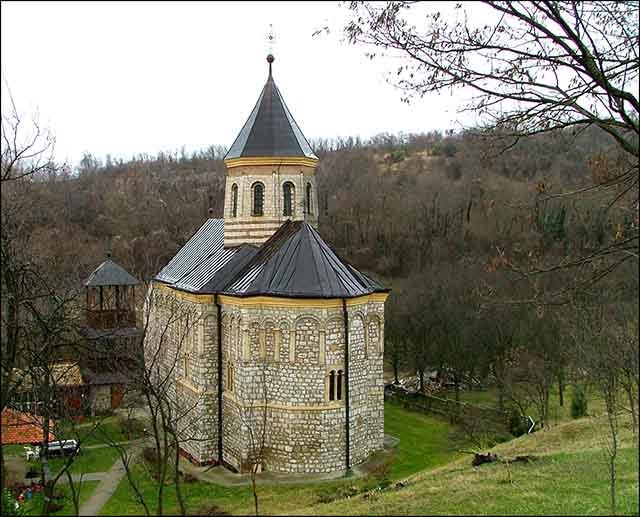
- Altar Screen With Throne Icons Painted By Janko Halkozović
- Wall Paintings By Kosta VanđElović
Manastir Mala Remeta
King Dragutin
- Destruction By Turks At the End of the 17th Century
- Reconstruction By Refugee Monks From RačA Monastery
About Mala Remeta Monastery
Mala Remeta Monastery is a significant Serb Orthodox monastic site located on the picturesque Fruška Gora mountain in the Vojvodina province of northern Serbia. The monastery's origins are traditionally linked to Serbian King Dragutin, who reigned from 1276 to 1282, although concrete historical documentation places its earliest records in the mid-16th century.
Historical Context and Reconstruction
The monastery has experienced periods of destruction and renewal throughout its history. At the close of the 17th century, it was reportedly destroyed by Ottoman Turks. Following this devastation, monks displaced from the Rača Monastery sought refuge at Mala Remeta and undertook its restoration. The precise appearance of the monastery's earlier church is not precisely known, but the extant church structure was erected on the same location in 1739.
Artistic and Cultural Significance
Mala Remeta Monastery is distinguished by its artistic heritage. The prominent throne icons adorning the altar screen were created by the artist Janko Halkozović in 1759. Later, in 1910, the monastery's interior was further enriched with wall paintings executed by Kosta Vanđelović. Recognizing its historical and artistic value, Mala Remeta Monastery was designated a Monument of Culture of Exceptional Importance in 1990 and continues to be protected by the Serbian state.
Source: Wikipedia ↗
Frequently Asked Questions
When was Mala Remeta Monastery founded?
The foundation of Mala Remeta Monastery is traditionally ascribed to the Serbian King Dragutin, who reigned from 1276 to 1282. While this is the traditional date, the earliest historical records that specifically mention the monastery date to the middle of the 16th century.
What historical events impacted Mala Remeta Monastery?
The monastery suffered destruction at the end of the 17th century when Ottoman Turks had already ravaged it. Following this destruction, refugee monks from the nearby Rača Monastery sought refuge at Mala Remeta and undertook its reconstruction.
What is the significance of Mala Remeta Monastery today?
Mala Remeta Monastery is recognized for its cultural and historical importance. In 1990, it was declared a Monument of Culture of Exceptional Importance and is currently protected by the state.
Who painted the icons and wall paintings in Mala Remeta Monastery?
The throne icons on the altar screen of Mala Remeta Monastery were painted by Janko Halkozović in 1759. The wall paintings within the monastery are a later addition, completed in 1910 by Kosta Vanđelović.
Related Monasteries

Bavanište Monastery
Bavanište Monastery is a 15th-century Serb Orthodox monastery situated in Bavanište, Kovin, in northern Serbia's Banat region. Originally founded in the 15th century, it was later deserted and destroyed during the Ottoman advance. The monastery was rebuilt in the mid-19th century and was renovated and reinstituted as a working monastery in 1997. A notable feature of the monastery is its healthy water spring.

Divša Monastery
Divša Monastery, also known as Đipša, is a Serb Orthodox monastery situated on Fruška Gora mountain in Vojvodina, Serbia. Believed to have been founded by Despot Jovan Branković in the late 15th century, its earliest records date to the latter half of the 16th century. Despite periods of desertion due to raids, the monastery underwent significant reconstruction in the 18th century and is now a protected Monument of Culture of Exceptional Importance.

Jazak Monastery
Jazak Monastery is a Serb Orthodox monastery located on Fruška Gora mountain in Vojvodina, northern Serbia. Founded in 1736, it is distinguished by its baroque iconostasis, with icons painted in 1769 by Dimitrije Bačević and woodwork attributed to Marko Vujatović. The monastery underwent a significant reconstruction between 1926 and 1930 and has been recognized as a Monument of Culture of Exceptional Importance since 1990.