
Jazak Monastery
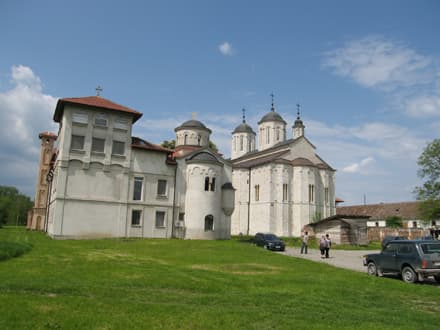
Jazak Monastery is a Serb Orthodox monastery located on Fruška Gora mountain in Vojvodina, northern Serbia. Founded in 1736, it is distinguished by its baroque iconostasis, with icons painted in 1769 by Dimitrije Bačević and woodwork attributed to Marko Vujatović. The monastery underwent a significant reconstruction between 1926 and 1930 and has been recognized as a Monument of Culture of Exceptional Importance since 1990.
Key Facts
- ›Founded in 1736.
- ›Features a baroque iconostasis with icons by Dimitrije Bačević (1769).
- ›Woodwork on the iconostasis is attributed to engraver Marko Vujatović.
- ›Underwent reconstruction between 1926 and 1930.
- ›Declared a Monument of Culture of Exceptional Importance in 1990 and is state-protected.
- ›The monastery is the burial site of Stefan Uroš V.

Baroque
Baroque Iconostasis, Icons By Dimitrije BačEvić, Woodwork By Marko Vujatović
Manastir Jazak
Dimitrije BačEvić, Marko Vujatović, Stefan Uroš V
Reconstruction From 1926 To 1930
About Jazak Monastery
Jazak Monastery is a significant Serb Orthodox monastic institution situated on the picturesque Fruška Gora mountain in the Vojvodina region of northern Serbia. Established in 1736, the monastery has evolved over centuries, with its present appearance shaped by key artistic and structural developments.
History and Significance
The monastery's rich artistic heritage is particularly evident in its baroque iconostasis. The icons were masterfully painted in 1769 by the renowned artist Dimitrije Bačević, while the intricate carved woodwork of the iconostasis is attributed to the skilled engraver Marko Vujatović. These elements contribute significantly to the monastery's aesthetic and spiritual value. A period of extensive renovation took place between 1926 and 1930, ensuring the preservation of this cultural monument for future generations. Reflecting its importance, Jazak Monastery was officially designated as a Monument of Culture of Exceptional Importance in 1990, placing it under state protection.
Notable Burials
Jazak Monastery holds historical significance as the final resting place for Stefan Uroš V. This association further cements its place in Serbian history and religious tradition.
Source: Wikipedia ↗
Frequently Asked Questions
When was Jazak Monastery founded?
Jazak Monastery was founded in the year 1736. This date marks the establishment of the religious institution on Fruška Gora mountain.
What is notable about the iconostasis at Jazak Monastery?
The monastery's baroque iconostasis is a significant feature. The icons adorning it were painted in 1769 by Dimitrije Bačević, and the carved woodwork is attributed to the engraver Marko Vujatović.
Has Jazak Monastery undergone any major renovations?
Yes, an overall reconstruction of the monastery was carried out from 1926 to 1930. This period saw significant restoration work on the monastic complex.
What is the cultural significance of Jazak Monastery?
Jazak Monastery was declared a Monument of Culture of Exceptional Importance in 1990. It is protected by the state, highlighting its historical and artistic value.
Who is buried at Jazak Monastery?
Jazak Monastery is the burial site for Stefan Uroš V. His presence there adds to the historical significance of the monastery.
Related Monasteries
Kovilj Monastery
Kovilj Monastery is a significant 13th-century Serb Orthodox monastery located in Vojvodina, Serbia. Traditionally attributed to Saint Sava, it is renowned as the "Jewel of Bačka" and is protected as a cultural monument. The monastery has a rich history marked by destruction and reconstruction, its present stone church dating from the 18th century, and it plays a vital role in contemporary Serbian Orthodox life, including a notable drug rehabilitation program.

Kuveždin Monastery
Kuveždin Monastery is a Serb Orthodox monastery situated on Fruška Gora mountain in Vojvodina, Serbia. Its foundation is traditionally attributed to Stefan Štiljanović in the late 15th century, with the first confirmed record dating to the late 16th century, indicating an earlier construction. The monastery complex underwent reconstruction in 2009 and is recognized as a Monument of Culture of Exceptional Importance, protected by the state.

Rakovac Monastery
Rakovac Monastery is a Serb Orthodox monastery situated on Fruška Gora mountain in Vojvodina, Serbia. Traditionally founded in 1498 by Raka Milošević, a chamberlain to Despot Jovan Branković, the monastery's earliest historical mentions date to the mid-16th century. It features significant fresco fragments from the early 16th century and later Baroque additions, including a bell tower and residential buildings, with notable iconostasis paintings from the 18th century. Declared a Monument of Culture of Exceptional Importance in 1990, Rakovac Monastery is protected by the state.