
Kovilj Monastery
Kovilj Monastery is a significant 13th-century Serb Orthodox monastery located in Vojvodina, Serbia. Traditionally attributed to Saint Sava, it is renowned as the "Jewel of Bačka" and is protected as a cultural monument. The monastery has a rich history marked by destruction and reconstruction, its present stone church dating from the 18th century, and it plays a vital role in contemporary Serbian Orthodox life, including a notable drug rehabilitation program.
Key Facts
- ›Founded in the 13th century, traditionally attributed to Saint Sava.
- ›Located near Kovilj, a suburban village of Novi Sad, in the Bačka region of Vojvodina.
- ›The present stone church was built between 1741 and 1749 in the Serbo-Byzantine architectural style.
- ›The monastery is known for its honey production and a variety of brandies.
- ›Operates the 'Land of the Living' project, a drug rehabilitation center for young addicts.
- ›Revitalized in 1990 by hieromonks who later became bishops, including the future Patriarch Porfirije.
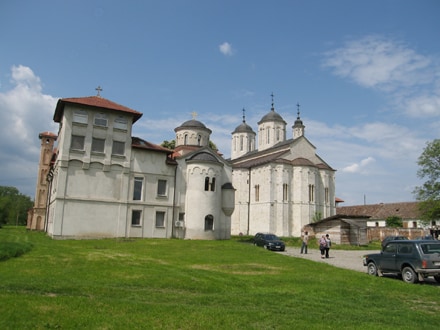
Serbo-Byzantine, Morava Architectural School
- Monastic Library With Rare Books and Manuscripts
- Collection of Paintings By Uroš Predić and Rafailo MomčIlović
- Monastic Archive
- Tomb of Jovan Rajić
- Hollow Oak Tree Estimated To Be 600 Years Old
- Byzantine Chanting Choir
- Drug Rehabilitation Center
манастир ковиљ, Manastir Kovilj
Saint Sava, Grand žUpan Stefan the First-Crowned, King Andrew Ii of Hungary, King Stefan Dragutin, Evliya çElebi, Teodor Kosta, Nikola Krapić, Empress Maria Theresa, Jovan Rajić, Aksentije Marodić, Ludvig Tauš, Uroš Predić, Rafailo MomčIlović, Damaskin Davidović, Porfirije Perić, Fotije Sladojević, Andrej ćIlerdžIć
- Diplomatic Talks Between Saint Sava and King Andrew Ii of Hungary In 1220.
- Demolition and Burning By Ottomans Between 1686 and 1697.
- Restoration and Renovation After the Treaty of Karlowitz .
- Construction of the Present Stone Church .
- Use As A Base By Hungarian Rebels In 1848-1849.
- Looting and Partial Destruction During the 1848 Hungarian Revolution.
- Restoration Efforts Beginning In 1850.
- Looting By Hungarian Occupational Forces In 1941.
- Confiscation of Monastic Estate By Communist Authorities After Wwii.
- Revitalization Starting In 1990.
- Renovation and Expansion of the Complex .
About Kovilj Monastery
Kovilj Monastery, known in Serbian as Манастир Ковиљ (Manastir Kovilj), is a significant 13th-century Serb Orthodox monastery located in the Bačka region of Vojvodina, Serbia. Traditionally, its founding is attributed to Saint Sava, the first Archbishop of Serbia, in 1220, to commemorate his diplomatic efforts that averted war between his brother, King Stefan the First-Crowned, and King Andrew II of Hungary. The monastery is celebrated as one of the most beautiful in the region, earning the nickname "Jewel of Bačka," and is recognized as a monumental cultural-historical object, protected by the state since 1949.
History and Architecture
The monastery's history is marked by periods of destruction and rebuilding. While tradition points to Saint Sava, historical documents first mention Kovilj in the 14th century. The original wooden church, later renovated and adorned with frescoes in 1651, was repeatedly destroyed by the Ottomans in the late 17th century. Following the Treaty of Karlowitz, the surviving monks restored the church, and the present stone church was constructed between 1741 and 1749. This new structure was built in the Serbo-Byzantine style, influenced by the Morava architectural school, drawing parallels with monasteries like Manasija and Ravanica. The monastery's estate was significantly impacted by historical events, including the Hungarian Revolution of 1848, which led to looting and burning, and post-World War II confiscations by Communist authorities.
Contemporary Significance
Kovilj Monastery experienced a revitalization in 1990 with the arrival of three hieromonks, including Porfirije Perić, who later became the Patriarch of the Serbian Orthodox Church. This period saw the renovation and expansion of the complex. Beyond its religious and historical importance, Kovilj Monastery is recognized for its economic activities, including the production of famed white basil honey and a variety of brandies. A notable contemporary initiative is the "Land of the Living" project, a drug rehabilitation center established within the monastery grounds, offering therapeutic programs for young addicts. The monastery also boasts a choir renowned for its Byzantine chanting, contributing to the preservation of this musical tradition.
Source: Wikipedia ↗
Frequently Asked Questions
When was Kovilj Monastery founded?
According to tradition, Kovilj Monastery was founded in 1220 by Saint Sava. The monastery is generally considered to be a 13th-century establishment, with its oldest mentions appearing in the 14th century.
What is Kovilj Monastery known for?
Kovilj Monastery is nicknamed the "Jewel of Bačka" and is recognized for its beauty and historical significance. It is also known for its economic activities, such as producing honey and brandies, and for its contemporary role as a rehabilitation center.
What is the architectural style of Kovilj Monastery?
The present stone church at Kovilj Monastery was built in the Morava architectural school style of Serbo-Byzantine architecture, patterned after monasteries like Manasija and Ravanica. While the frescoes follow church canons, the iconostasis features non-canonical deviations influenced by Renaissance art.
What is the 'Land of the Living' project?
The 'Land of the Living' is a project initiated in 2004 by hegumen Porfirije, which transformed part of the monastery into a drug rehabilitation center for young addicts. The program, lasting from 12 to 36 months, involves supervised work, spiritual guidance, and community living.
Has the monastery faced destruction or damage throughout its history?
Yes, Kovilj Monastery has endured significant destruction. It was demolished and burned by the Ottomans on multiple occasions in the late 17th century. Later, during the Hungarian Revolution of 1848, it was looted and burned by rebels, and in World War II, Hungarian occupational forces looted it.
What notable figures are associated with Kovilj Monastery?
Saint Sava is traditionally credited with its founding. Jovan Rajić, a forerunner of Serbian historiography, served as the archimandrite here. More recently, Porfirije Perić, who became Patriarch of the Serbian Orthodox Church, was instrumental in its revitalization and established the 'Land of the Living' project.
Related Monasteries

Jazak Monastery
Jazak Monastery is a Serb Orthodox monastery located on Fruška Gora mountain in Vojvodina, northern Serbia. Founded in 1736, it is distinguished by its baroque iconostasis, with icons painted in 1769 by Dimitrije Bačević and woodwork attributed to Marko Vujatović. The monastery underwent a significant reconstruction between 1926 and 1930 and has been recognized as a Monument of Culture of Exceptional Importance since 1990.

Kuveždin Monastery
Kuveždin Monastery is a Serb Orthodox monastery situated on Fruška Gora mountain in Vojvodina, Serbia. Its foundation is traditionally attributed to Stefan Štiljanović in the late 15th century, with the first confirmed record dating to the late 16th century, indicating an earlier construction. The monastery complex underwent reconstruction in 2009 and is recognized as a Monument of Culture of Exceptional Importance, protected by the state.

Rakovac Monastery
Rakovac Monastery is a Serb Orthodox monastery situated on Fruška Gora mountain in Vojvodina, Serbia. Traditionally founded in 1498 by Raka Milošević, a chamberlain to Despot Jovan Branković, the monastery's earliest historical mentions date to the mid-16th century. It features significant fresco fragments from the early 16th century and later Baroque additions, including a bell tower and residential buildings, with notable iconostasis paintings from the 18th century. Declared a Monument of Culture of Exceptional Importance in 1990, Rakovac Monastery is protected by the state.