
Lyse Abbey
Lyse Abbey, also known as Saint Mary's Abbey, Lyse, was a significant Cistercian monastery founded in 1146 near Lysefjorden in southwestern Norway. It was the first Cistercian house in Norway, established by the Bishop of Bergen with monks from Fountains Abbey. Over centuries, the abbey accumulated considerable wealth and land through its skilled farming practices, becoming a powerful institution before its dissolution in 1536 with the establishment of Lutheranism as the state religion.
Key Facts
- ›Founded in 1146 by Bishop Sigurd of Bergen.
- ›First Cistercian monastery established in Norway.
- ›Monks were initially brought from Fountains Abbey in England.
- ›Acquired significant wealth and land through expert farming operations.
- ›Dissolved in 1536 following the Reformation and the decree of Lutheranism as the state religion.
- ›Building materials, particularly soapstone, were later repurposed for other structures.

Ruins Excavated and Restored, Protected National Monument, Popular Tourist Site, Location For Wedding Photographs
Saint Mary's Abbey, Lyse, Lyse Kloster, Lyse Mariakloster
Sigurd, Bishop of Bergen
Founded In 1146, Dissolved In 1536
About Lyse Abbey
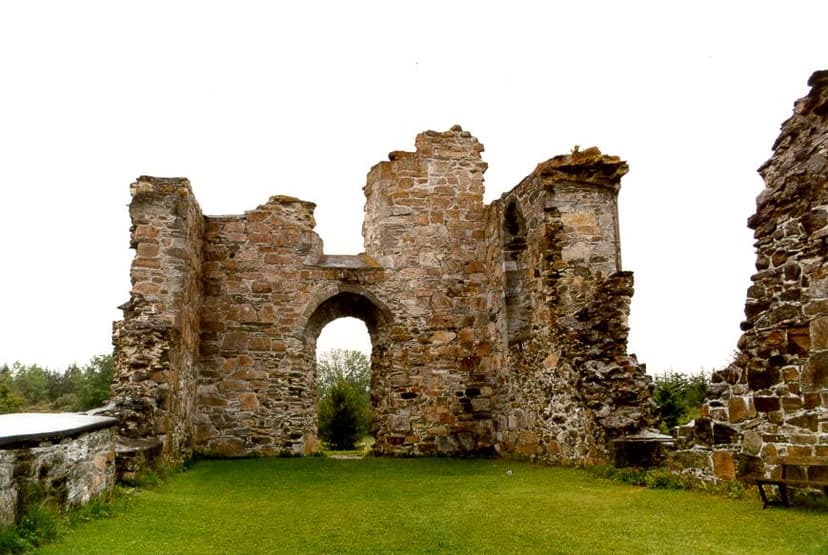
Lyse Abbey, officially known as Saint Mary's Abbey, Lyse (Norwegian: Lyse kloster, Lyse Mariakloster), stands today as a significant ruin in Bjørnafjorden Municipality, Vestland county, southwestern Norway. Its name derives from its proximity to Lysefjorden, and it is situated at the southern foot of Lyshornet mountain.
History and Significance
The abbey was founded in 1146 by Sigurd, the Bishop of the Ancient Diocese of Bergen, on land he owned. This marked the establishment of the first Cistercian monastery in Norway, drawing its initial monks from Fountains Abbey in Yorkshire, England, and following the architectural and organizational models of similar institutions in England and France. Adhering to the Cistercian vow of poverty and relying solely on income from farming, the monks of Lyse Abbey developed exceptional skills in agricultural management. This expertise led to the acquisition of numerous farms, both locally and in other regions, gradually accumulating considerable wealth and influence for the monastery.
Dissolution and Legacy
The abbey's existence as a religious institution concluded in 1536 with the dissolution of monasteries following Christian III of Denmark's decree establishing Lutheranism as the state religion of Norway. The abbey's extensive properties were confiscated and became royal assets. Much of the monastery's structure was built using soapstone, a material that would be gradually repurposed over the subsequent two centuries for the construction of other notable buildings, including the Rosenkrantz Tower in Bergen and Kronborg Castle in Denmark.
Modern Day
The ruins of Lyse Abbey were subjected to excavation in 1822 and 1838, with restoration efforts taking place around 1930. Today, the site is protected as a national monument, and ongoing archaeological work continues to preserve and document its historical significance. The ruins are a popular tourist destination, attracting visitors who also enjoy the surrounding nature walks. The picturesque setting has also made it a favored location for couples to hold wedding ceremonies or take photographs.
Source: Wikipedia ↗
Frequently Asked Questions
When was Lyse Abbey founded?
Lyse Abbey was founded in the year 1146. It was established by Sigurd, the Bishop of the Ancient Diocese of Bergen.
What religious order was Lyse Abbey part of?
Lyse Abbey was a Cistercian monastery. It was the first of its order to be established in Norway.
What happened to Lyse Abbey after the Reformation?
Following the Reformation, the abbey was dissolved in 1536 when Lutheranism became the state religion of Norway. Its possessions were confiscated by the king.
What is the current state of Lyse Abbey?
Lyse Abbey is now a ruined monastery. The ruins were excavated in the 19th century and partially restored around 1930. They are protected as a national monument.
Can people visit Lyse Abbey today?
Yes, the ruins of Lyse Abbey are a well-visited tourist site. The area offers nature walks, and it is a popular location for wedding photographs.
Related Monasteries

Munkeby Abbey
Munkeby Abbey was a Cistercian monastery founded between 1150 and 1180, located in Trøndelag county, Norway. It was the most northerly Cistercian foundation in the world and functioned as an independent house until the 13th century, after which its assets were transferred to Tautra Abbey. The abbey was dissolved during the Protestant Reformation in 1537, and today its medieval ruins are managed by the Society for the Preservation of Ancient Norwegian Monuments. In 2007, a new Trappist monastery, Munkeby Mariakloster, was established nearby.
Tautra Abbey
Tautra Abbey was a significant Cistercian monastery established in 13th century Norway, playing a notable role in the country's politics until its dissolution during the Reformation. Today, the well-preserved ruins of the medieval church serve as a popular tourist attraction, while a new Trappistine community, Tautra Monastery, was founded nearby in 1999, marking the return of Cistercian life to Norway.

Hovedøya Abbey
Hovedøya Abbey was a significant medieval Cistercian monastery located on the island of Hovedøya in the Oslofjord, Norway. Founded in 1147 by monks from England, it quickly became one of the wealthiest institutions in Norway during the medieval period. The abbey's existence was brought to an end by political turmoil and the Reformation, with its buildings later quarried for stone, leaving behind some of the most complete monastic ruins in Norway.